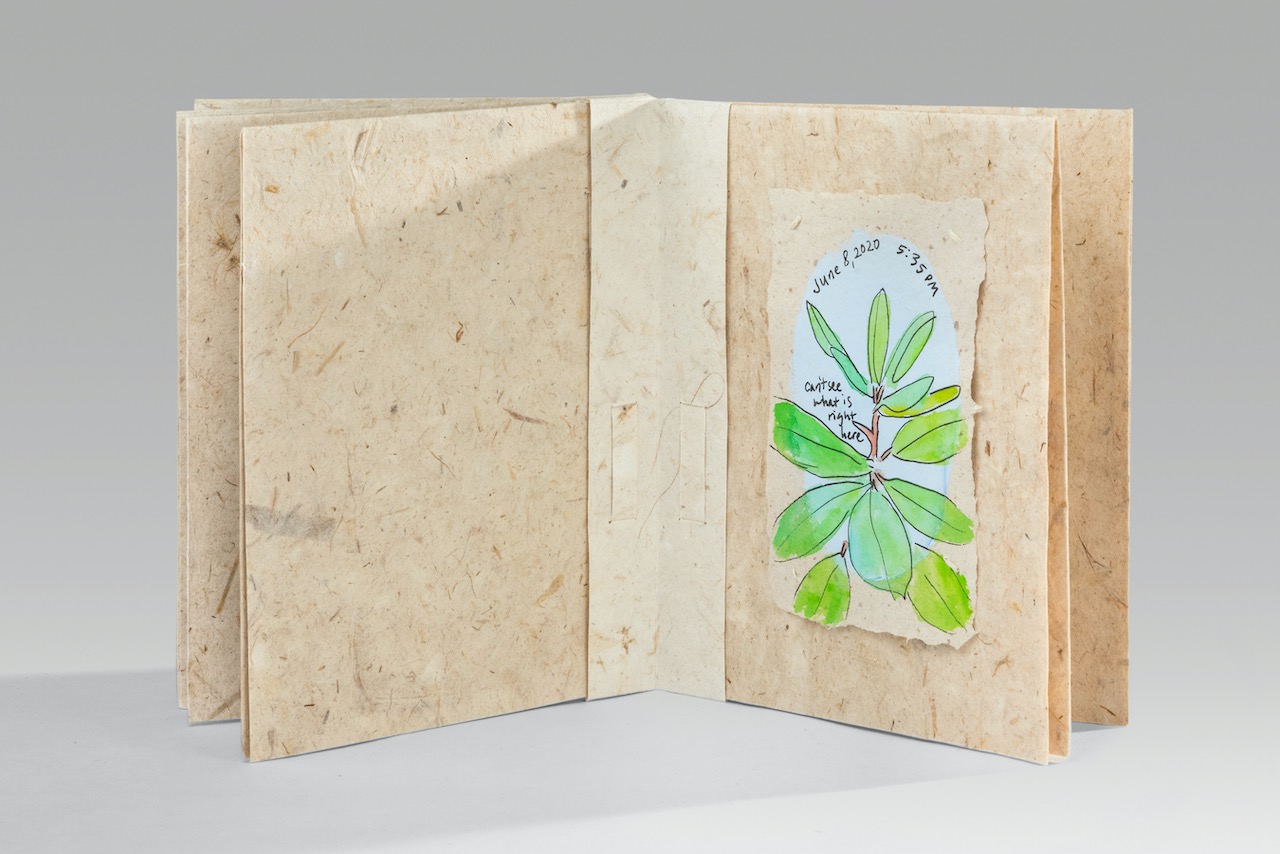
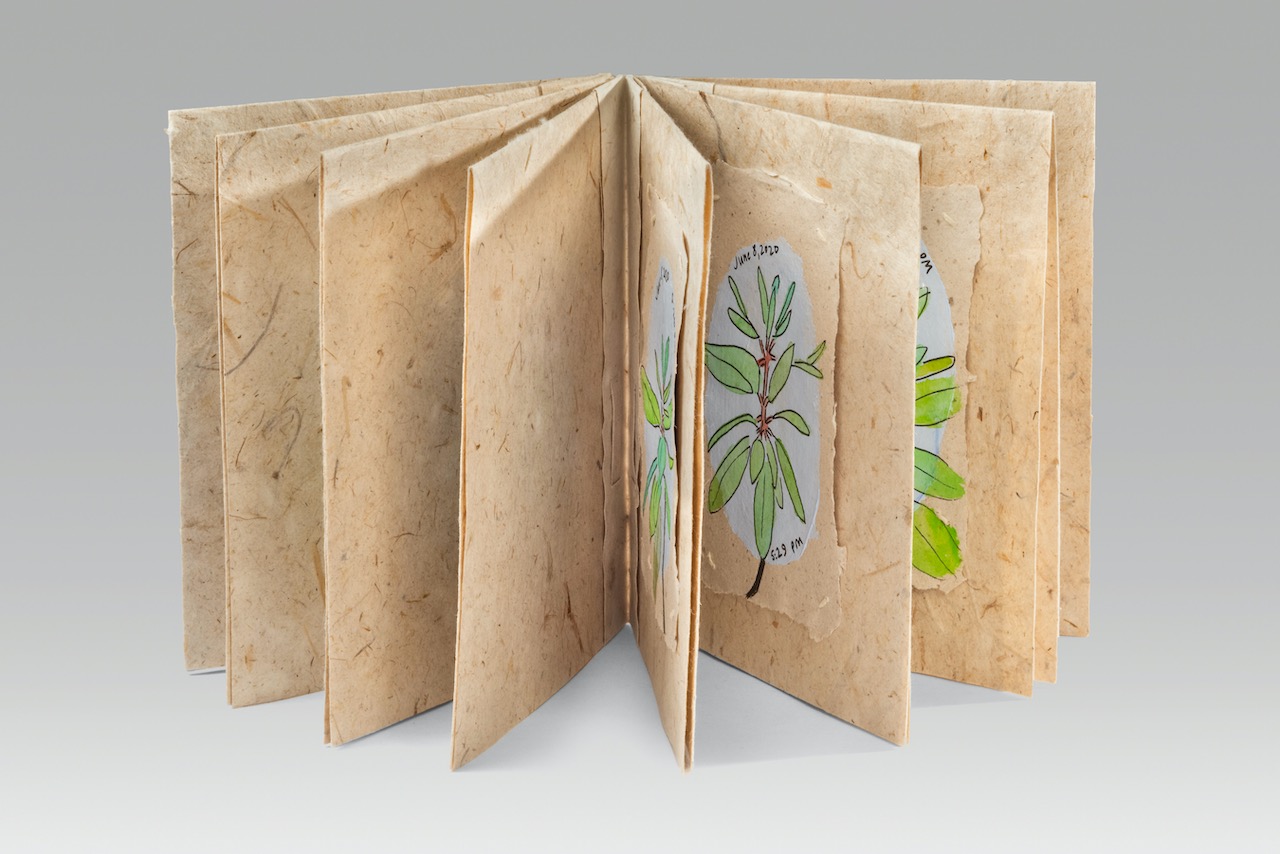
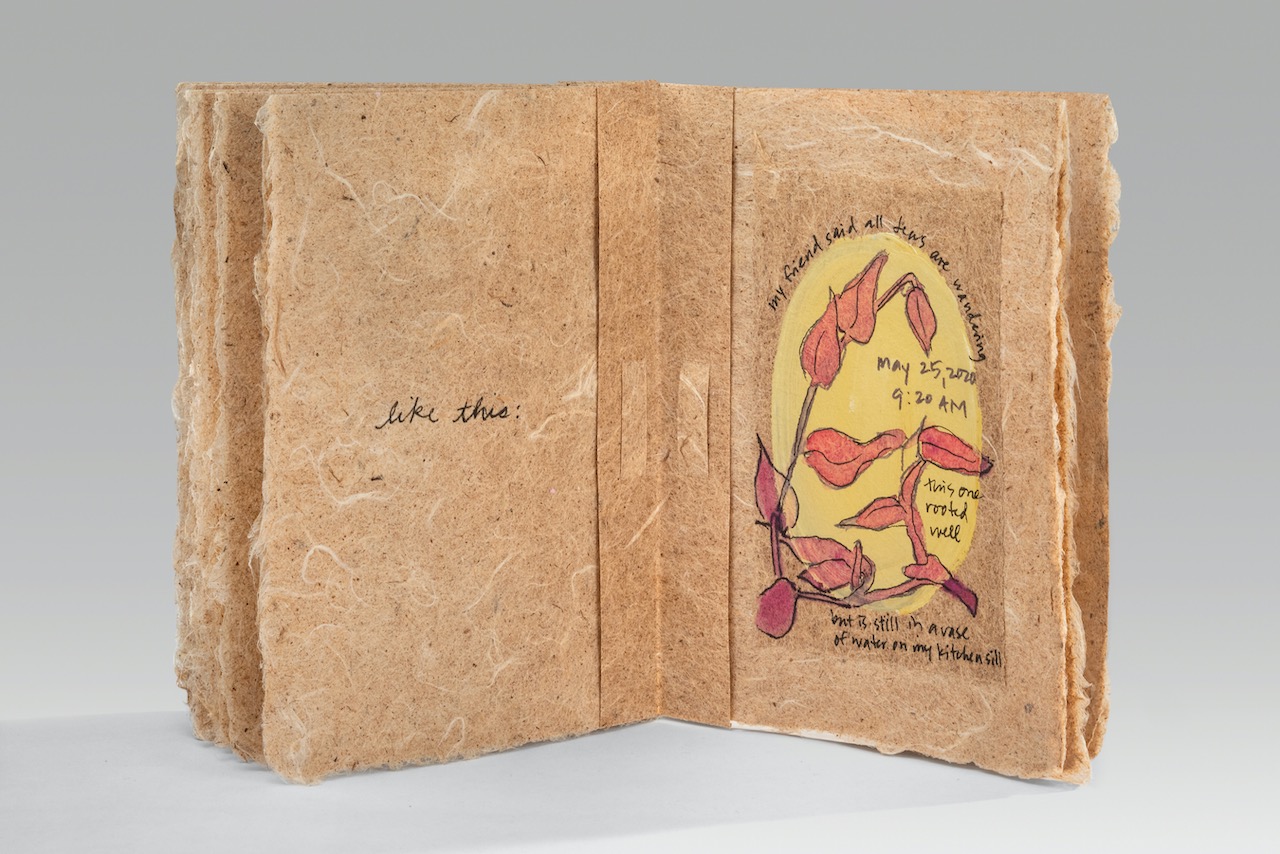
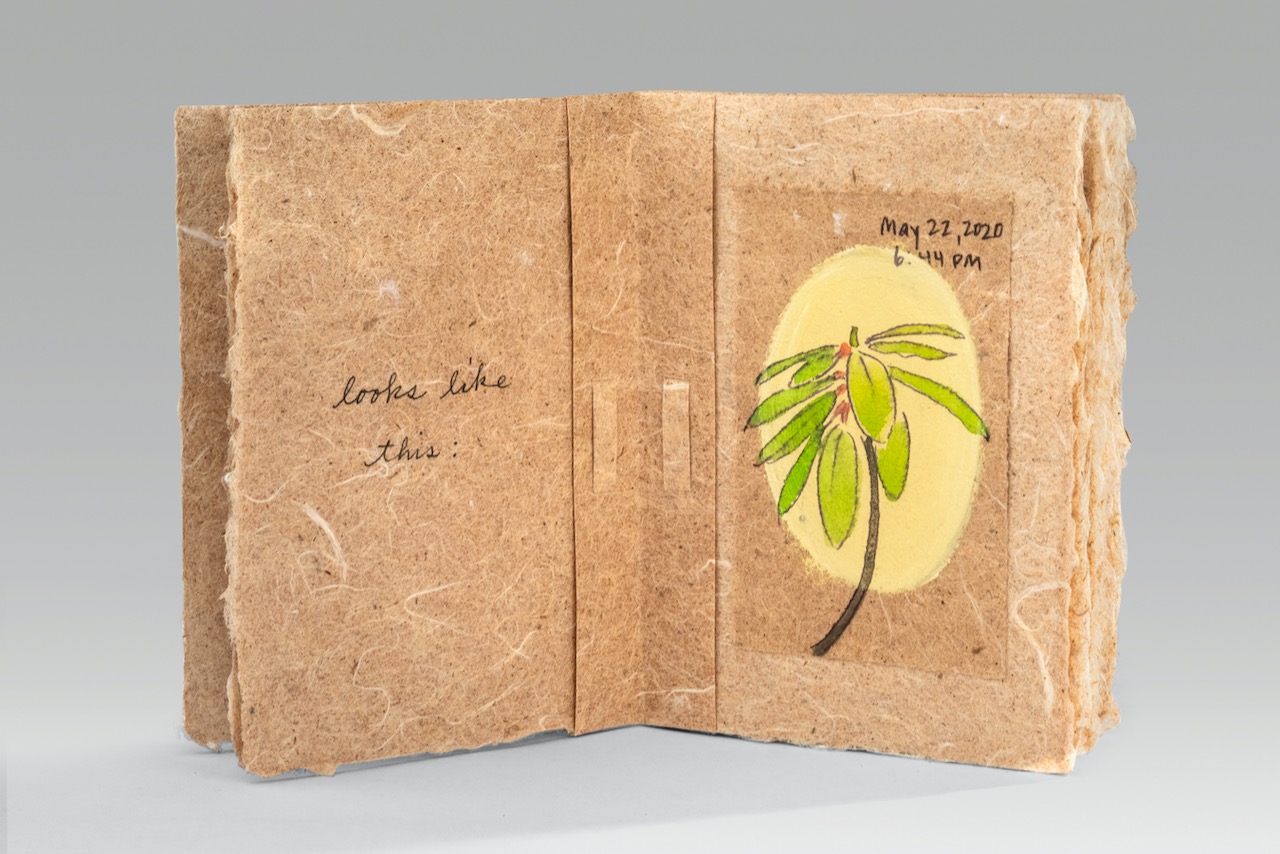
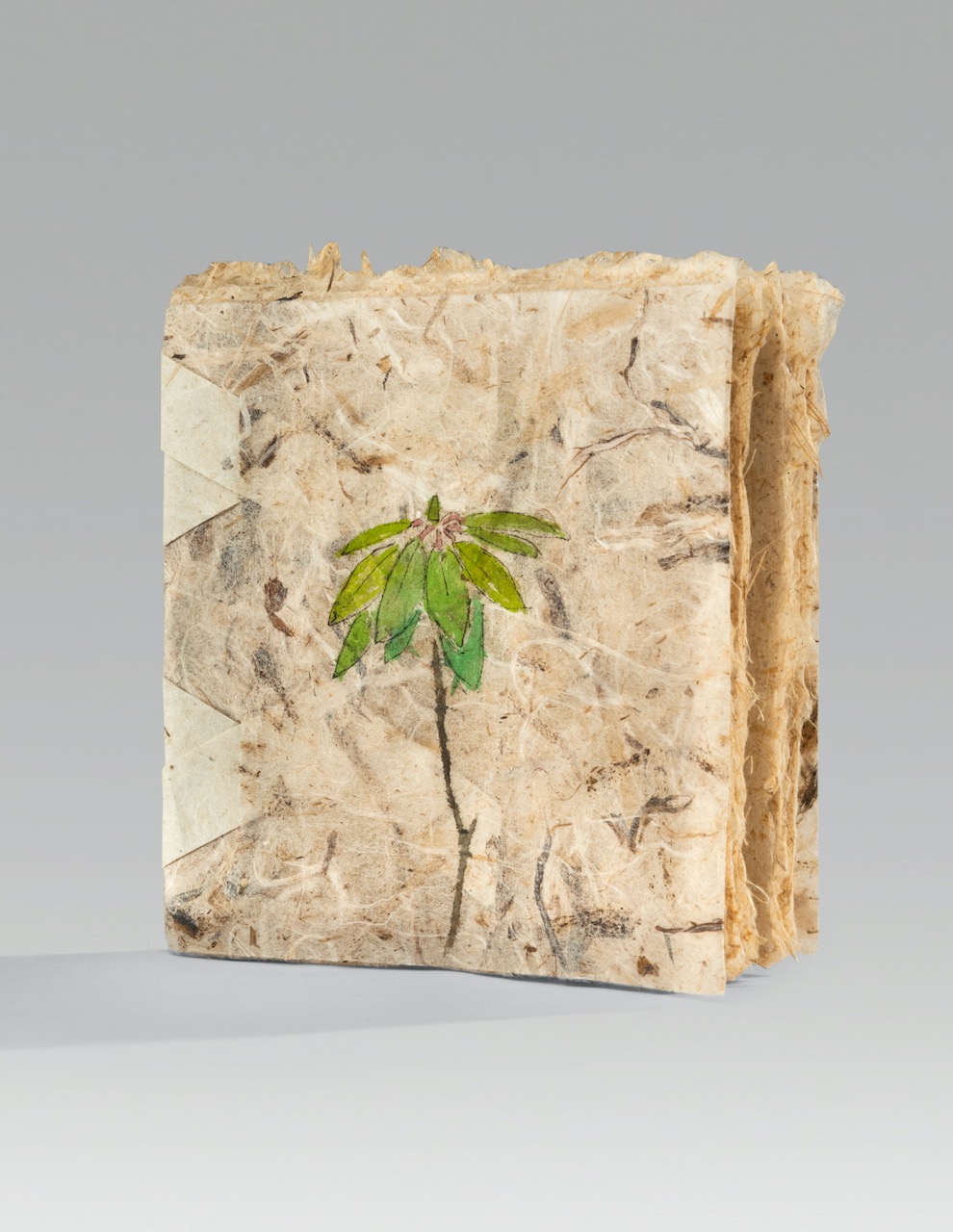
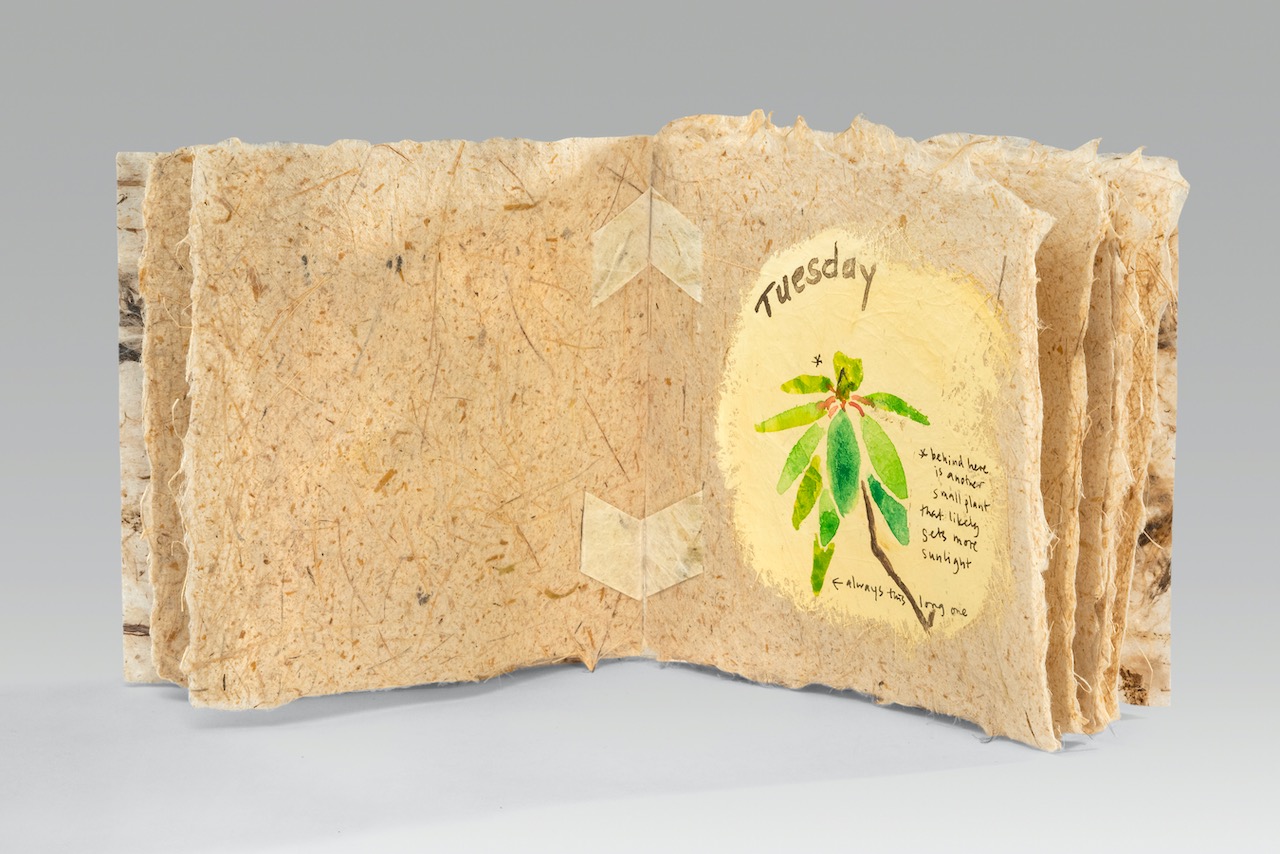
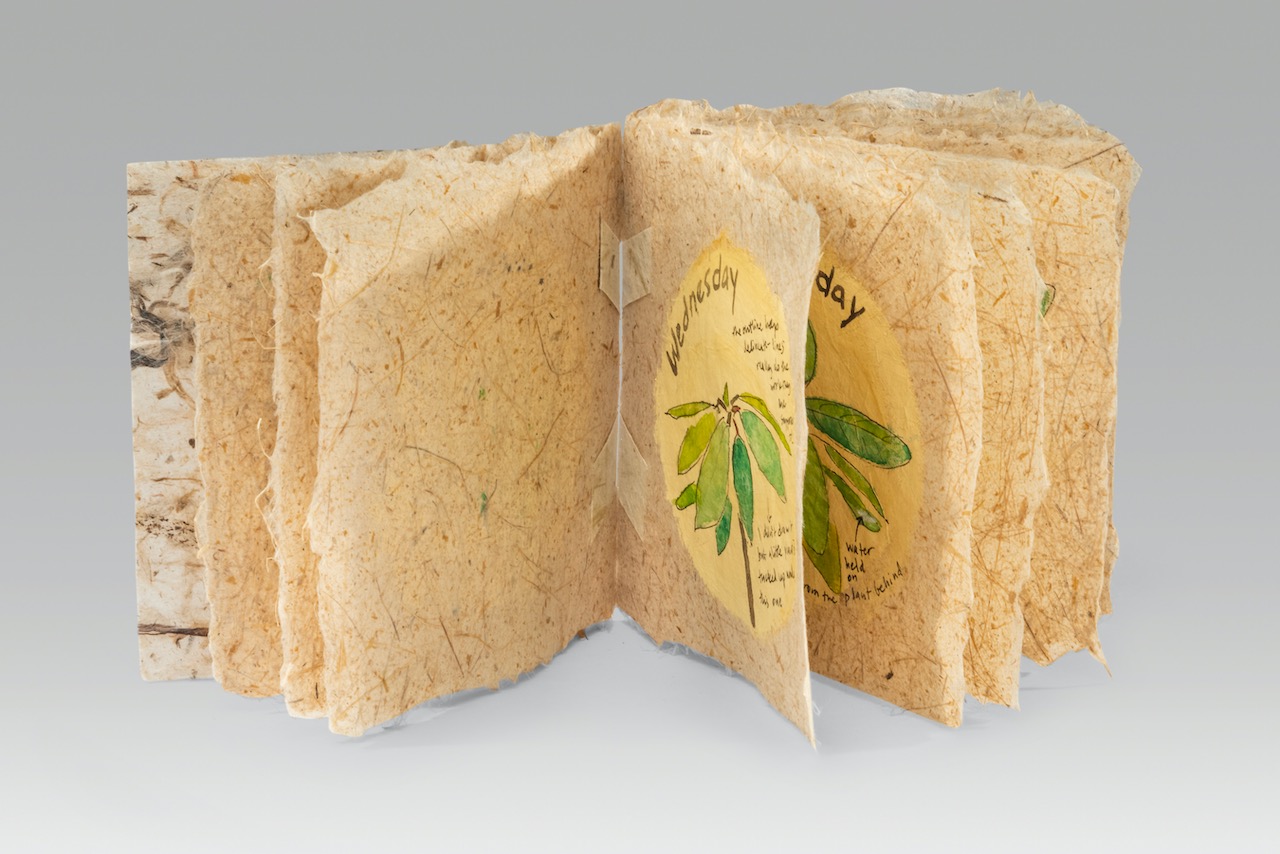
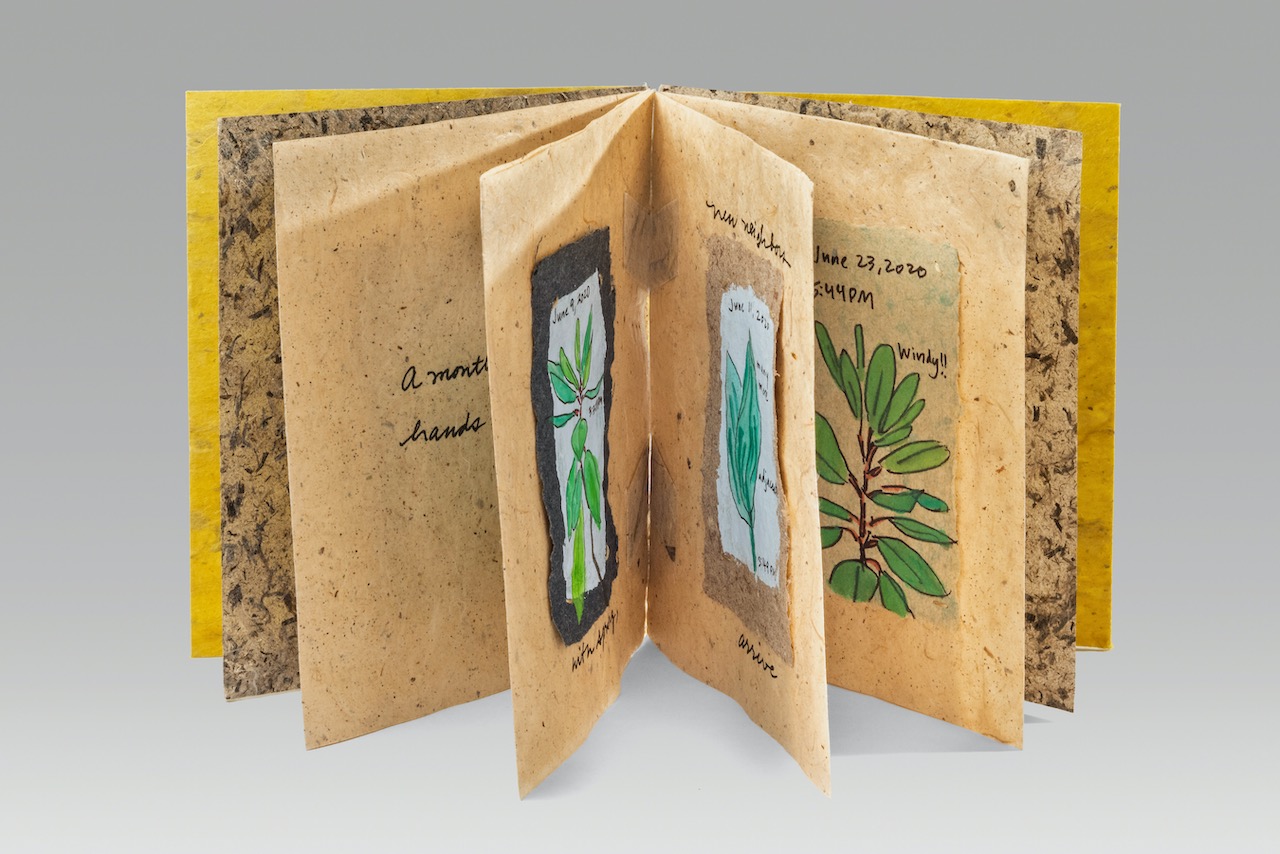
One rhododendron bush in May 2020
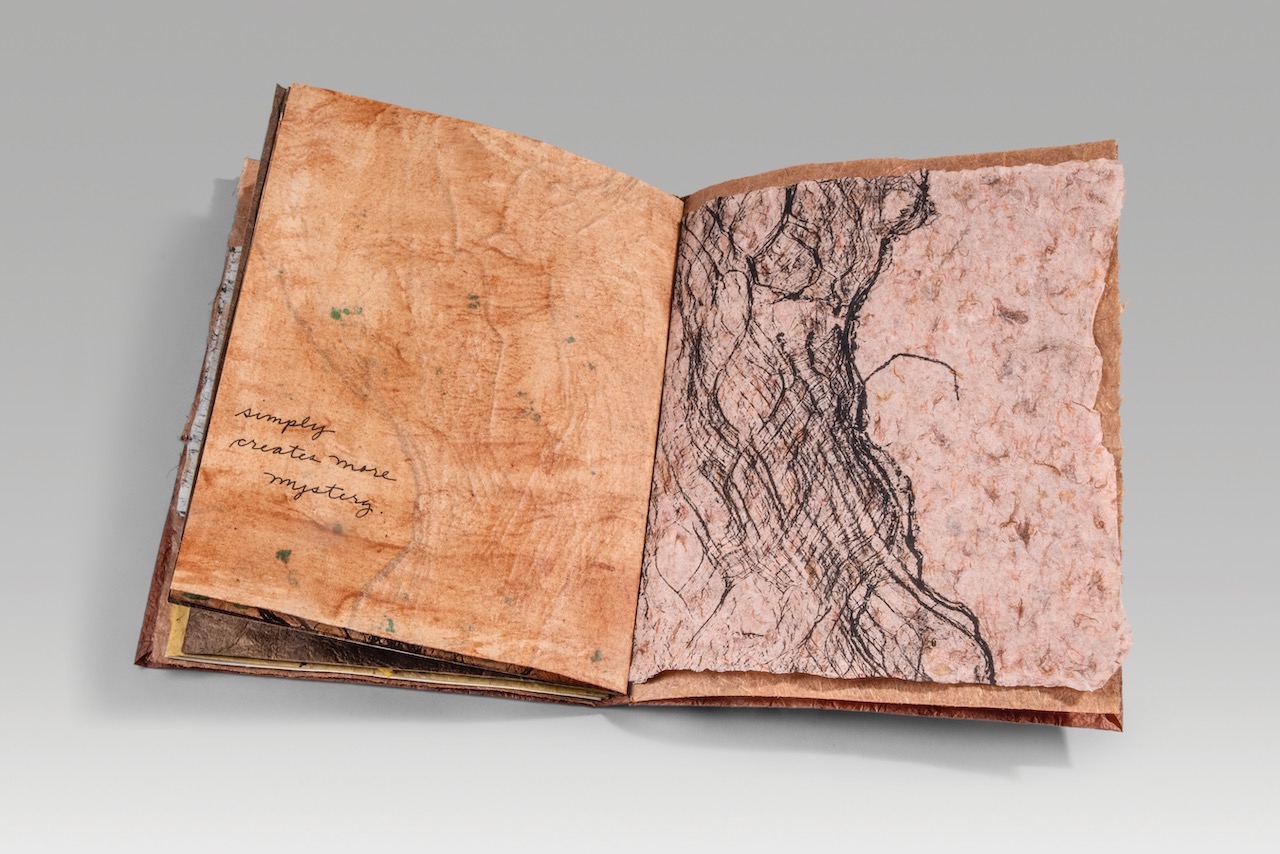
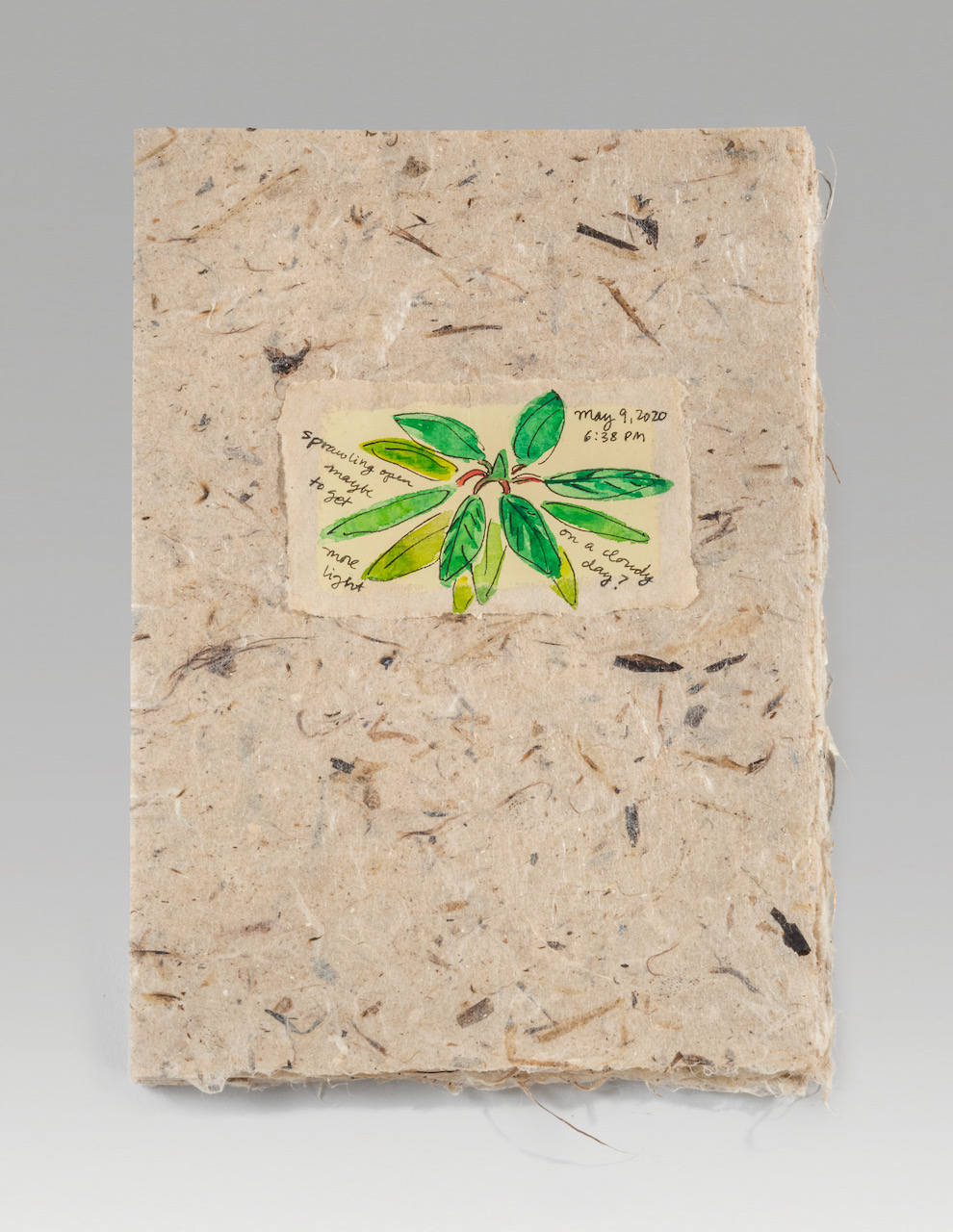
One rhododendron bush in May 2020 (2020). Pen, gouache, and acrylic on handmade paper (milkweed paper covers and straps, harakeke pages). 10 leaves, unique, 5 x 4.75 x 0.5” closed. Cynthia Sears Collection.
This book cycles through days of looking at the same rhododendron bush in May during lockdown in Ohio, using papers that I had made on different occasions from botanical fibers. I made the covers from milkweed (Asclepias) harvested in Michigan (thanks to a 2019 visit to Pati Scobey’s Concord studio) and the pages from harakeke (Phormium tenax) in Australia (thanks to a 2018 visit to Barb Adams’ Melbourne studio). The binding, a backstitch structure made entirely from cut and folded paper, was invented by Elizabeth Steiner. I learned it from her book with Claire Van Vliet, Woven and Interlocking Book Structures (Janus Gefn Unlimited, 2002). Each pen and gouache drawing sits on an acrylic paint background, and this book is one of the few complete pieces that I managed to create during this scary solitary time.
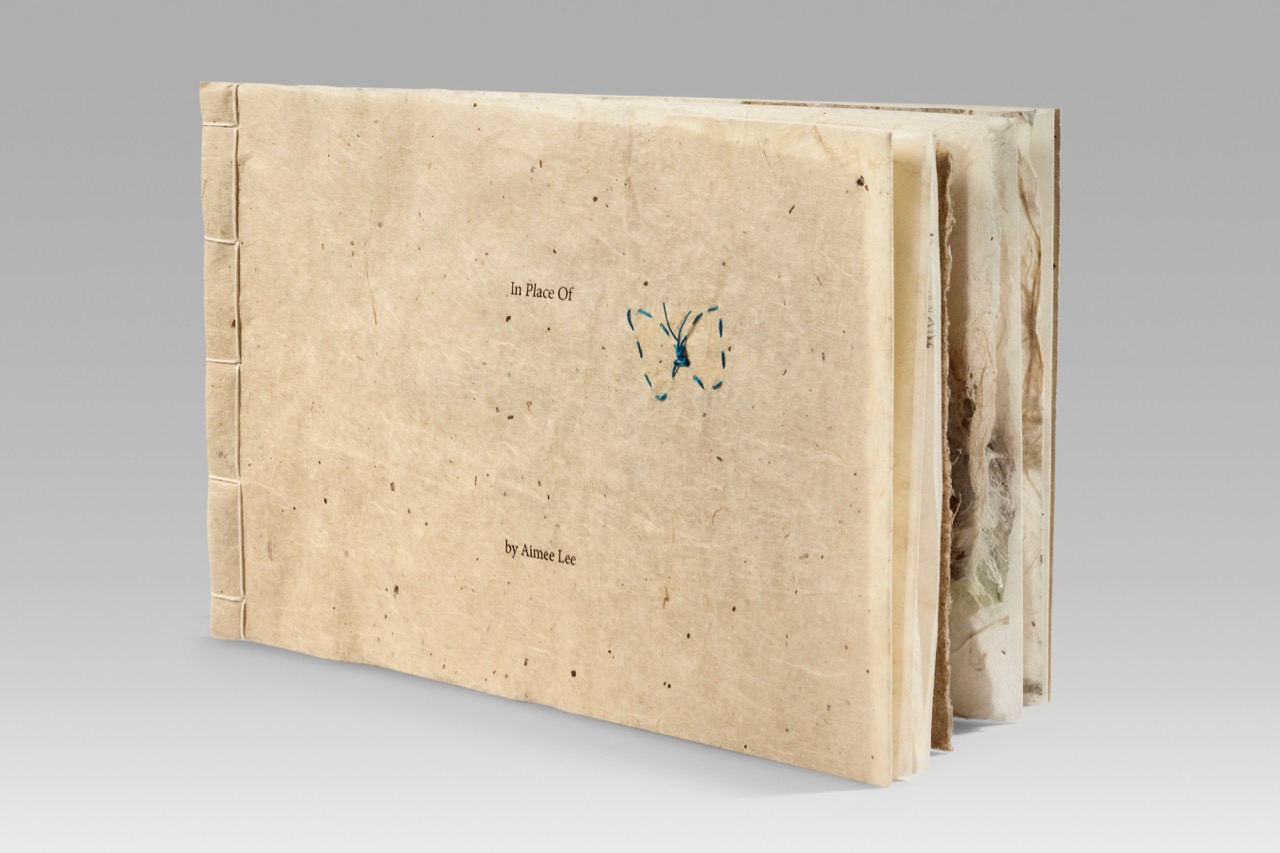
In Place Of
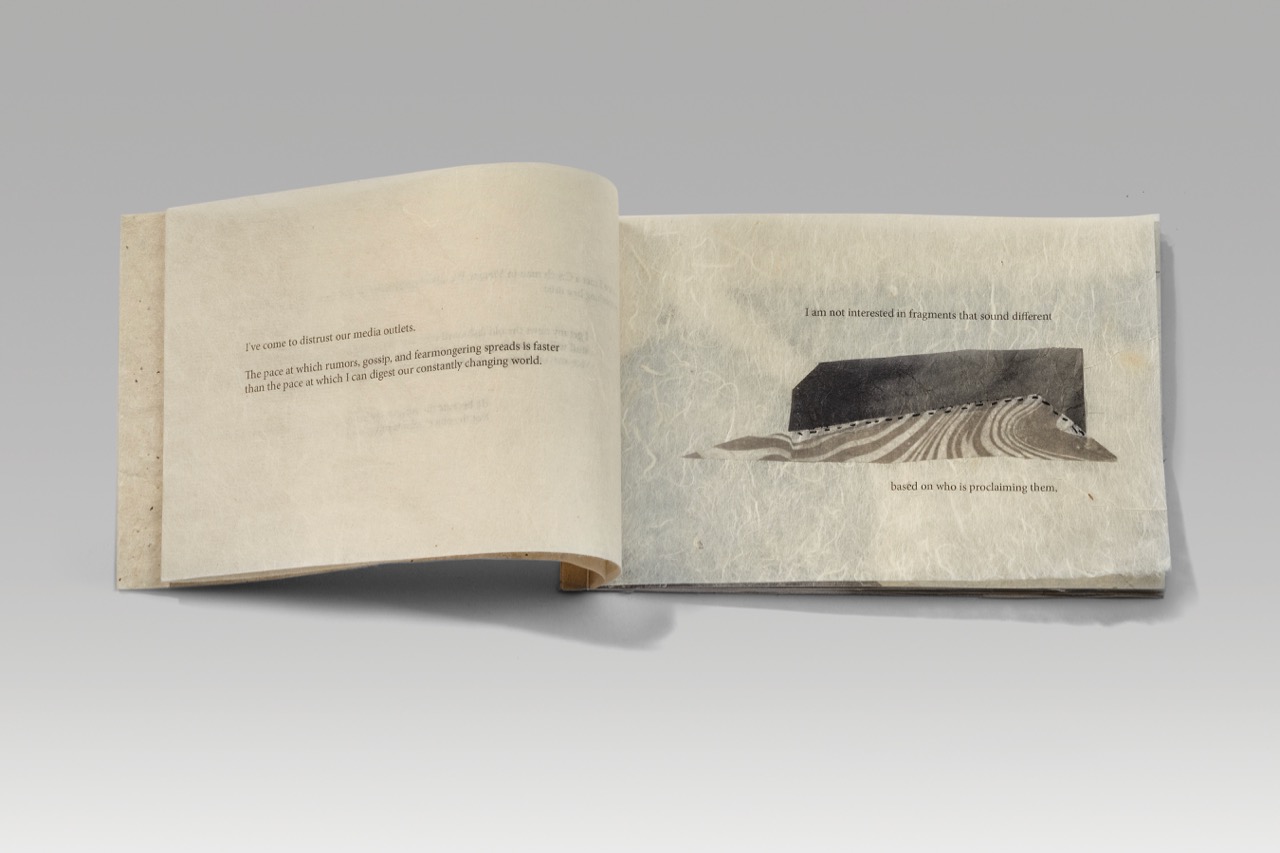
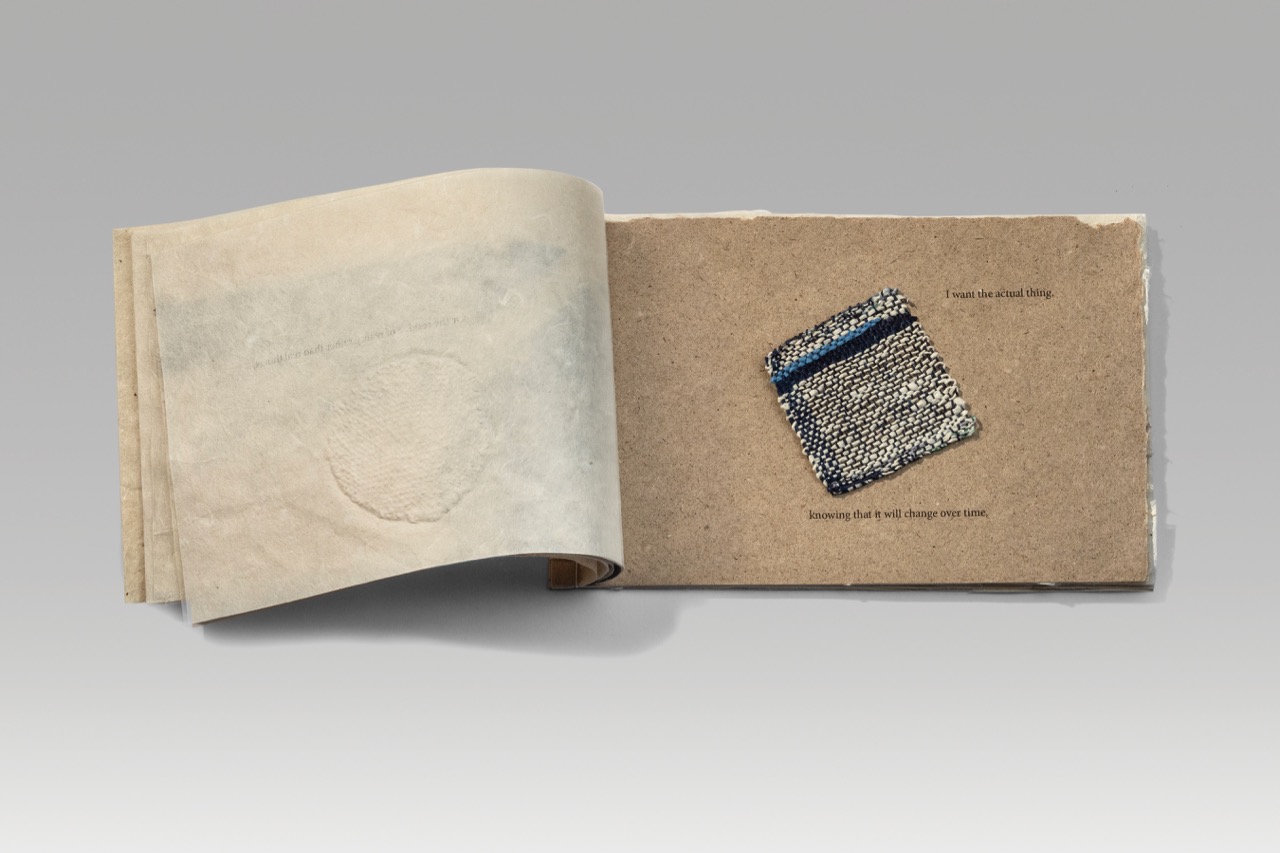
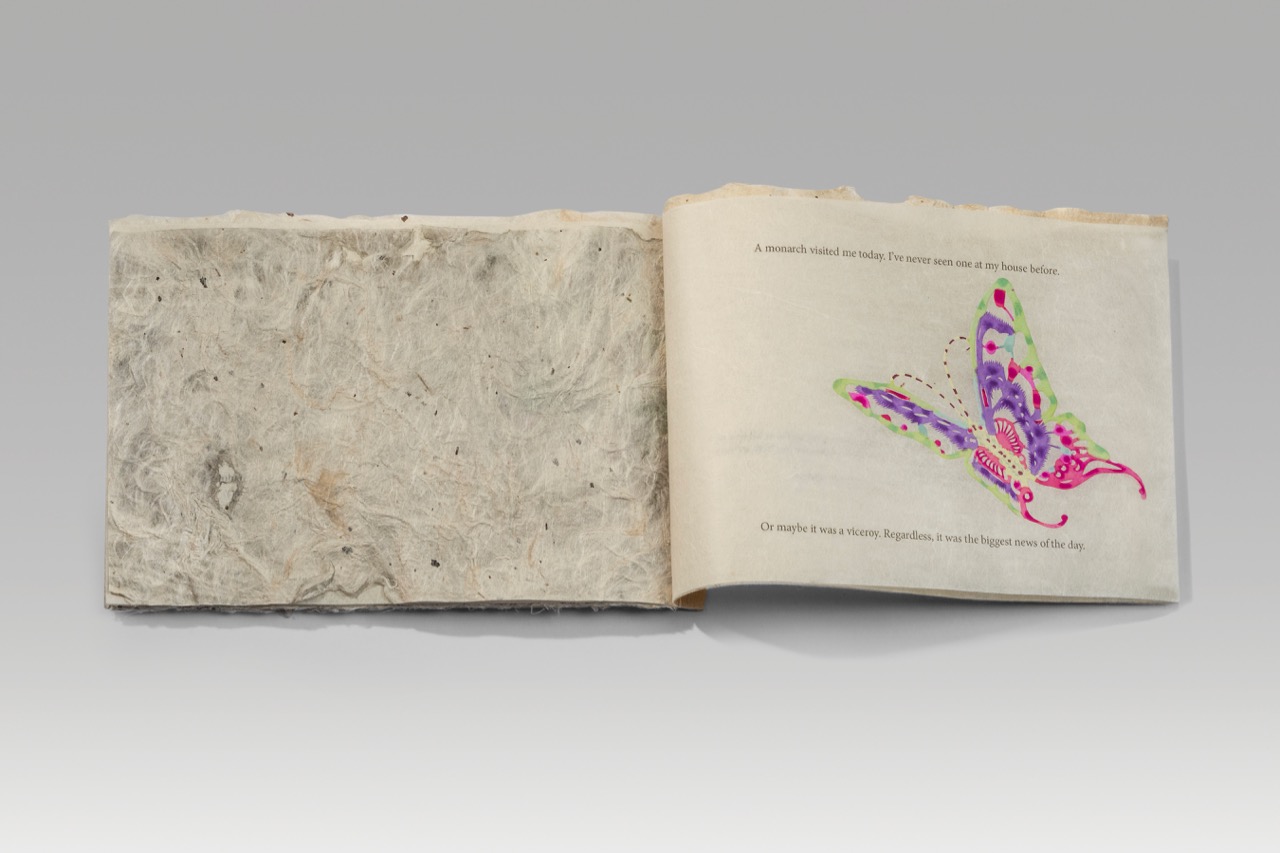
In Place Of (2019). Ink, natural dye, and inkjet print on handmade papers, woven paper thread, iris leaf, butterfly cutout. 5.5. x 8.5 x 0.5′ closed, 10 pages (plus 1 endsheet), variable edition of six. Collections of Emory, Oberlin, Tufts, University of Miami Richter Library, Indiana University Wells Library, UC Berkeley.
For the last few years I have felt helpless and despairing, as if any exercise of my agency has no chance of positively changing the world. My only solace has been in my work. This book explores the things that I have forsaken, like following the news, because that type of media consumption and frenzy makes me measurably sick on all levels. I seek refuge in my work and my ability to speak to my distress through paper. All of the manipulation on these pages have happened either while making paper at the vat or taking paper I have made to transform into other things. Most of the paper is made from the paper mulberry tree, but where I emphasize “reality” and “nature,” I turned to iris paper made from leaves I harvested in an effort to clear invasive stands in wetlands. There is sadness but in the end a glimpse of real priorities: what actually matters in our day-to-day lives? The title refers to the definition of “vice,” which appears on the first and last pages, and invites readers to imagine ways that they can change the way they approach and see the world.
Covered
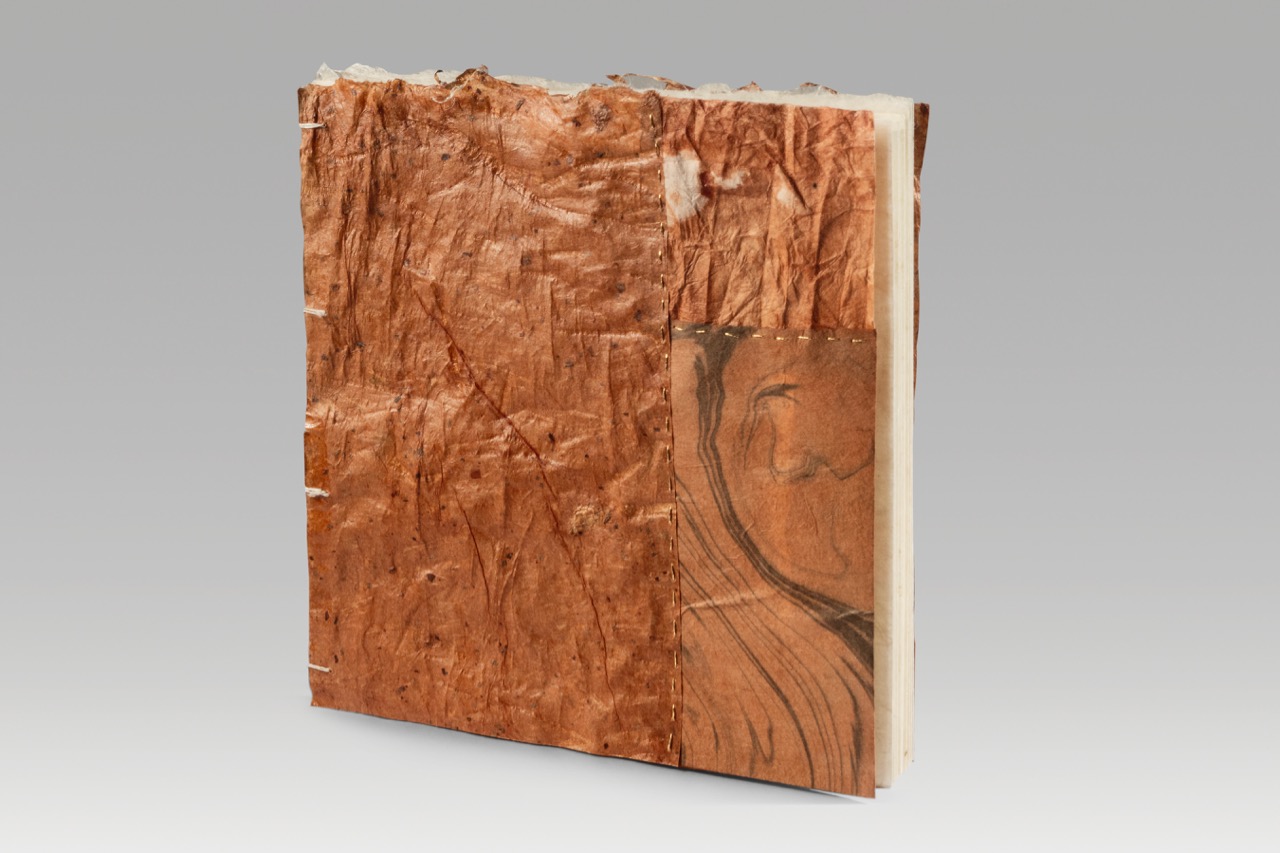
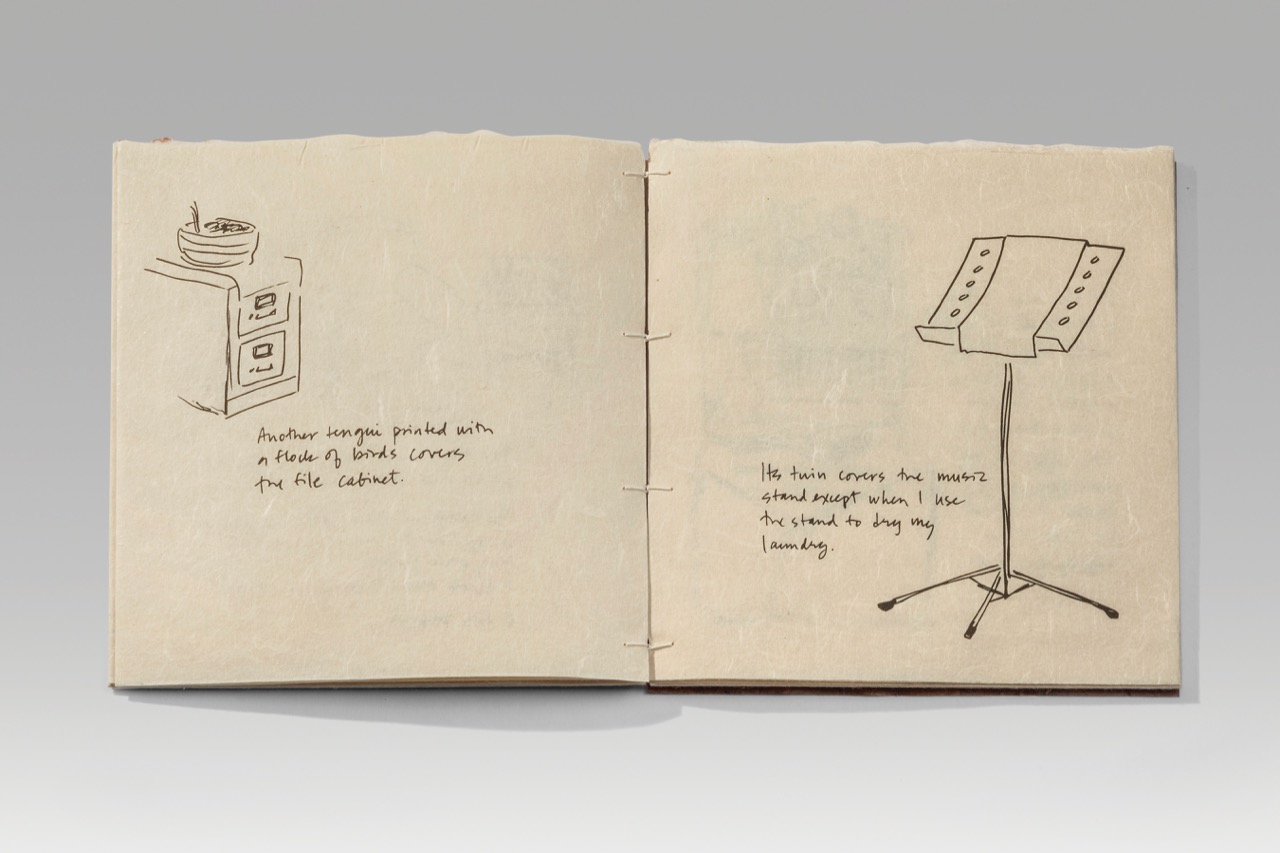
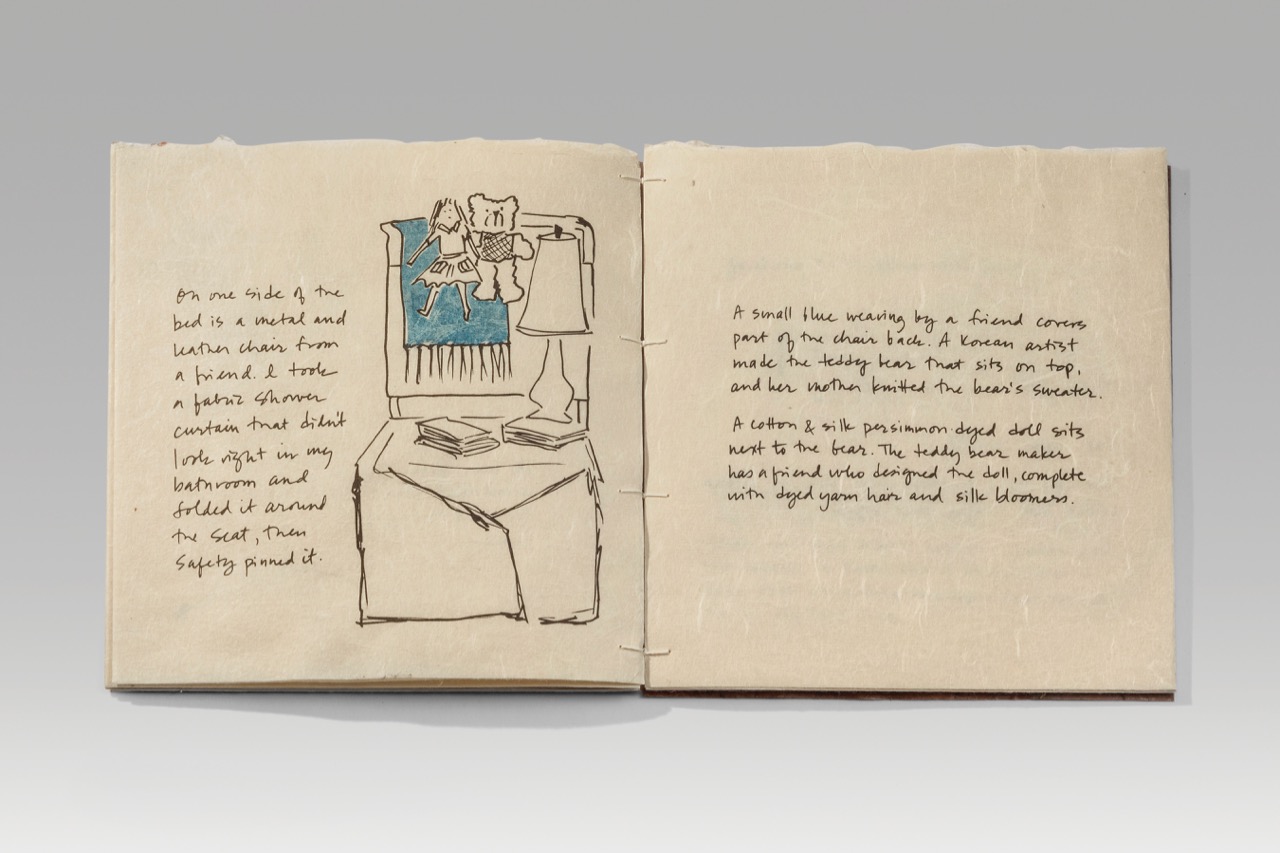
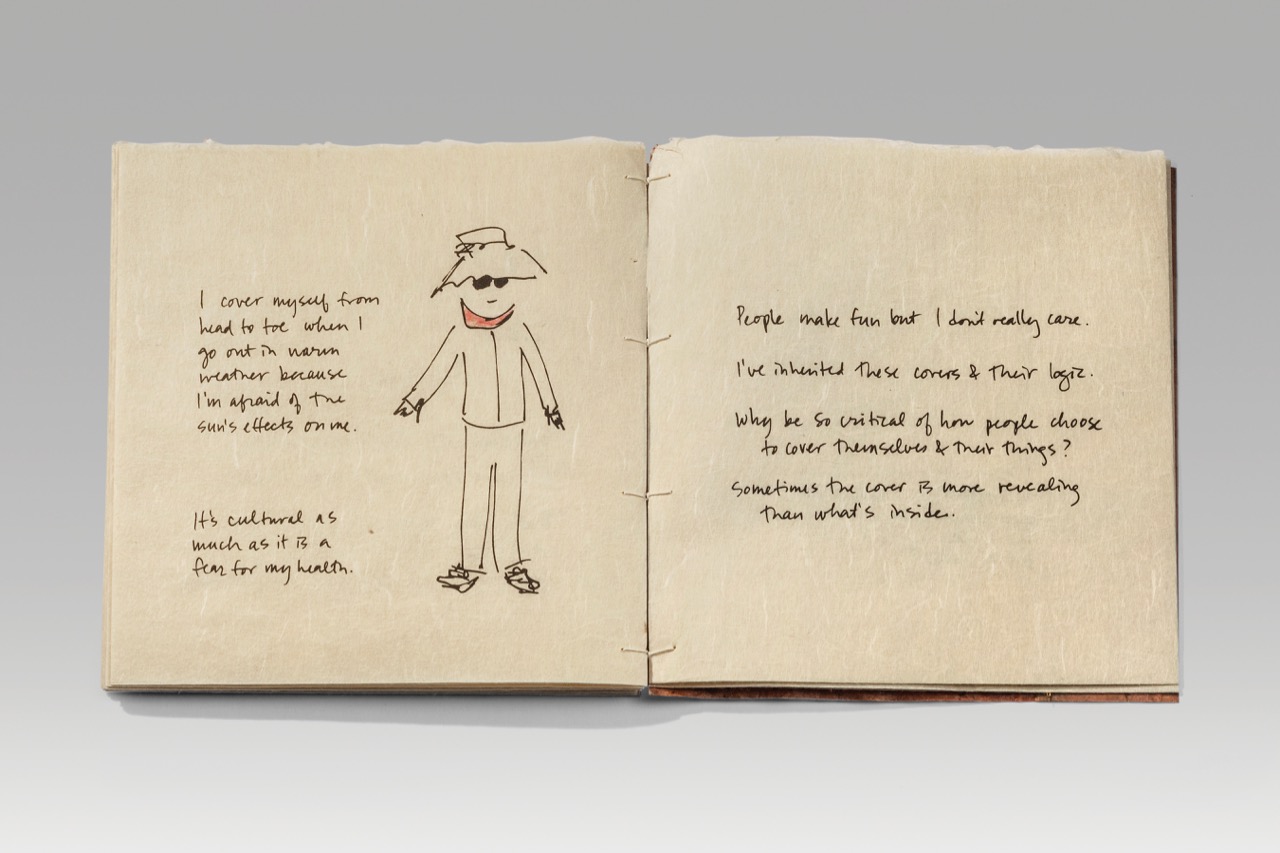
Covered (2019). Natural dyes and inkjet print on handmade paper, thread. 7.5 x 7.45 x 0.5′ closed, 11 pages, variable edition of 10. Collections of Oberlin, Indiana University Wells Library, Iowa State University Parks Library, Los Angeles Public Library, UNC Greensboro Library, Cynthia Sears Collection, private collections.
I wrote and drew Covered after someone noted that a great many surfaces in my home were covered in some kind of way. I live alone and was completely unconscious of this tendency, though sometimes in the past I had noted how my mother used textiles to cover the piano or the air conditioner wall unit.
When I looked at my home with fresh eyes, I was amazed by what I had done. This book is not an exhaustive catalog of all the covers and their purposes, but a window into the objects I chose to place in my home and the stories behind them. Colors and patterns are described but mostly left to the imagination in the accompanying illustrations. From time to time, real color appears as tipped-in handmade paper that I dyed with plant materials. The way I clothe my furniture and belongings is not much different from how I get dressed. Even the covers of the book are coated in persimmon juice: a protective coating rather than a dye that protects from moisture, insects, and dust. Though the edition is variable, each version is made from paper mulberry fibers that I hand processed and pulled in my hanji vat (which itself is a box covered with pond liner to act as waterproofing. From a distance, it looks like black draping).
Savor
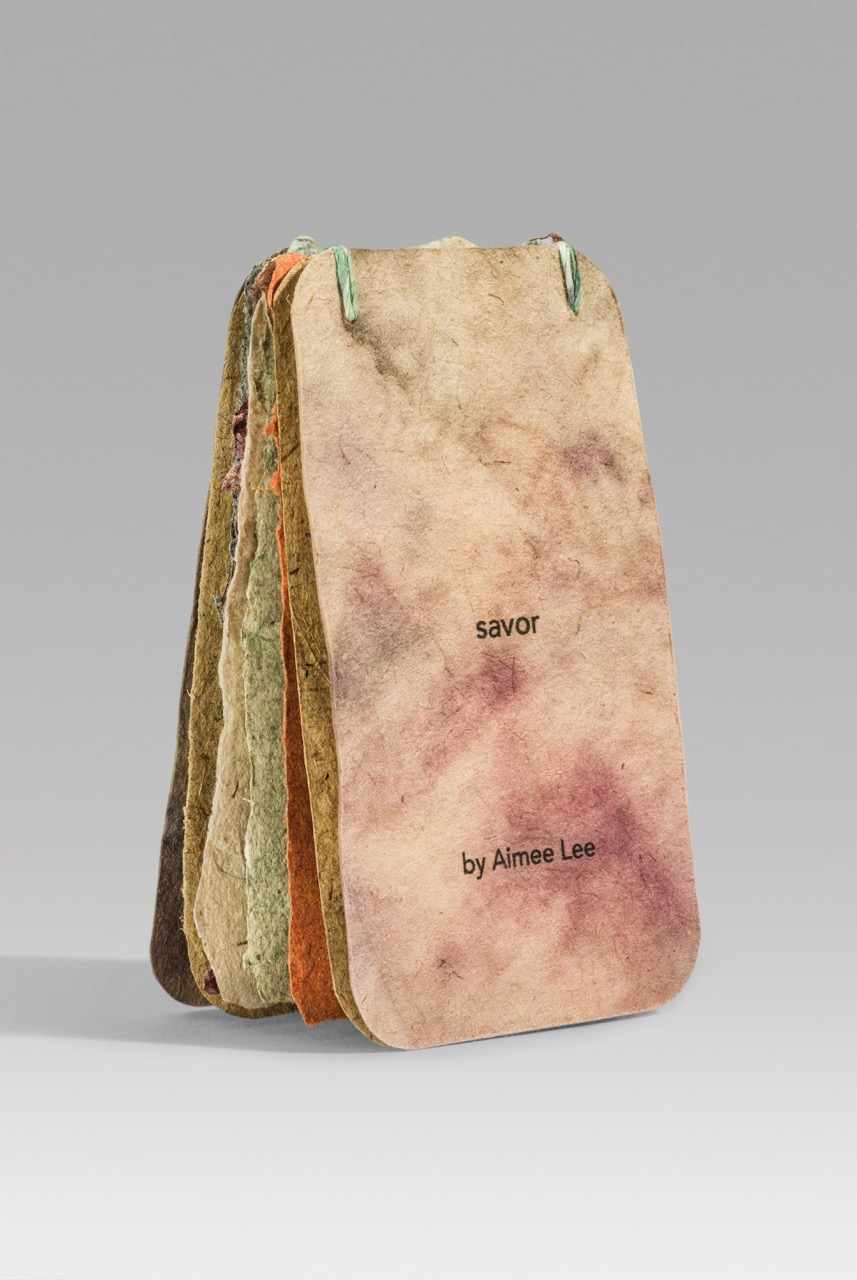
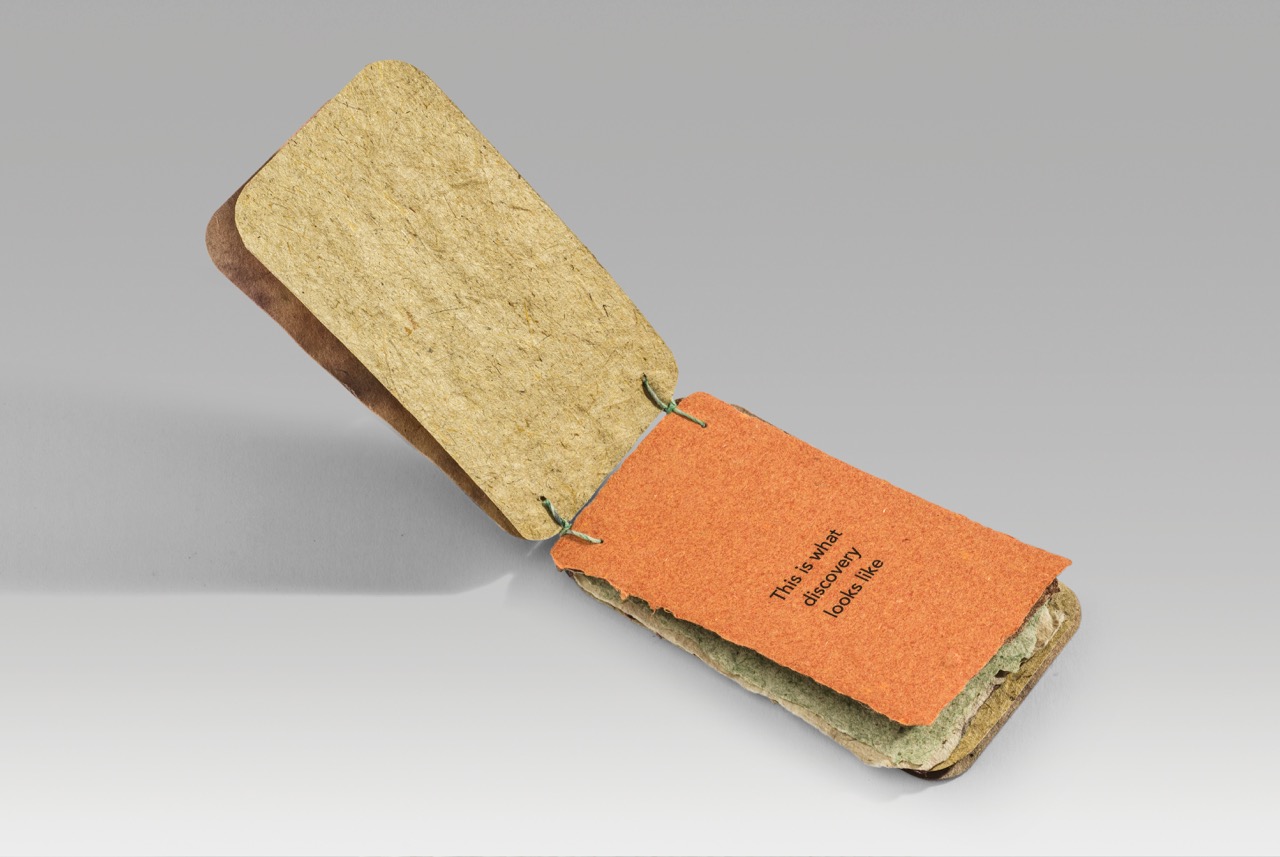
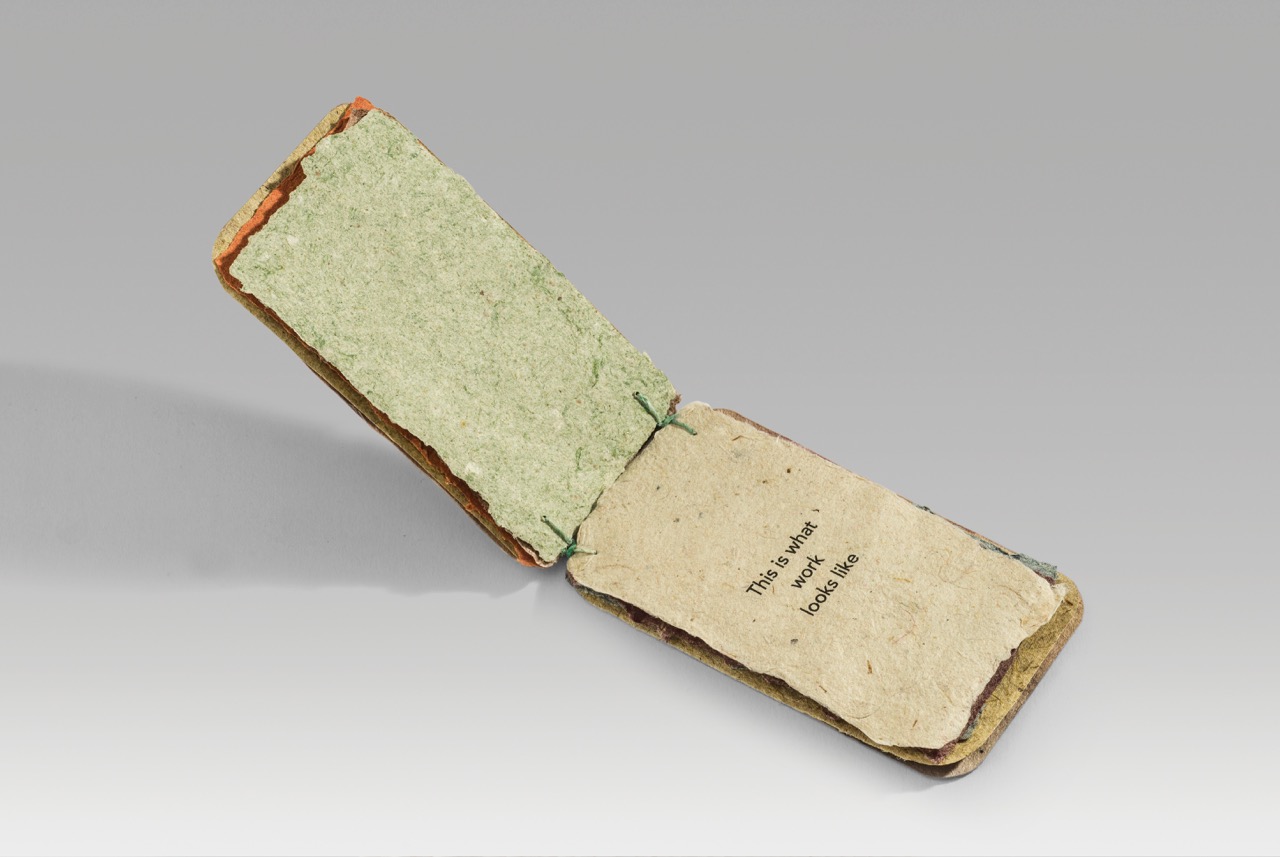
Savor (2018). Inkjet print, ink, and marker on handmade papers and paper thread. 3.75 x 2.25 x 0.5” closed, 7.6” tall open. 8 leaves, 1st edition of 2, 2nd edition of 10. Collections of Baylor University, Cleveland Institute of Art, Idaho State University, Los Angeles Public Library, Oberlin, SCAD, Cynthia Sears, private collections.
This is what discovery looks like
This is what time looks like
This is what joy looks like
This is what work looks like
This is what friendship looks like
This is what a calling looks like
Aimee wrote, inkjet printed (Avenir Medium), and bound this book in Cleveland. Papers are handmade by Velma Bolyard except for endsheets, which Aimee made.
How it Begins
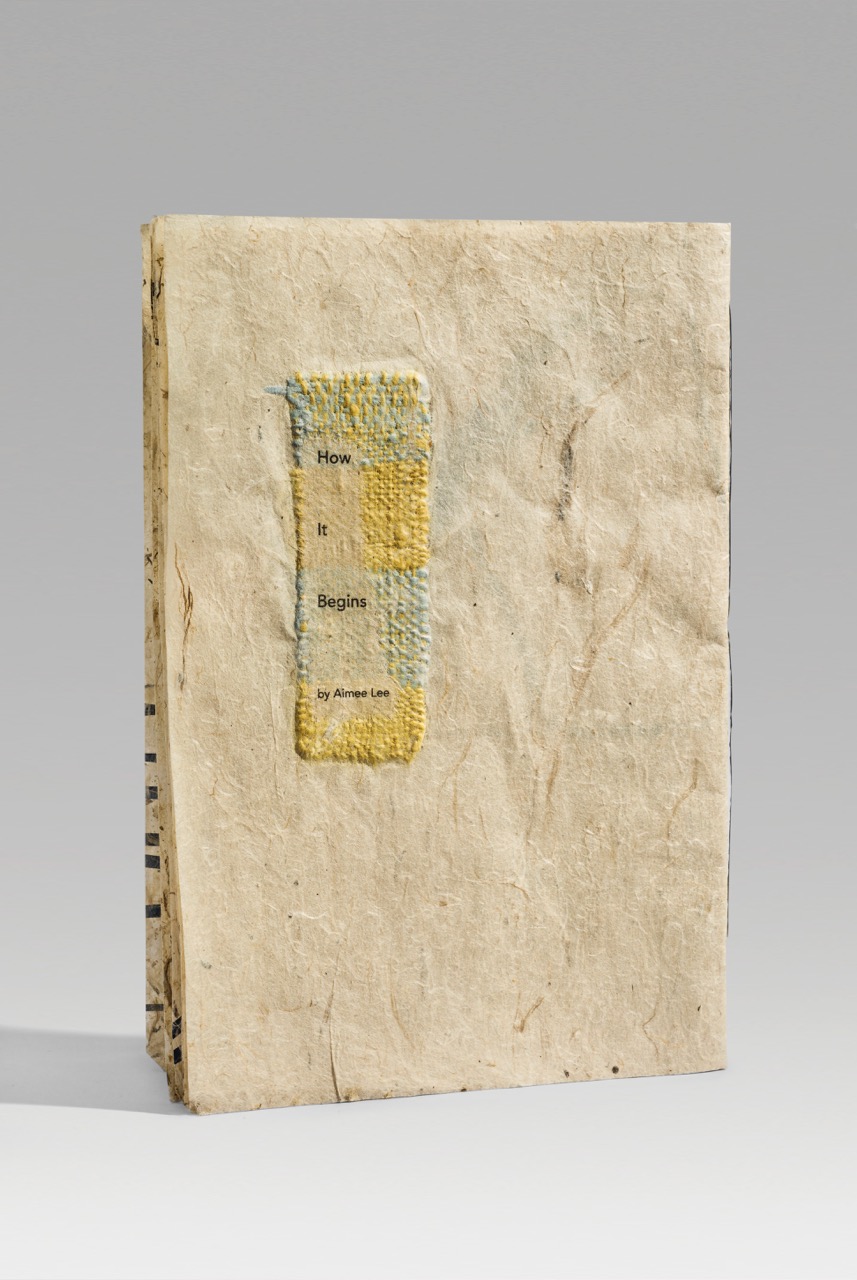
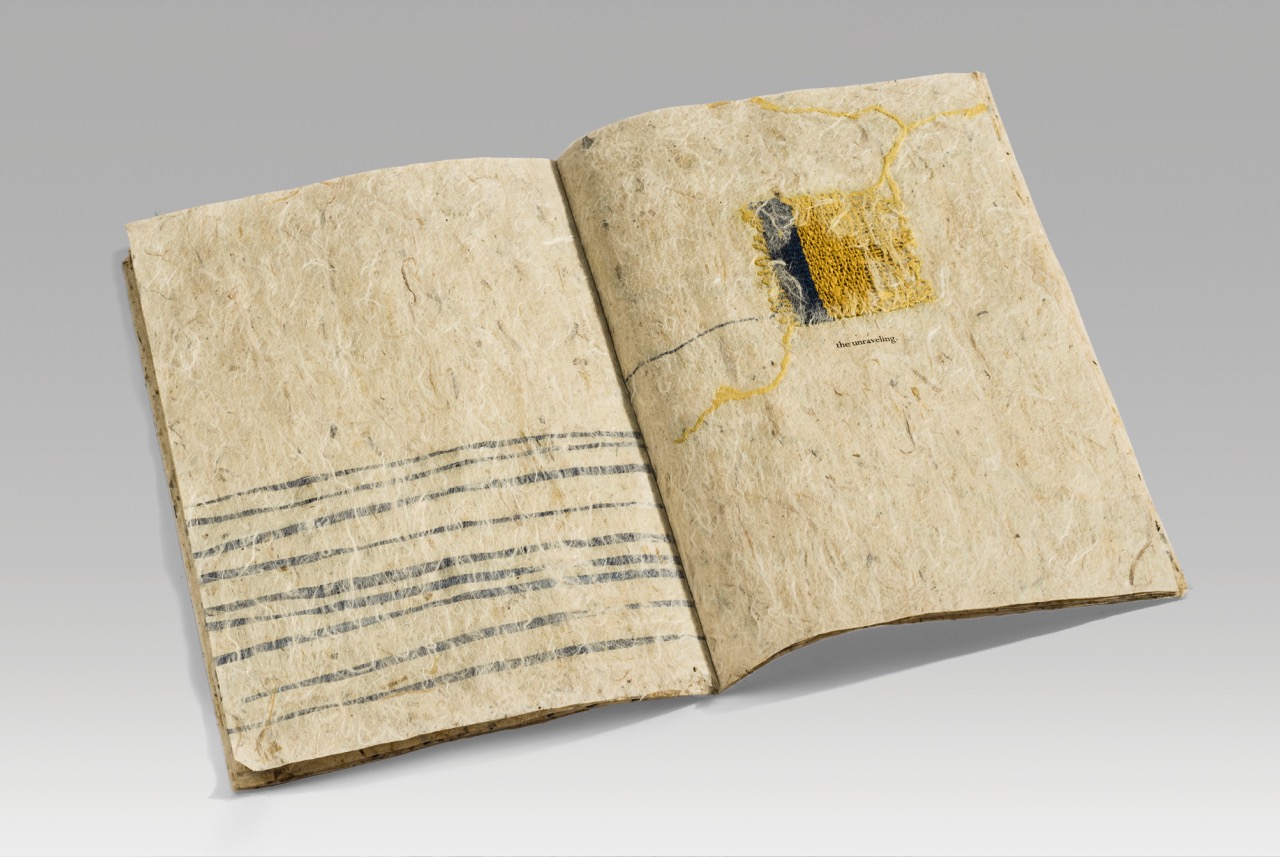
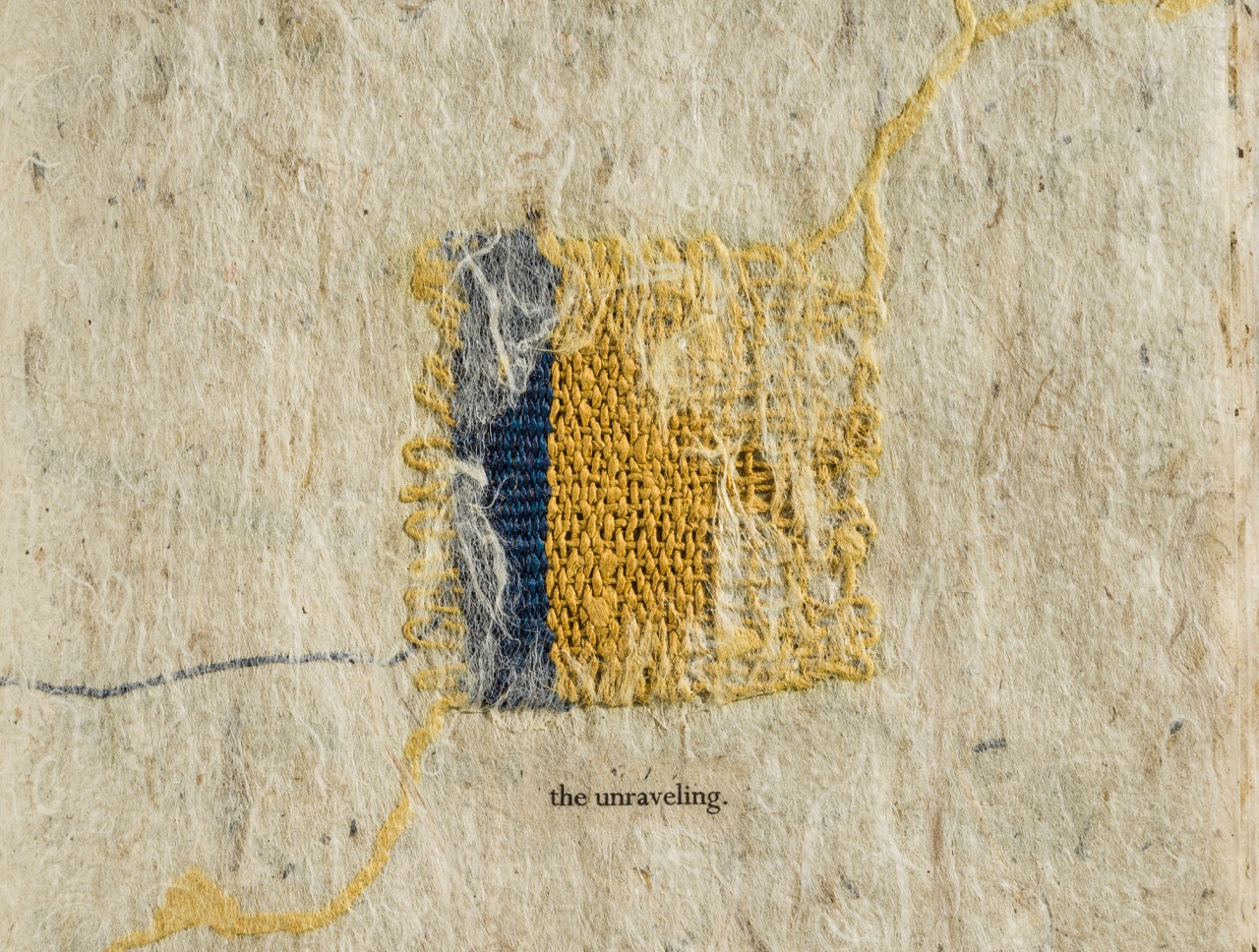
How It Begins (2018). Inkjet on handmade milkweed and mulberry paper embedded with paper threads and woven paper. 9.75 x 6.75 x 0.25′ closed, 10 pages. Scripps College Denison Library collection.
You’ve organized the strands
and wait
for inspiration.
Then,
the unraveling.
Reorganize,
regroup,
consider a change of scale
or a
change of direction
or even
a new path
and begin again.
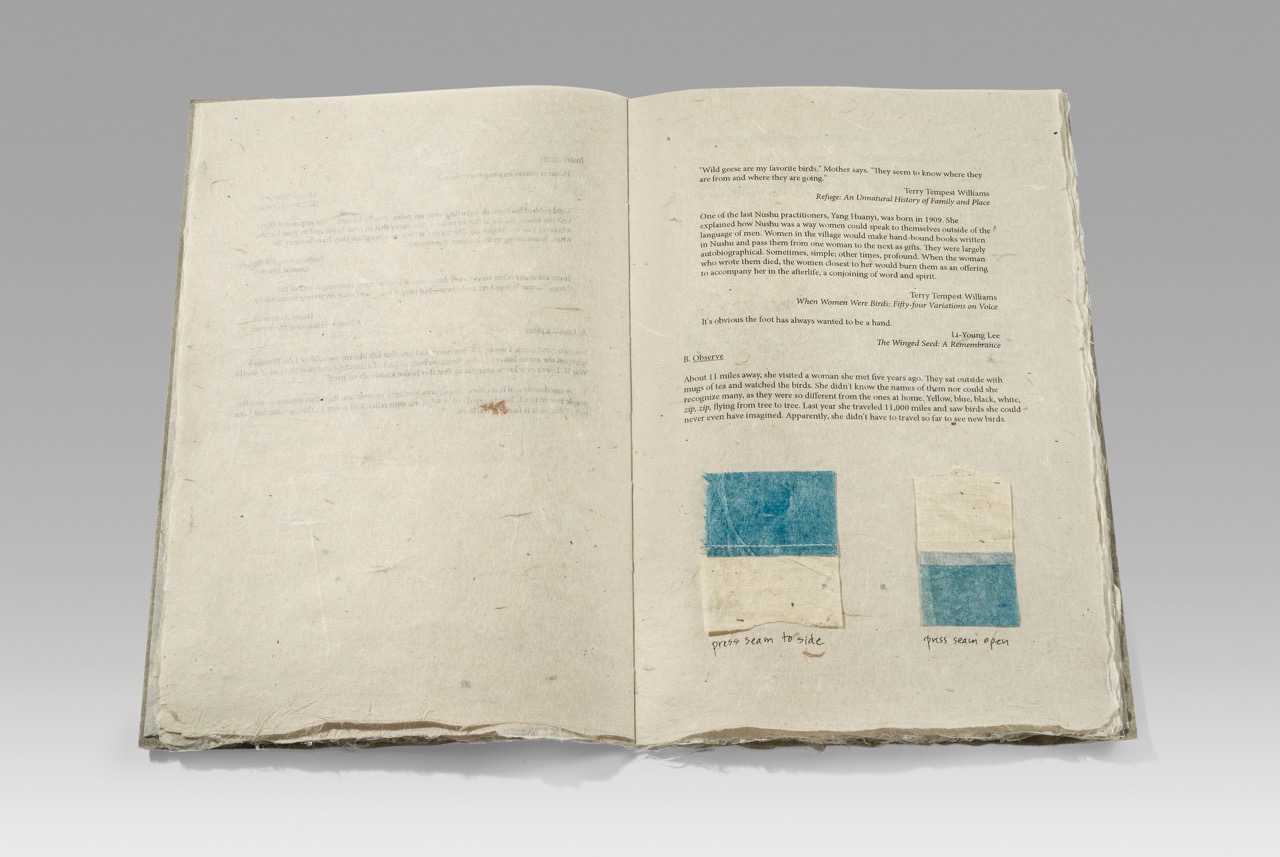
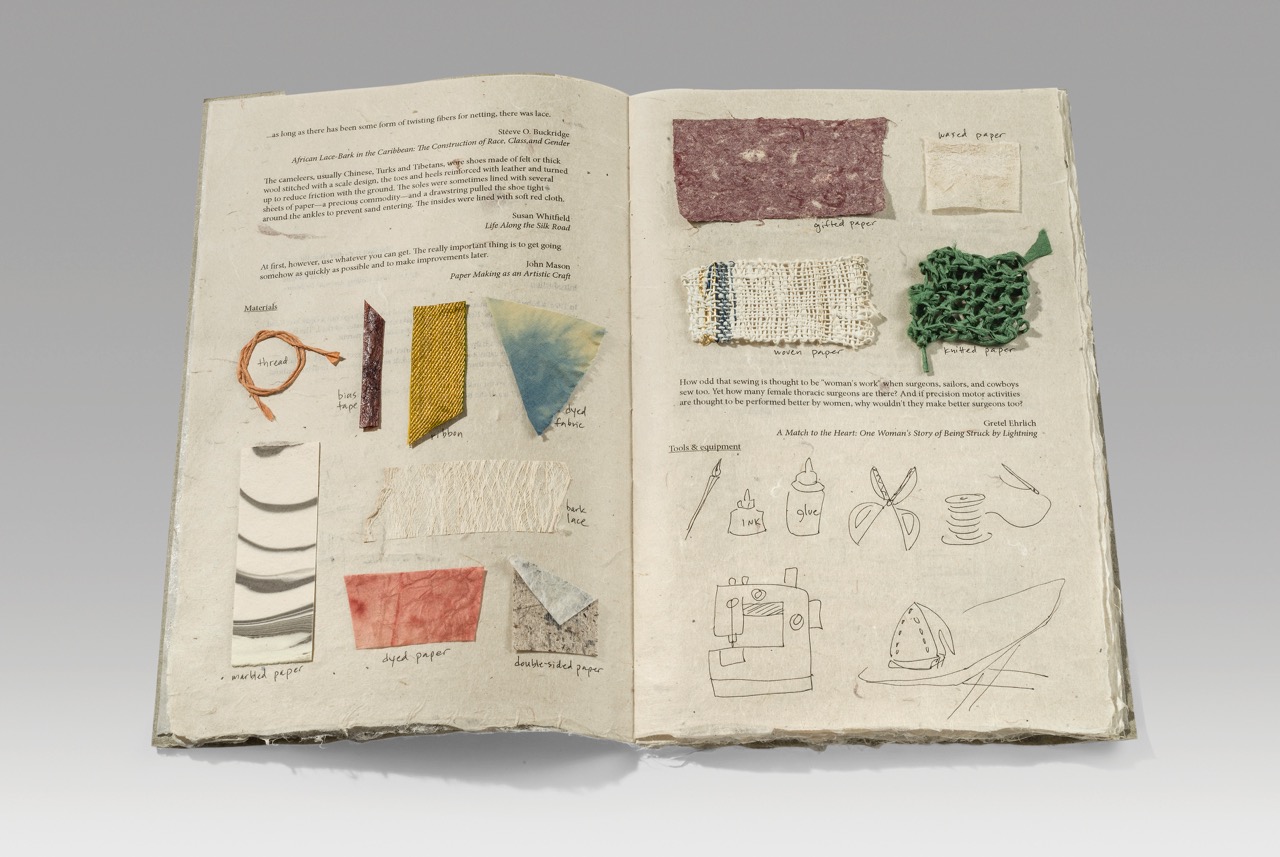
Peculiar & Commonplace
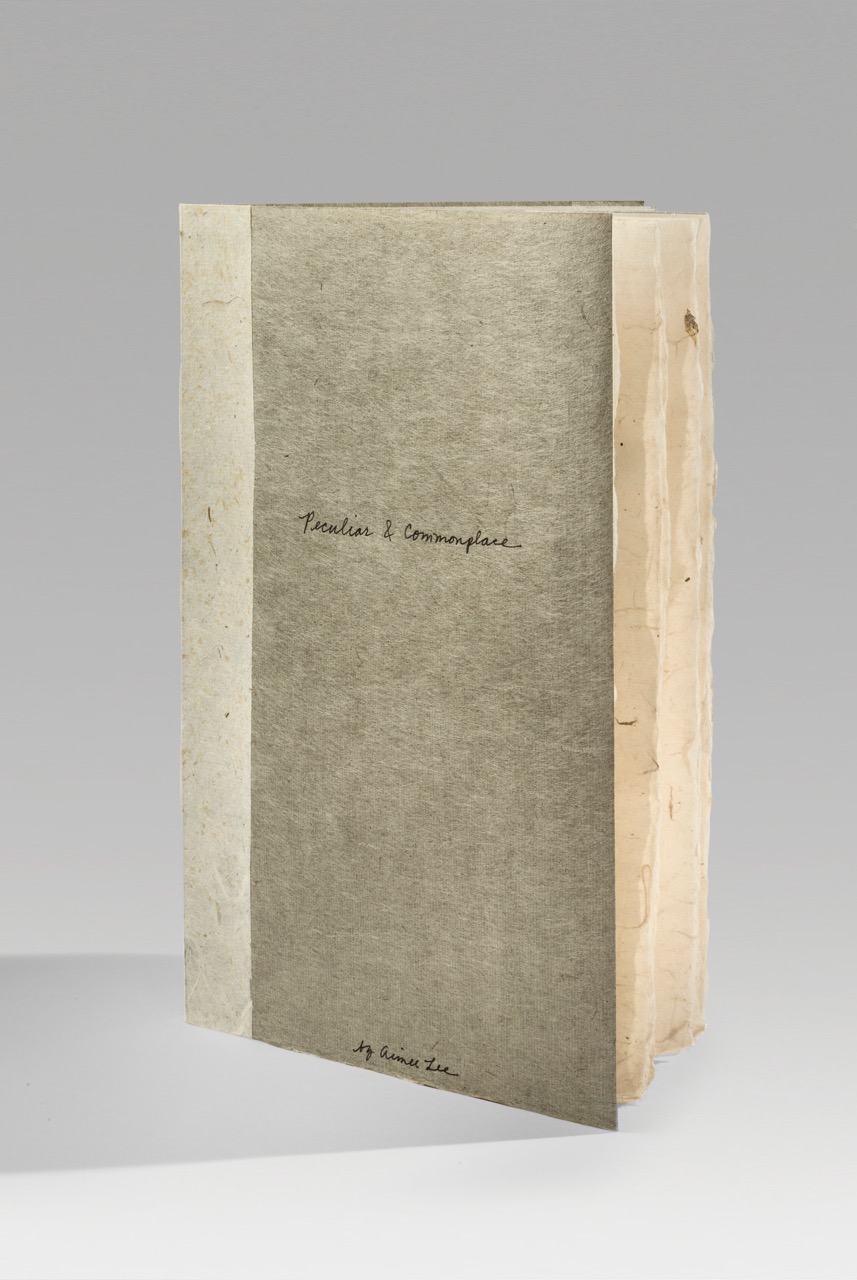
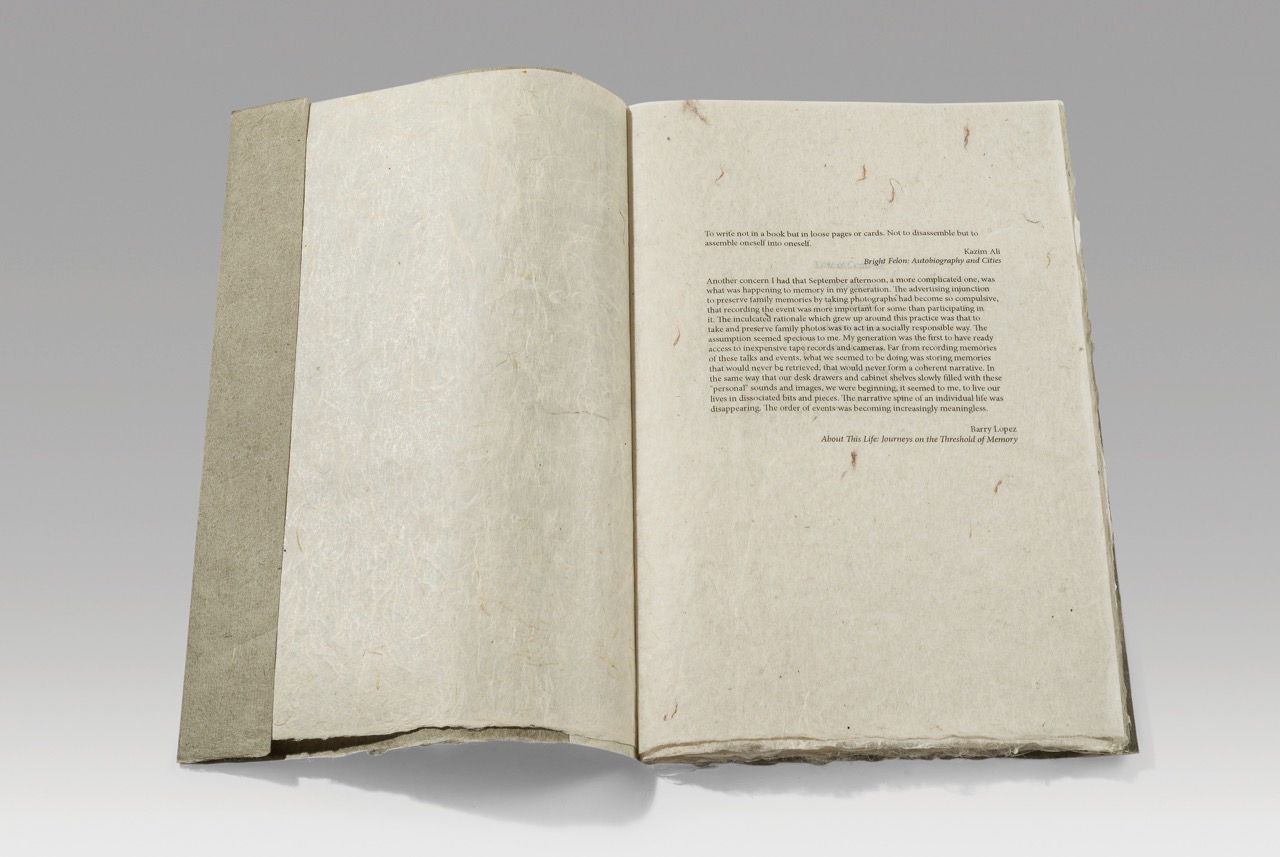
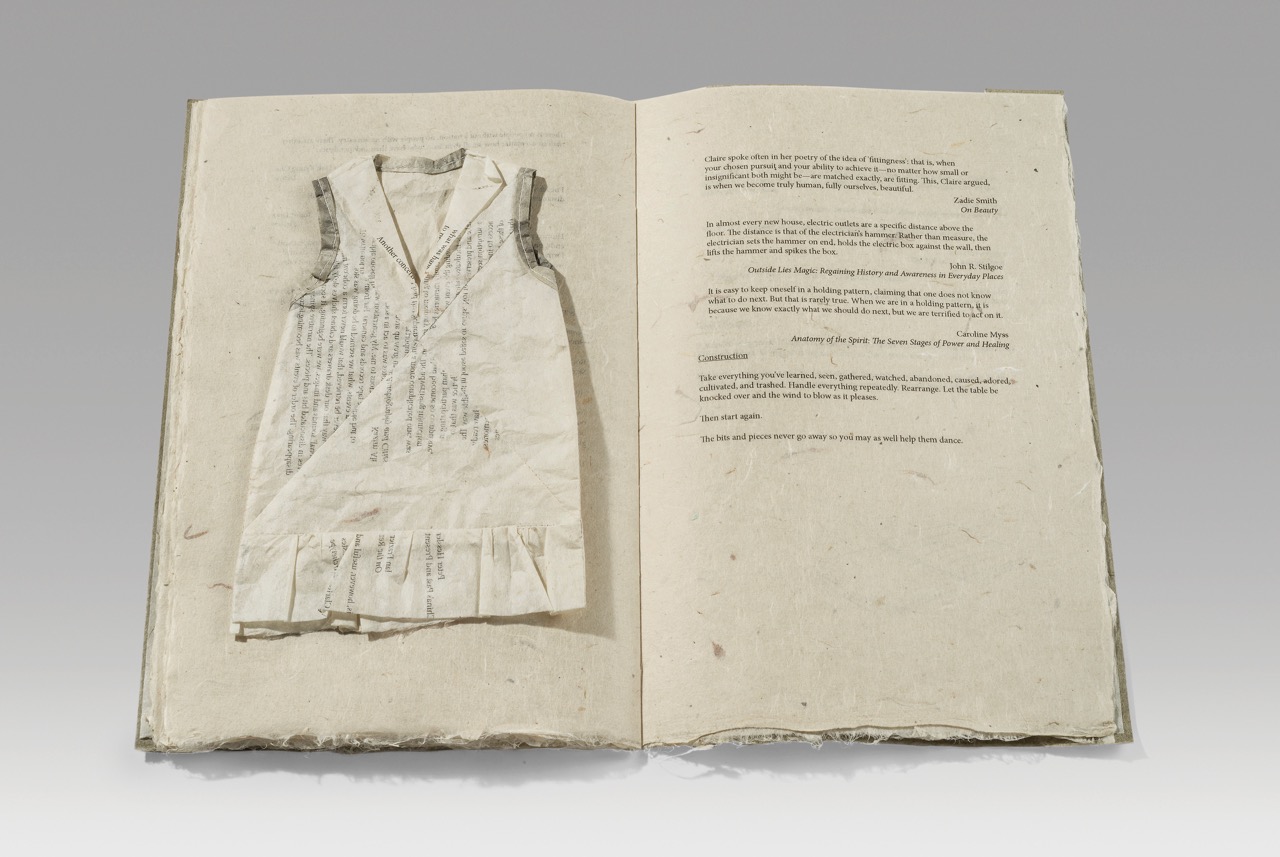
Peculiar & Commonplace (2018). Pen, pencil, and inkjet printing on hanji, handmade papers, thread, manipulated papers and materials (including but not limited to natural dye, beeswax, ink, suminagashi, woven and knitted paper, ribbon, and fabric). 11.5 x 7.5 x 0.75′ closed. 14 pages. Variable edition of 10. Collections of Kenyon, Oberlin, Metropolitan Museum of Art Watson Library, SCAD Atlanta, UT San Antonio, UW-Madison Kohler Library, Stanford, UCLA, Yale, Cynthia Sears.
This book combs through observations from various people’s lives, and pairs these stories with quotations from books and media that I have read or consumed for almost 15 years. These quotes are included in the spirit of commonplace books, and reflect my lifelong practices (and/or obsession) with compiling inspiration, organization, and filing.
An omnipresent narrative accompanies text through drawings and objects. It mimics an instruction manual on how to sew a paper garment, which appears at the end, constructed from discarded prints accumulated in the making of the book. These tip-ins balance the tension and anxiety of the stories; these sewing scraps attempt to be neutral, a safe location for the reader to place their own biographies.
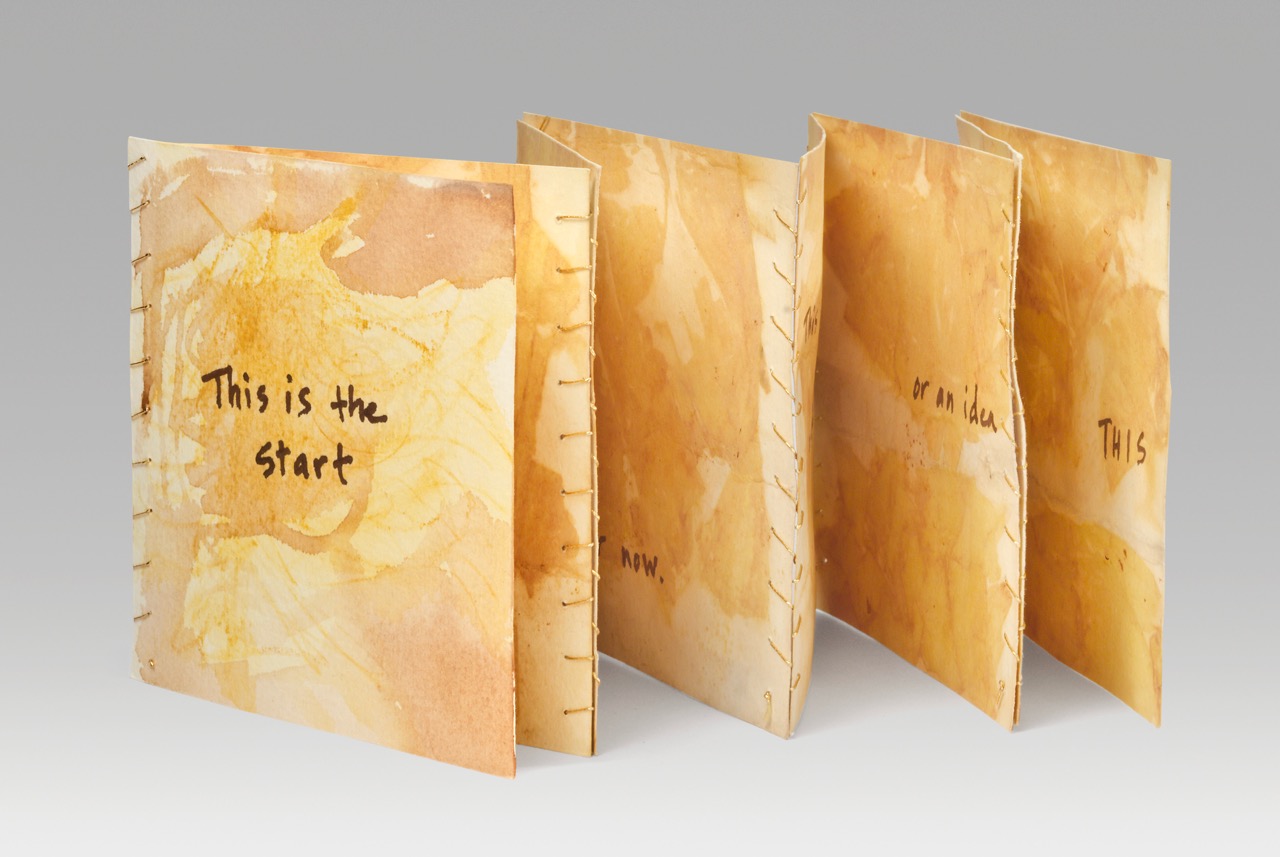
This is the start
This is the start (2017). Ink, pencil, and onion skins on paper, gold thread. 4 x 4 x 0.75′ closed, 4 x 32.5′ open. Baylor University Library Special Collections.
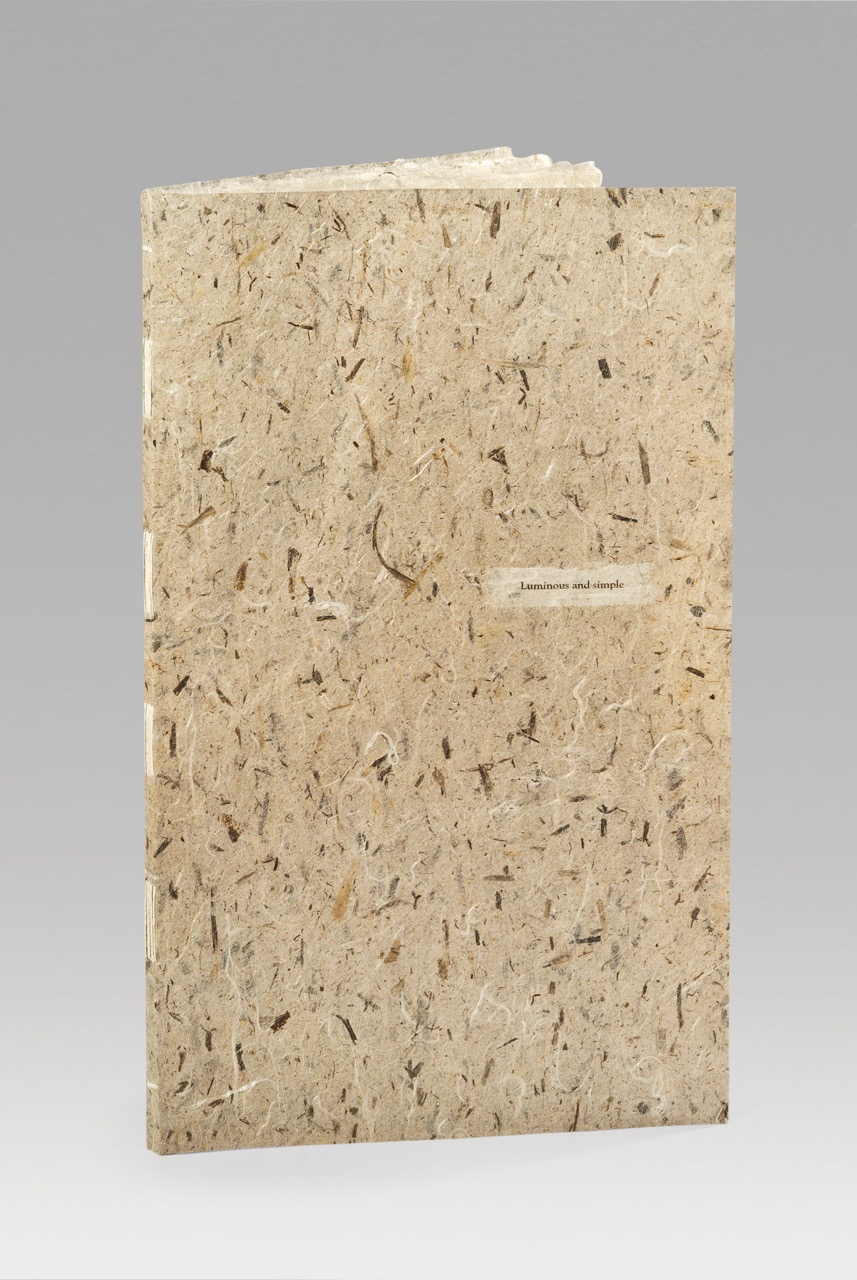
Luminous and simple
Luminous and simple (2017). Inkjet prints on handmade milkweed paper with varied inclusions, sewn with paper thread. 14 x 8 x 0.5′ closed, 16.25′ wide open. 14 leaves. UC Riverside Rivera Library collection.
From plants, we can ply rope
we can weave cloth
and make lace
From caterpillars,
we can make an entire culture,
learn to read and write.
We can paint and clothe ourselves
all over again
We can build hierarchies
that chart a new demise.
With genes and time, a worm can fly in the sky
By our will, they can travel over sea and land
We could leave them to live and fly again
We can return to luminous strands
of silky stalks, done with their yearly labor
Monarchs have hatched and departed.
What remains grays, stands, grows brittle and thin
What remains blackens and falls
From these windfalls we could ply string,
weave cloth,
and make paper
We could live simply, encased in threads full of light
We could.
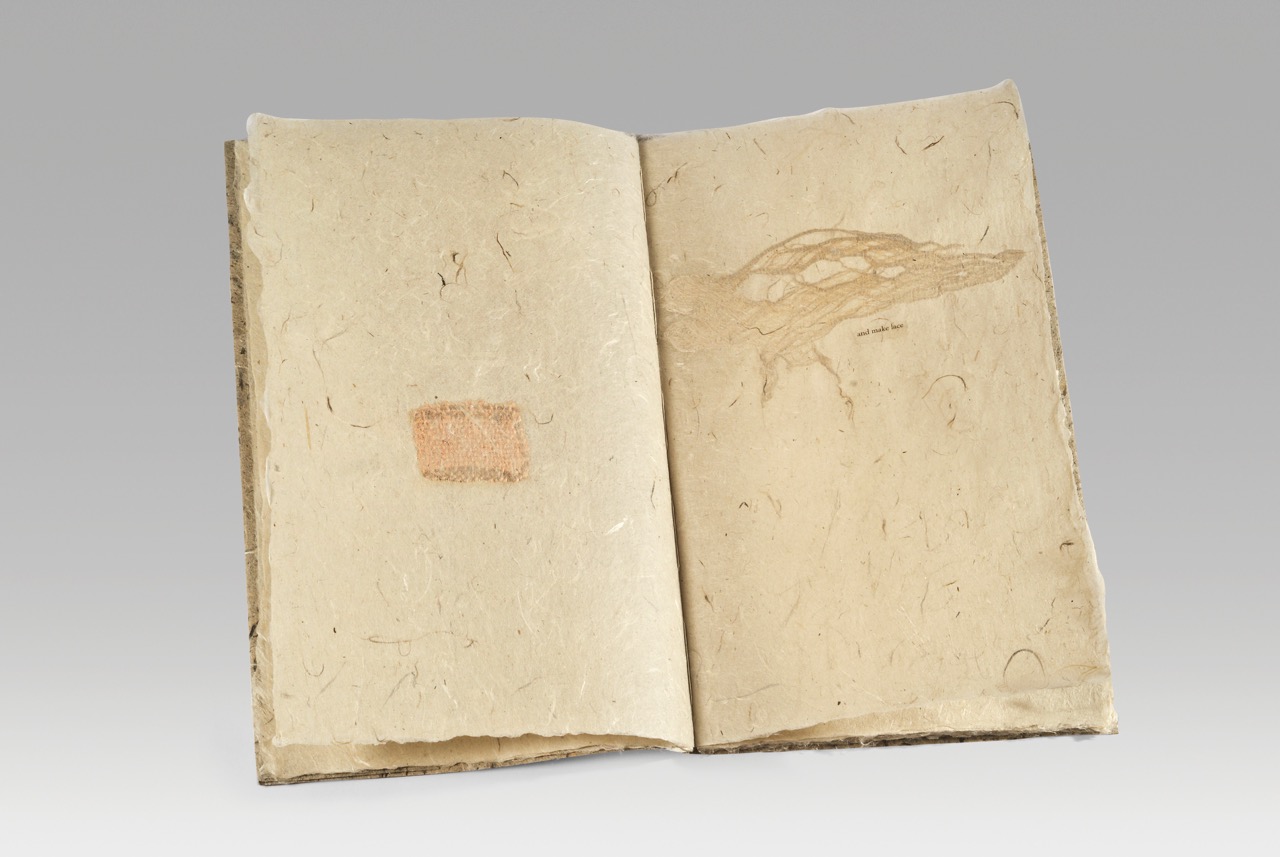
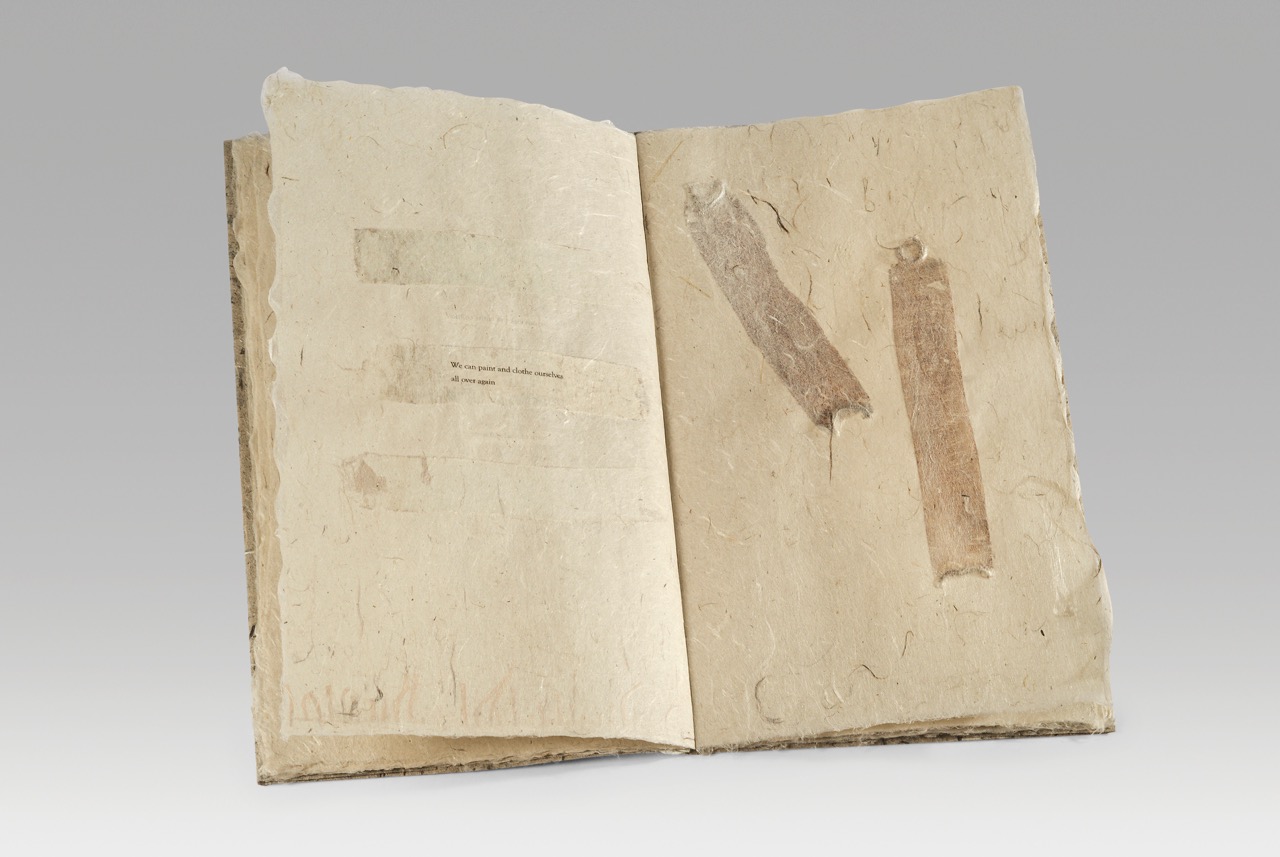
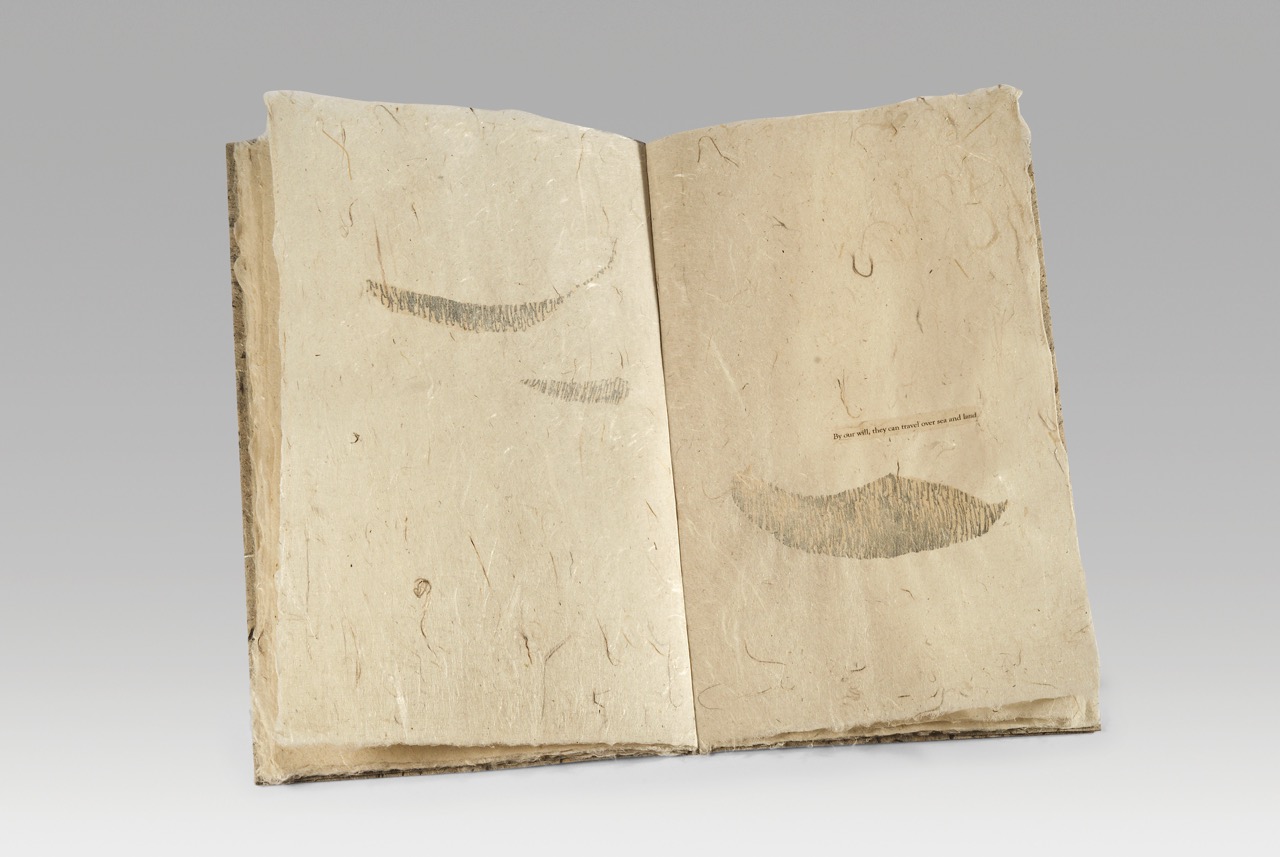
either way
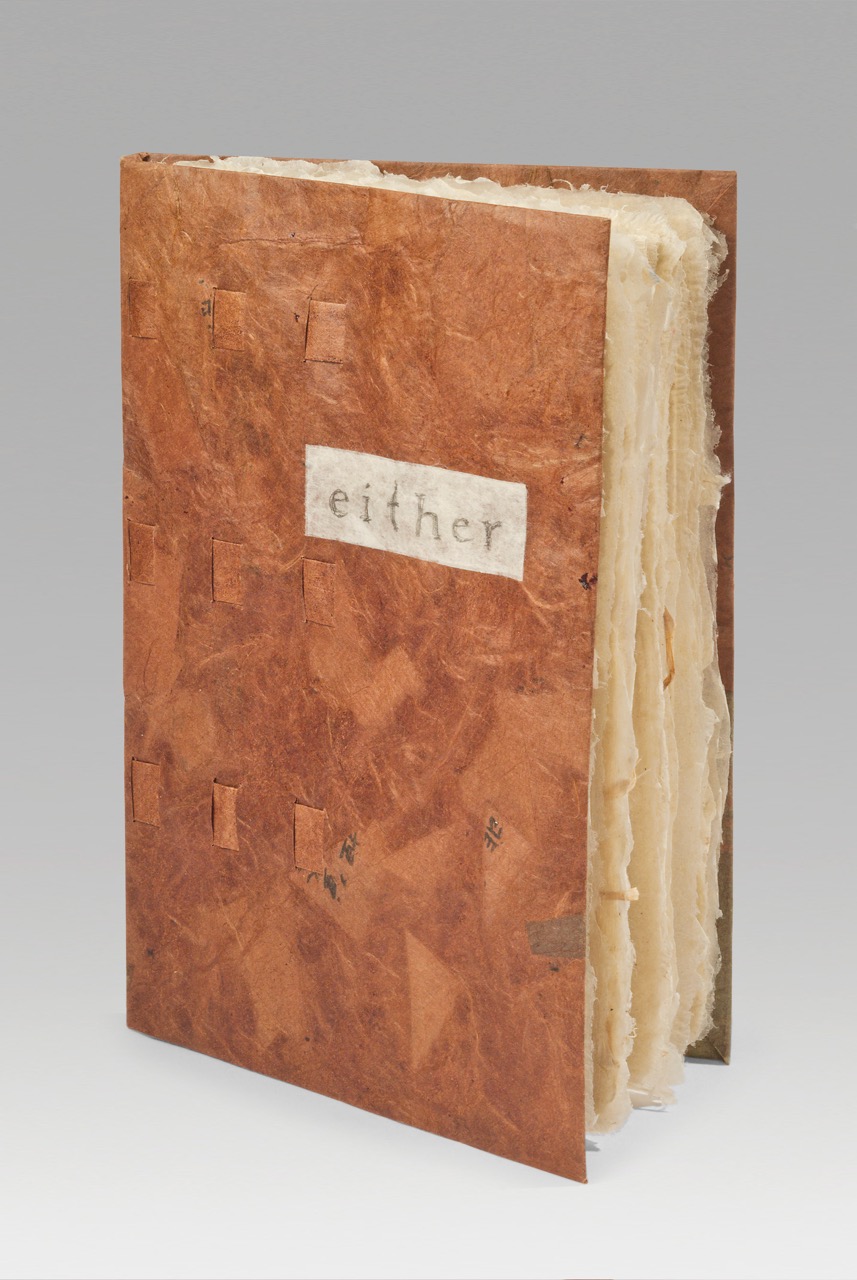
Either way (2017). Abaca and mulberry paper with persimmon juice, pencil, beeswax, paper thread and yarn. 9 x 5.75 x 0.5′ closed, 12′ wide open. Wesleyan Olin Library Special Collections.
This book can be read in either direction, referring to the different ways that cultures read: the binding is a Western codex but the title pages refer to Asian books that are read with the bound spine on the right side. It also asks the reader more overtly to impose and infer meaning through objects embedded in and emerging from the pages, as there is no other text beyond the covers. The covers themselves are made from layers of papers made from paper scraps that include fragments of the text of the oldest extant book printed with moveable type, Jikji, coated many times with a favorite Korean finish of persimmon juice.
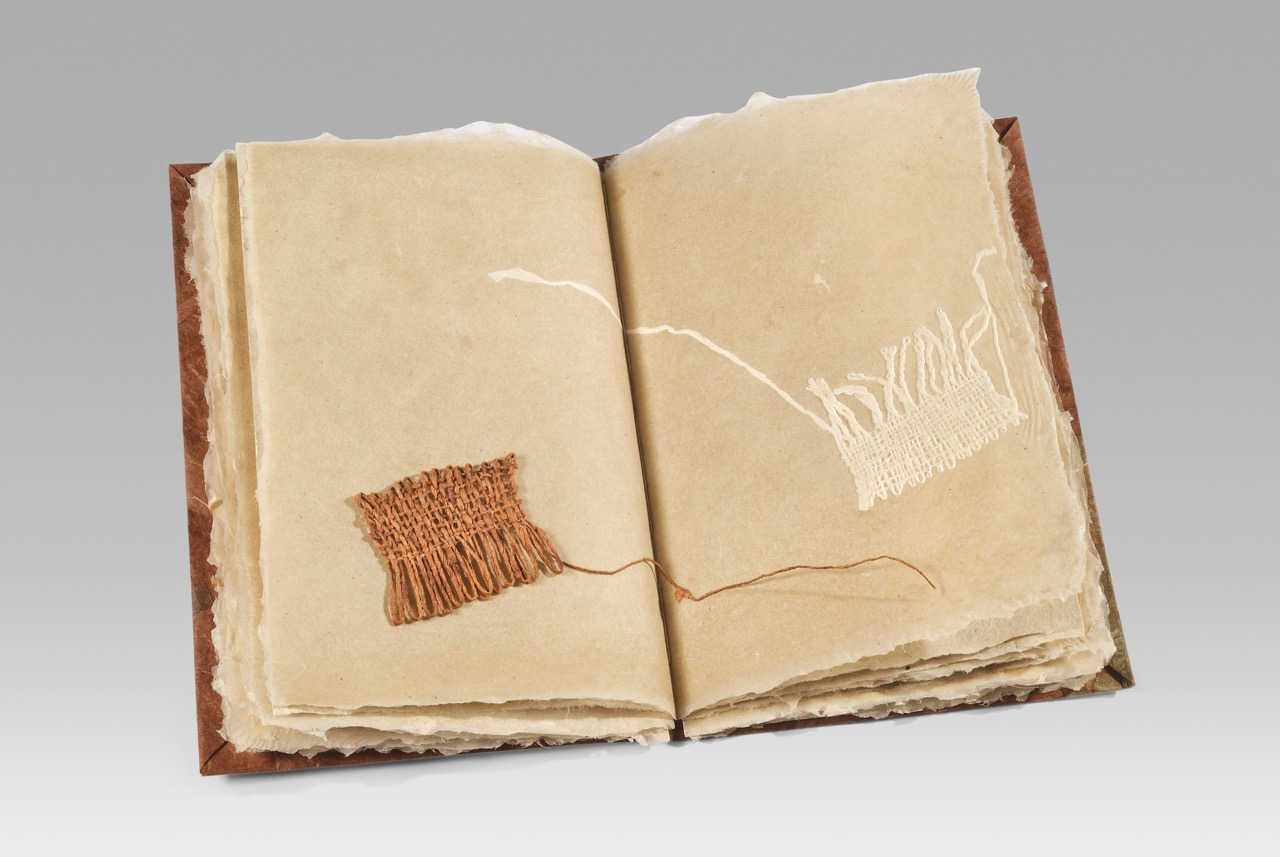
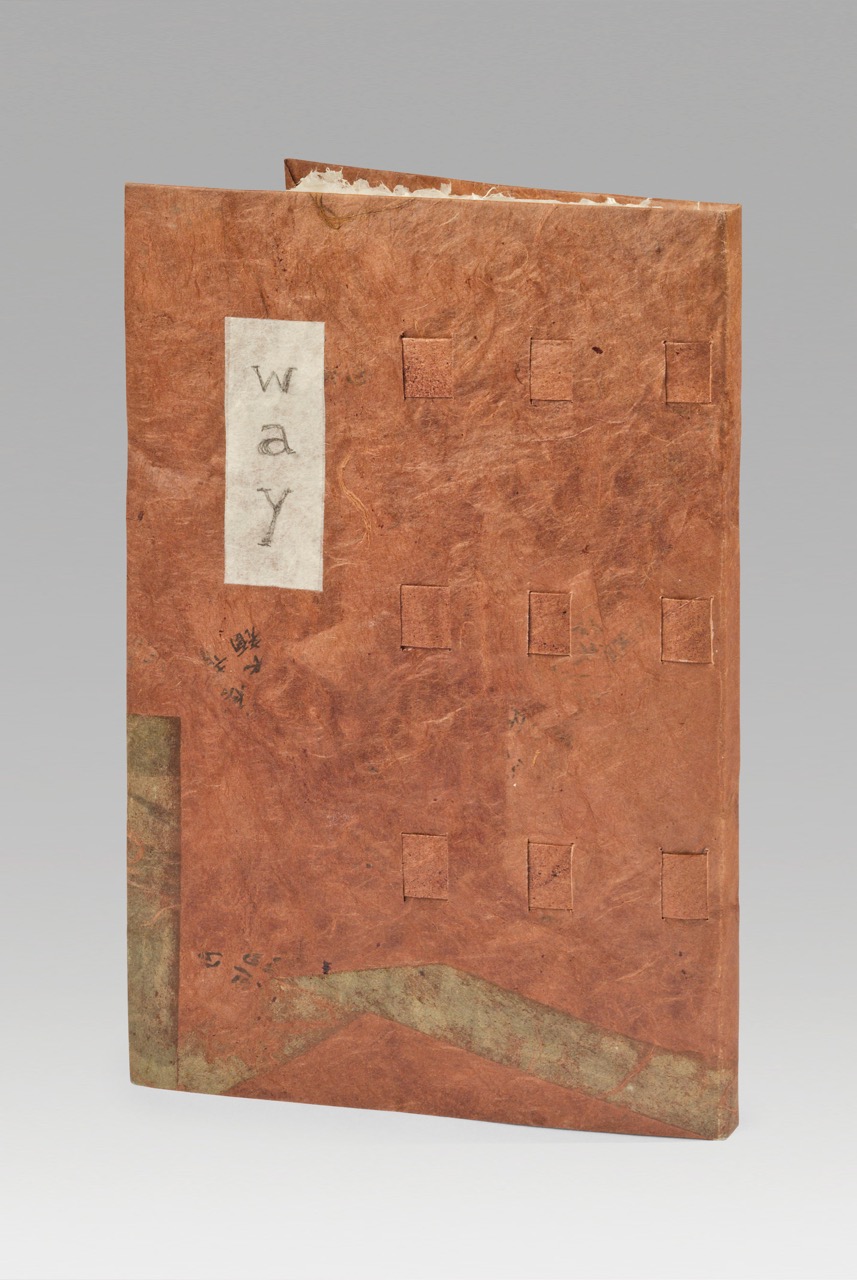
Weight of the moment
Weight of the moment (2016). Inkjet and calligraphy ink on handmade mulberry paper, paper thread, miscanthus. 12 x 8 x 1.5′. Baylor University Library Special Collections.
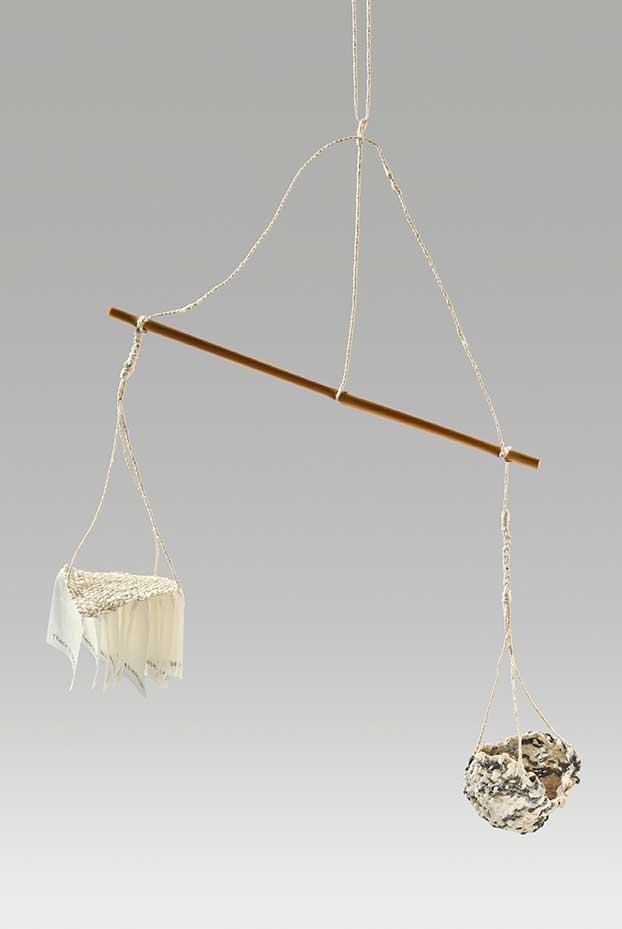
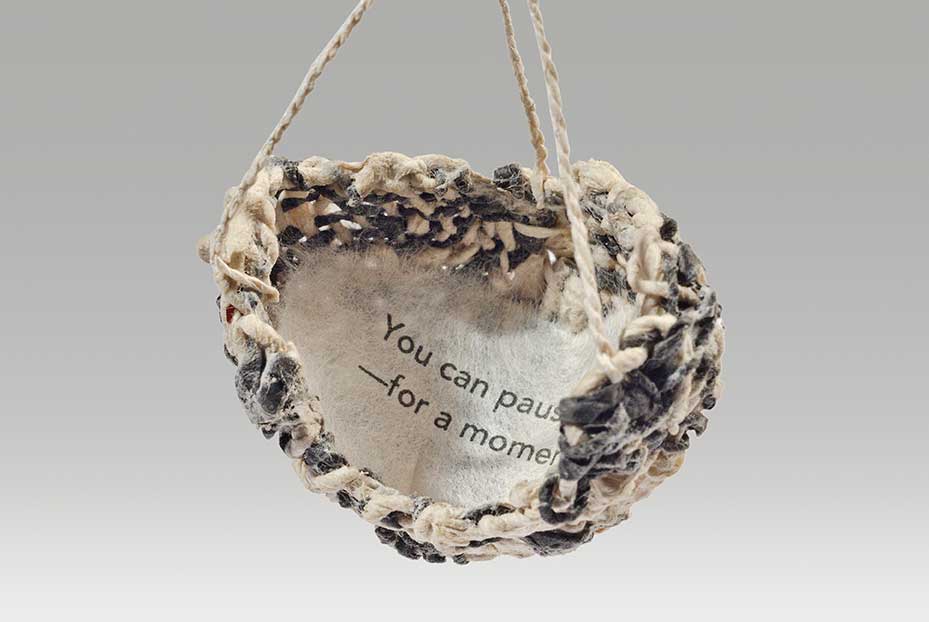
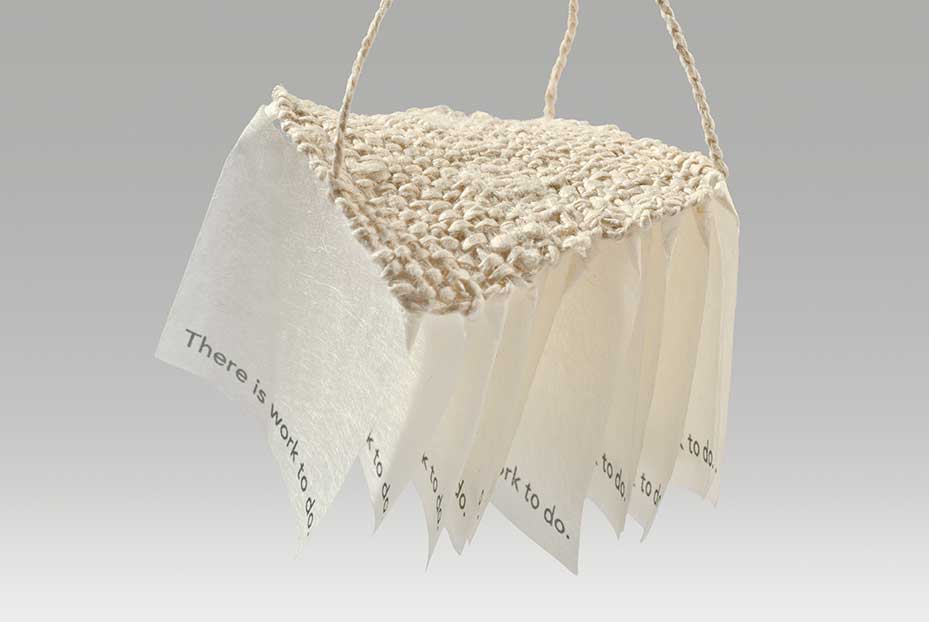
Hiruste #9
Hirsute #9 (2016). Natural dyes, pencil, and ink on assorted handmade papers, paper thread. 9 x 5.5 x 1.6′ closed. Private collection.
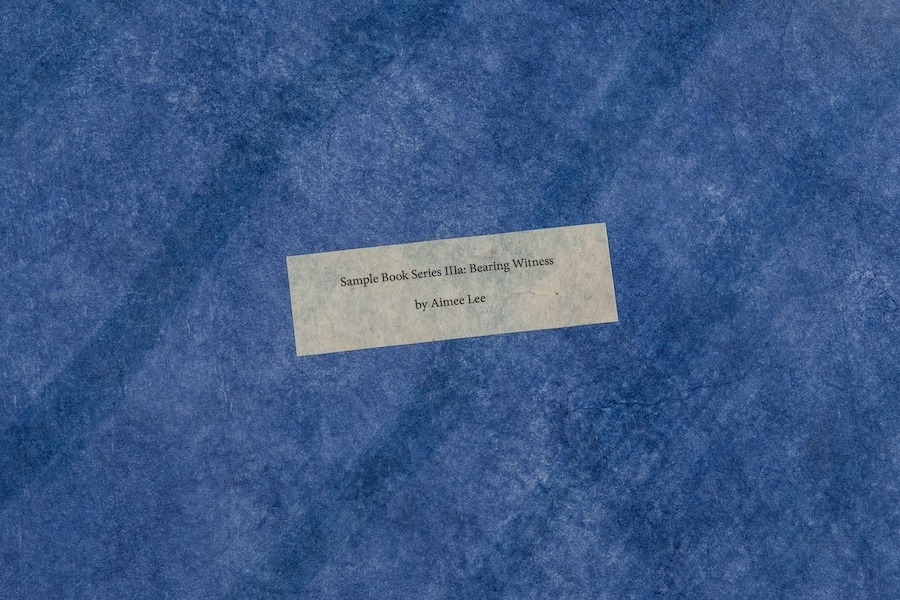
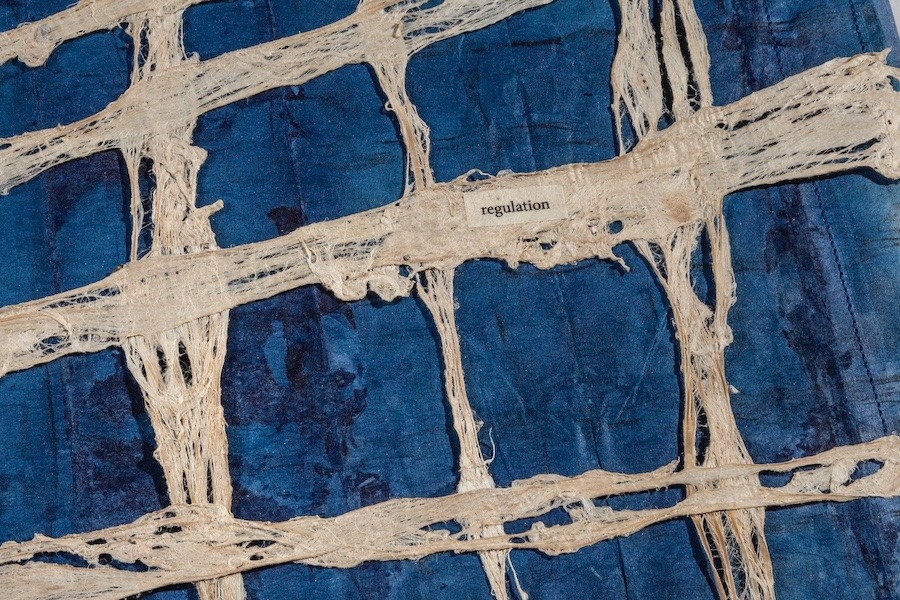
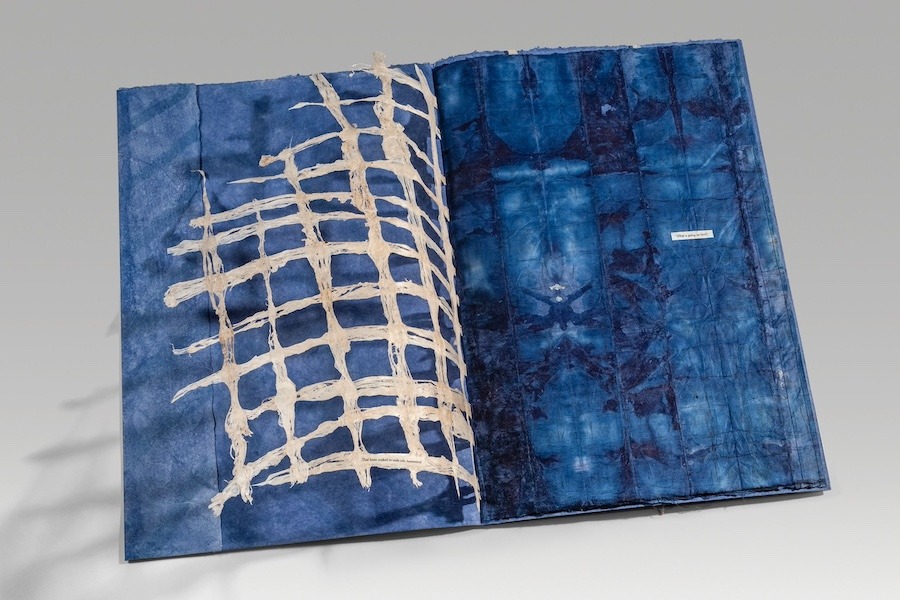
Sample Book Series III (a: Bearing witness; b: you can replenish yourself)
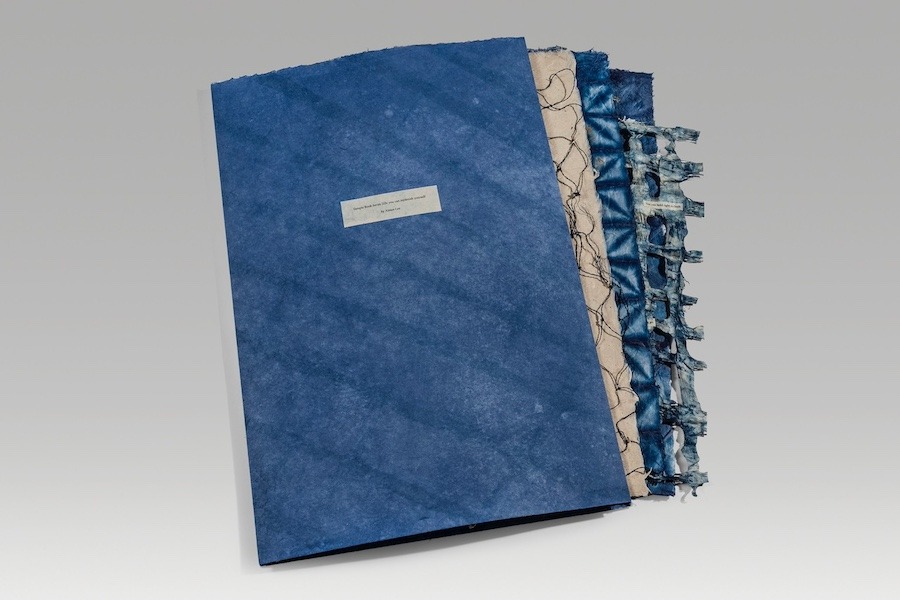
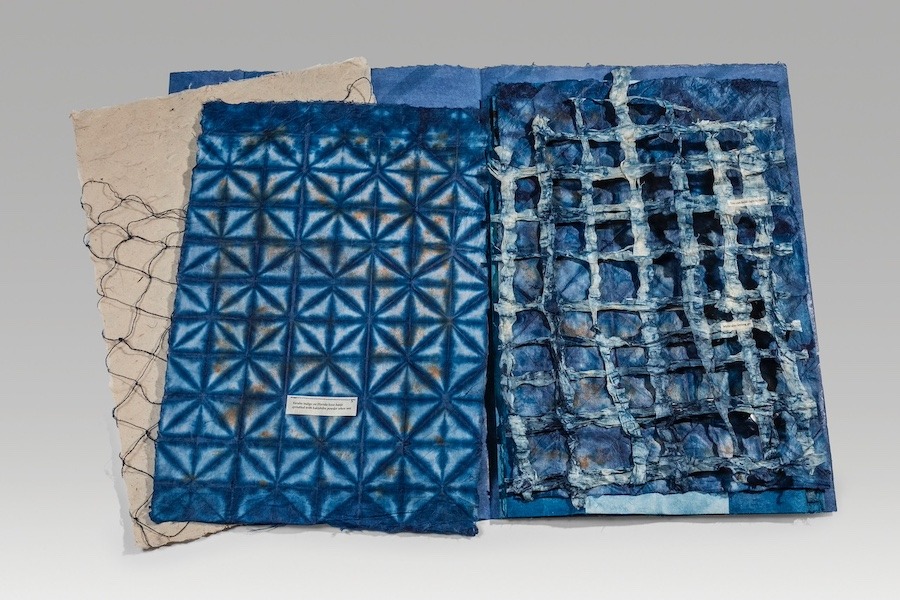
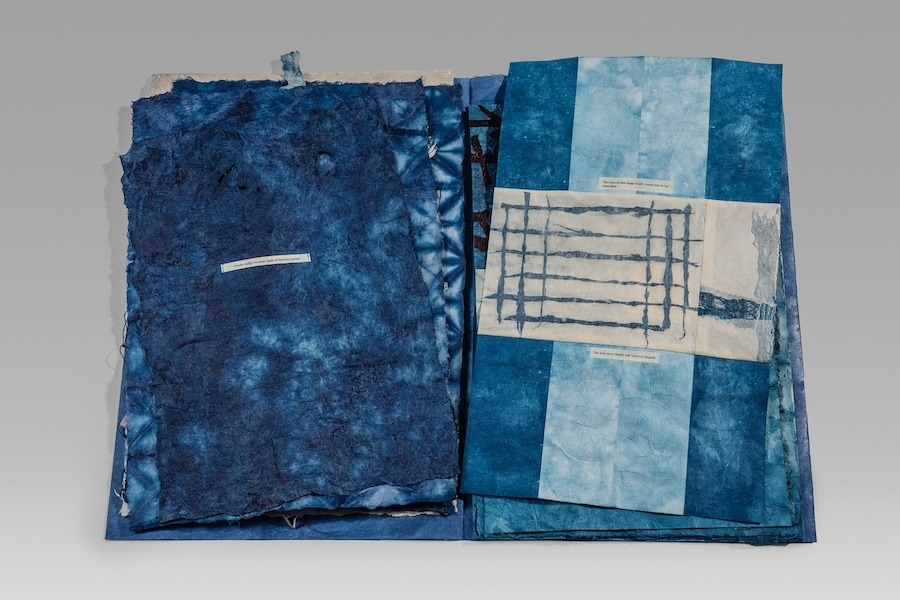
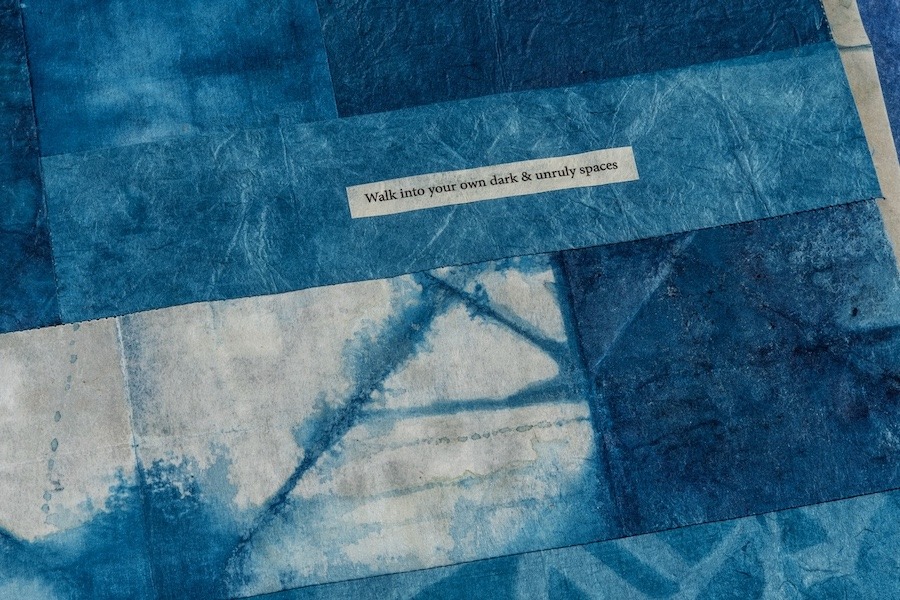
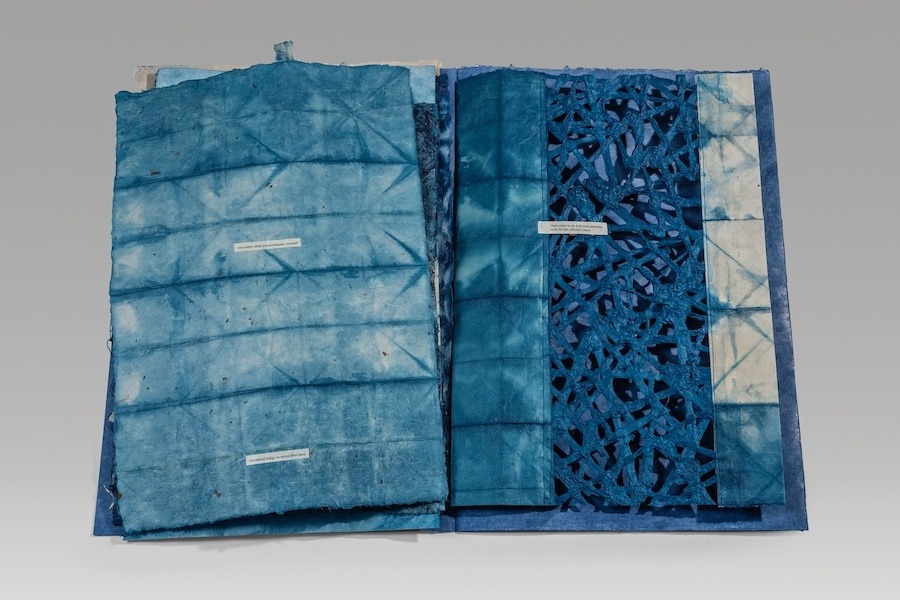
Ink, natural dyes, beeswax on hanji, abaca paper & thread, and paper mulberry bark. 24.25 x 16 x 1.5” closed; dos-à-dos. One of a kind.
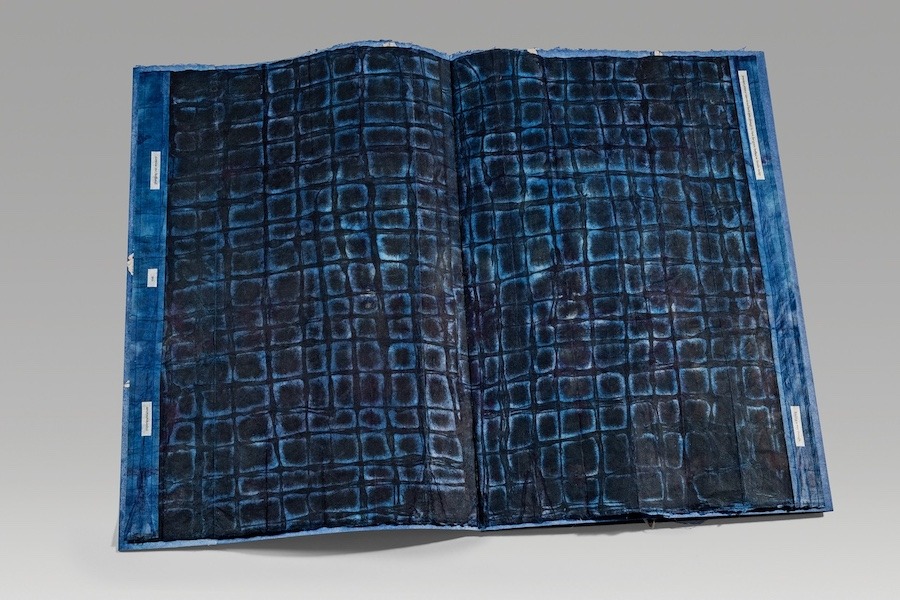
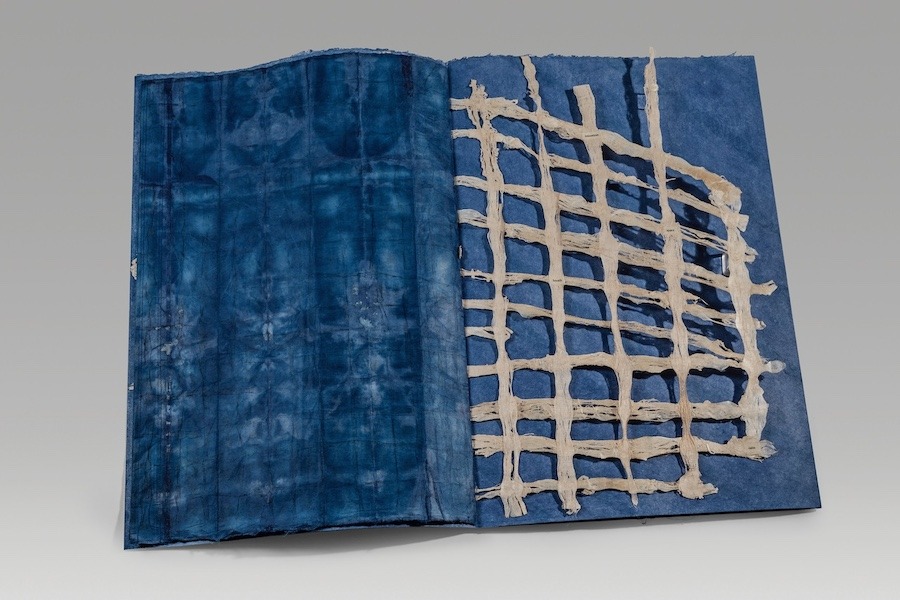
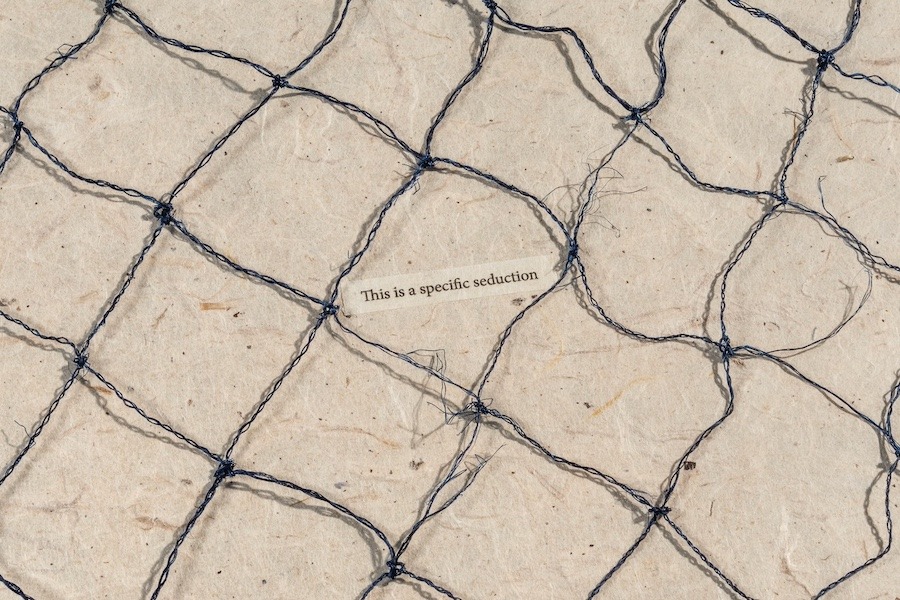
This dos-à-dos is the third in a series of sample book artists’ books. Aimee wrote the text and printed it via inkjet. She performed all of the surface treatments for the handmade papers and fibers, which include different types of indigo. Gasali Adeyemo made the Yoruba indigo vats in Cleveland in June 2024, which impart a different blue from the pre-reduced vat that Aimee set up at the Kalamazoo Book Arts Center during an NEA-funded residency in October 2024. Each volume of this series explores a different technique by folding narrative into technical experiments; here, indigo’s relationship with hanji and related fibers.
This book is inspired by the scale and color of lace sample books in St. Gallen, Switzerland, created by Iklé Frères and Co. Chemical in the first three decades of the 20th century. Aimee saw these books at the Threads of Power: Lace from the Textilmuseum St. Gallen exhibition at the Bard Graduate Center’s Gallery in New York City in December 2022. Made at the close of a tumultuous year, this book also strives to create an expanse of calm, inspired by Agnes Martin drawings that Aimee first saw in the late 1990s at Oberlin College. As Helmut Becker noted about Martin, “Her work was influenced greatly by nature, however not in the sense of replicating nature – rather, she wanted the viewer to experience the same feelings they have when in front of nature.” Hopefully from this well of blue, we can rejuvenate ourselves for the challenges to come.
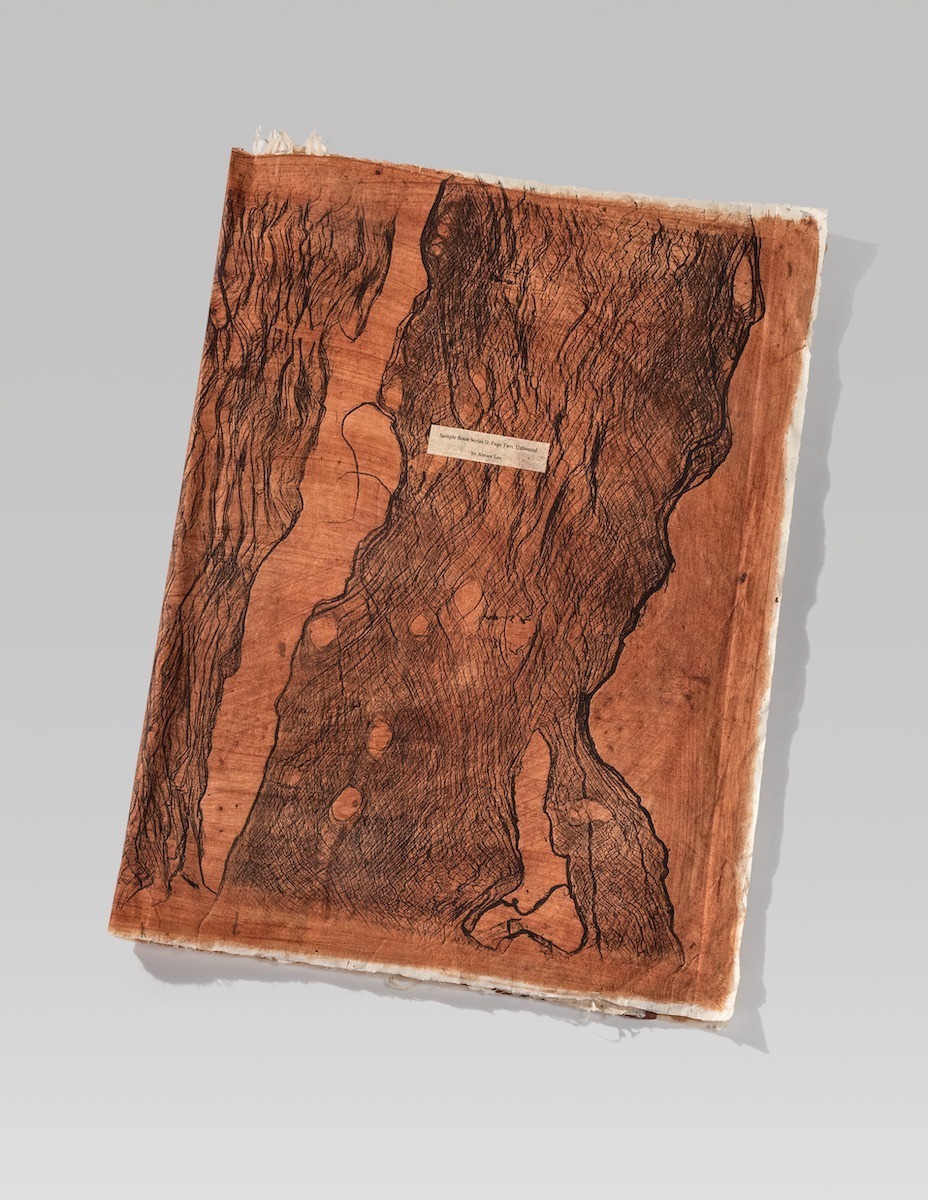
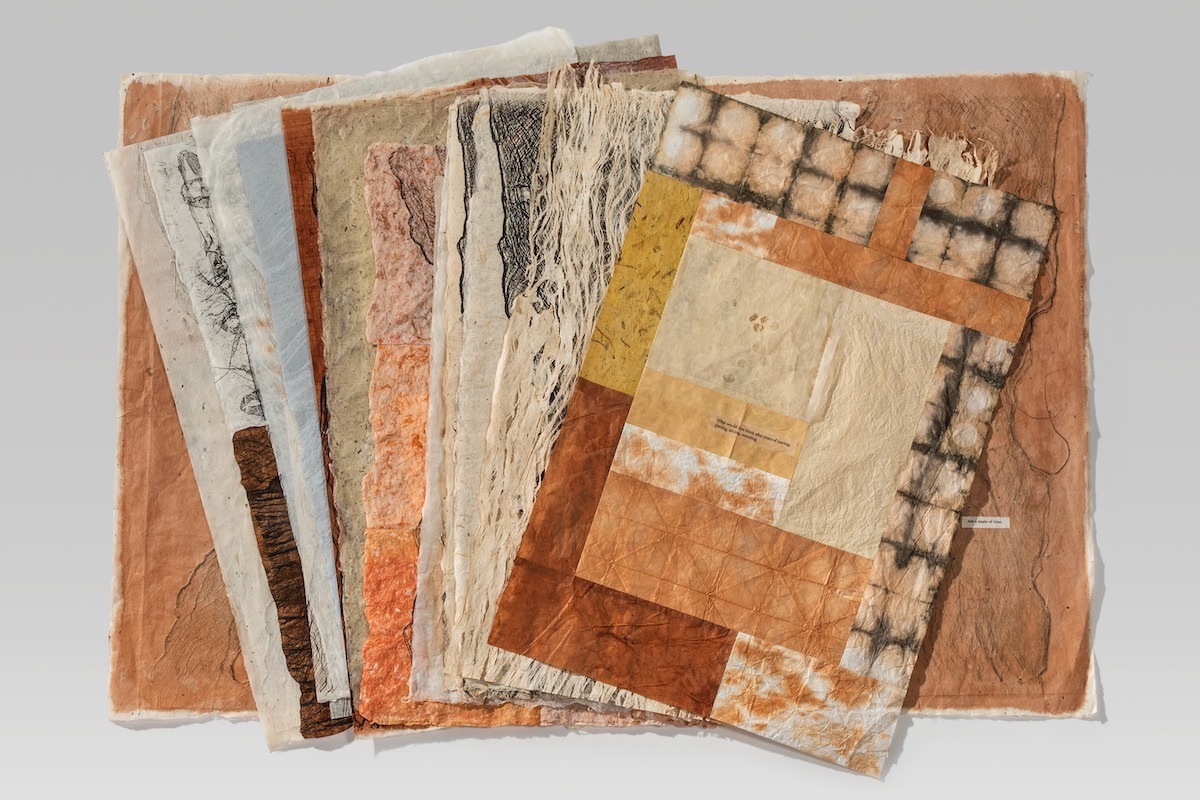
Sample Book Series II: Page Two, Unbound
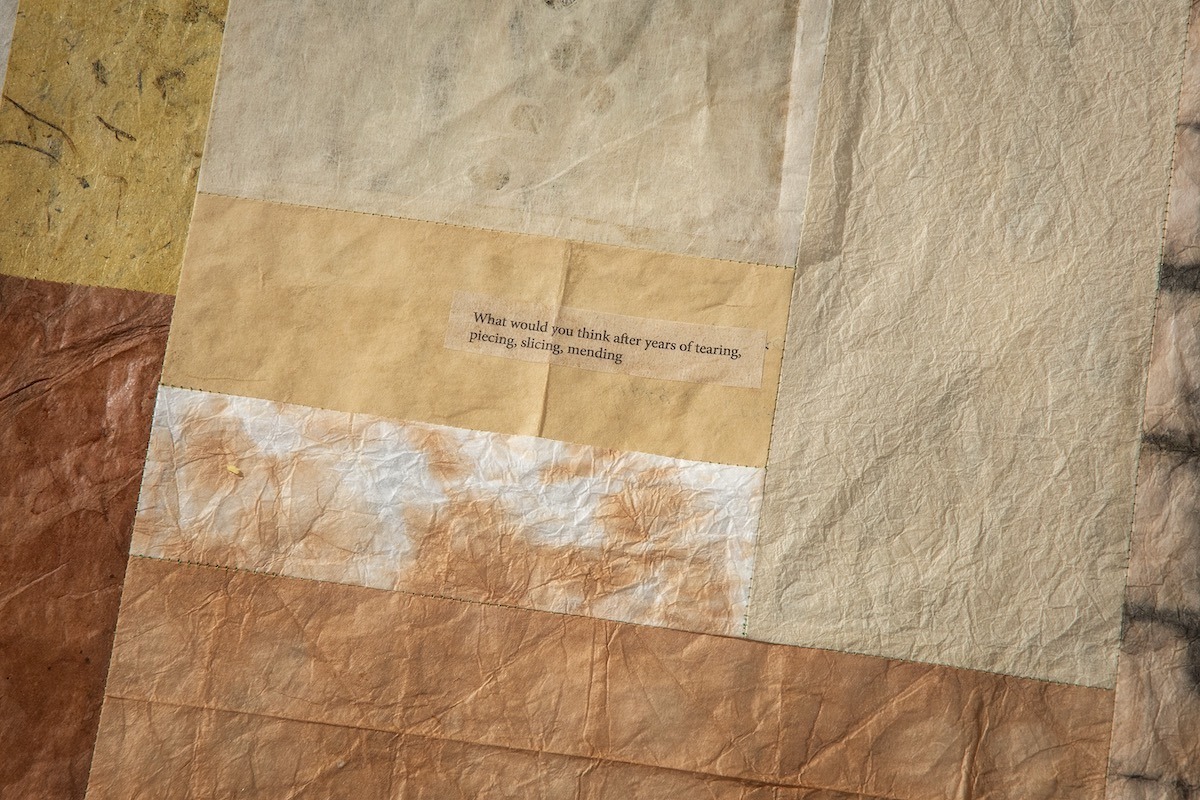
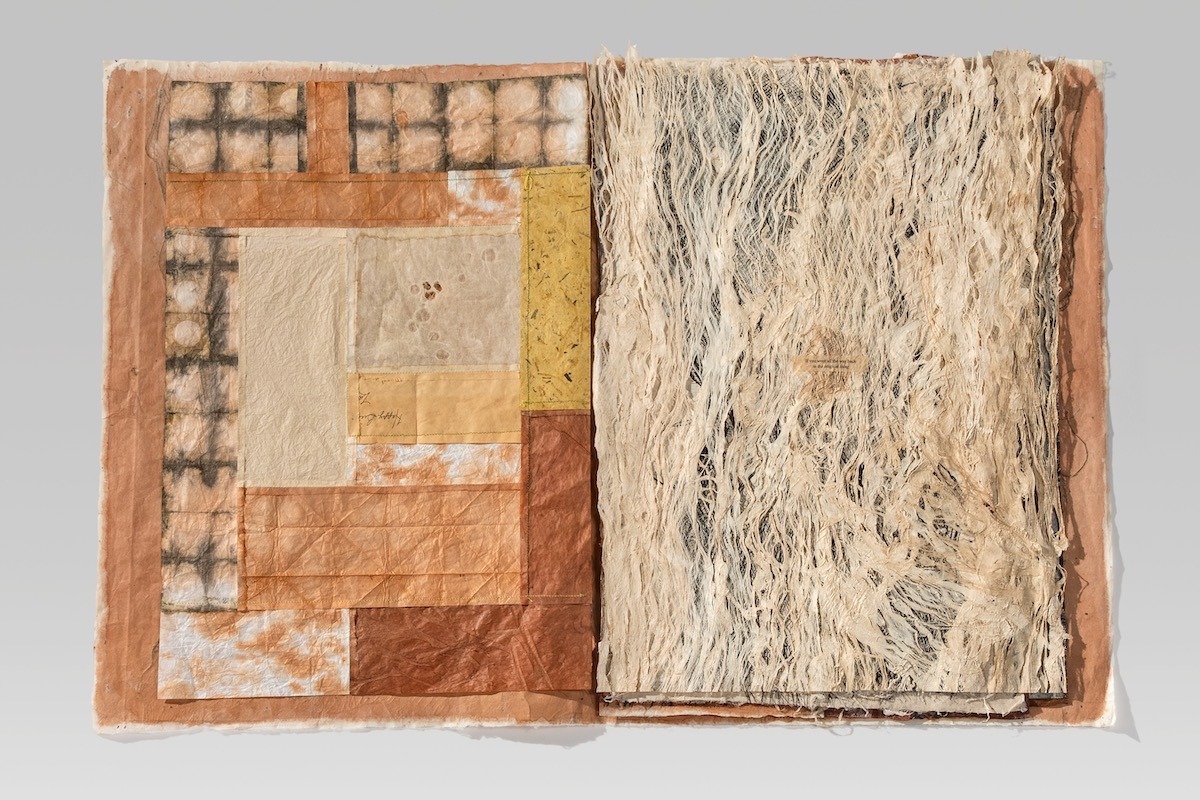
Sample Book Series II: Page Two, Unbound (2023). Mixed media. 24.25 x 18 x 0.5” closed, 36.5” wide open. 16 leaves, one of a kind.
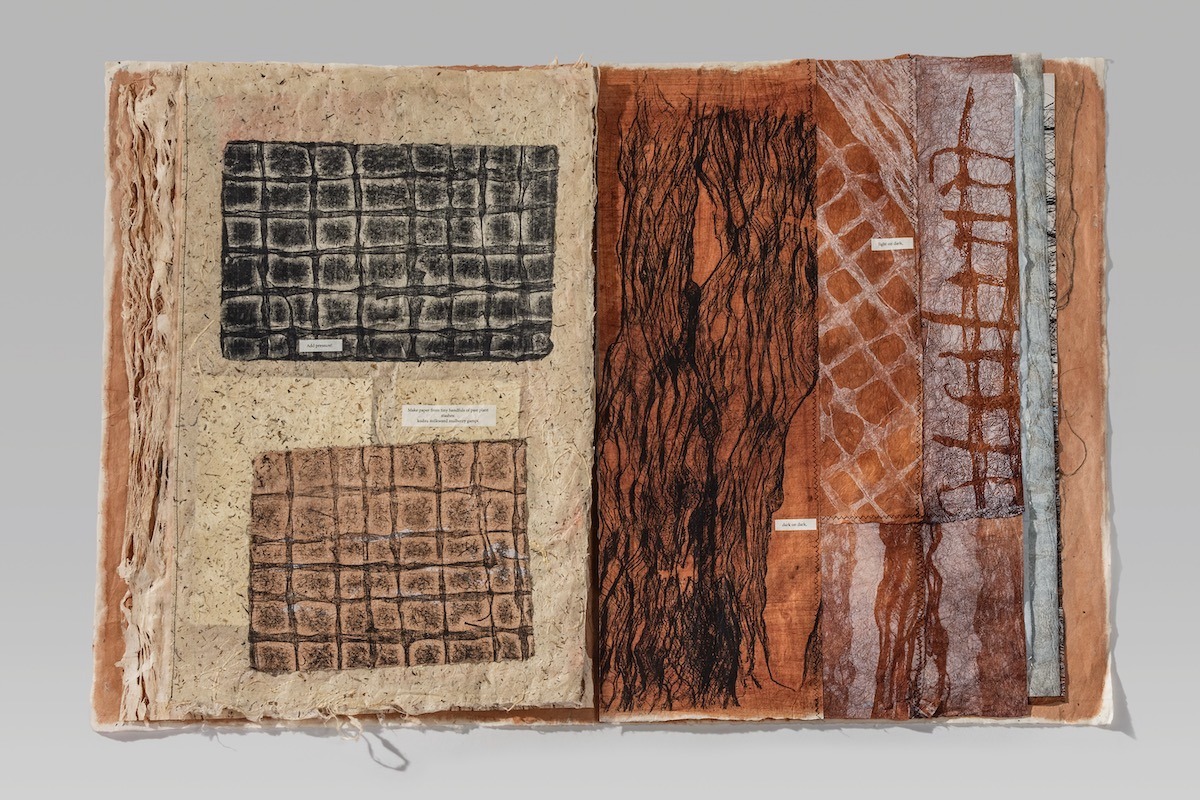
This oversize book is the second in a series about sample books, and eschews a binding altogether for maximum access to each sample. The narrative explores the failures and successes of experimenting with printing bark lace, from papermaking to printing. The title refers to the second page of the book, made entirely of bark lace, which inspired the entire experiment. Additional techniques include sewing, dyeing, various printing, drawing, and painting.
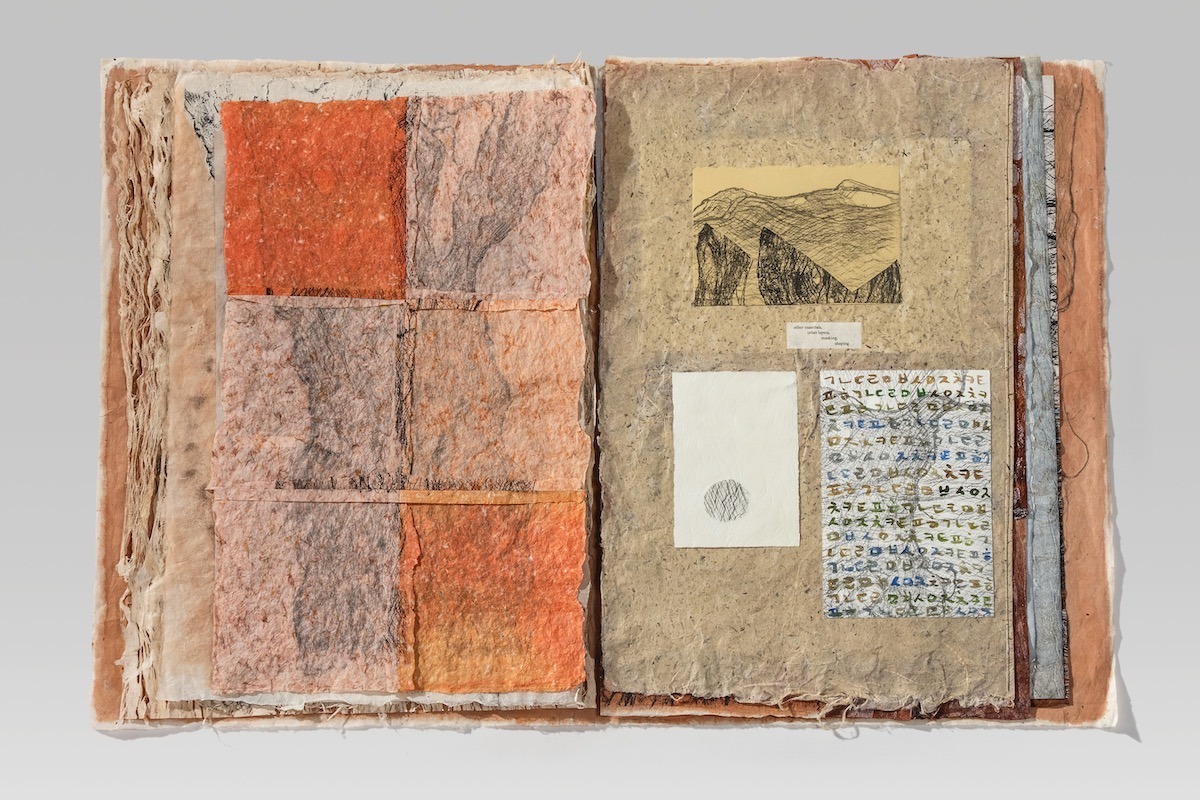
Sample Book Series I: Name this place
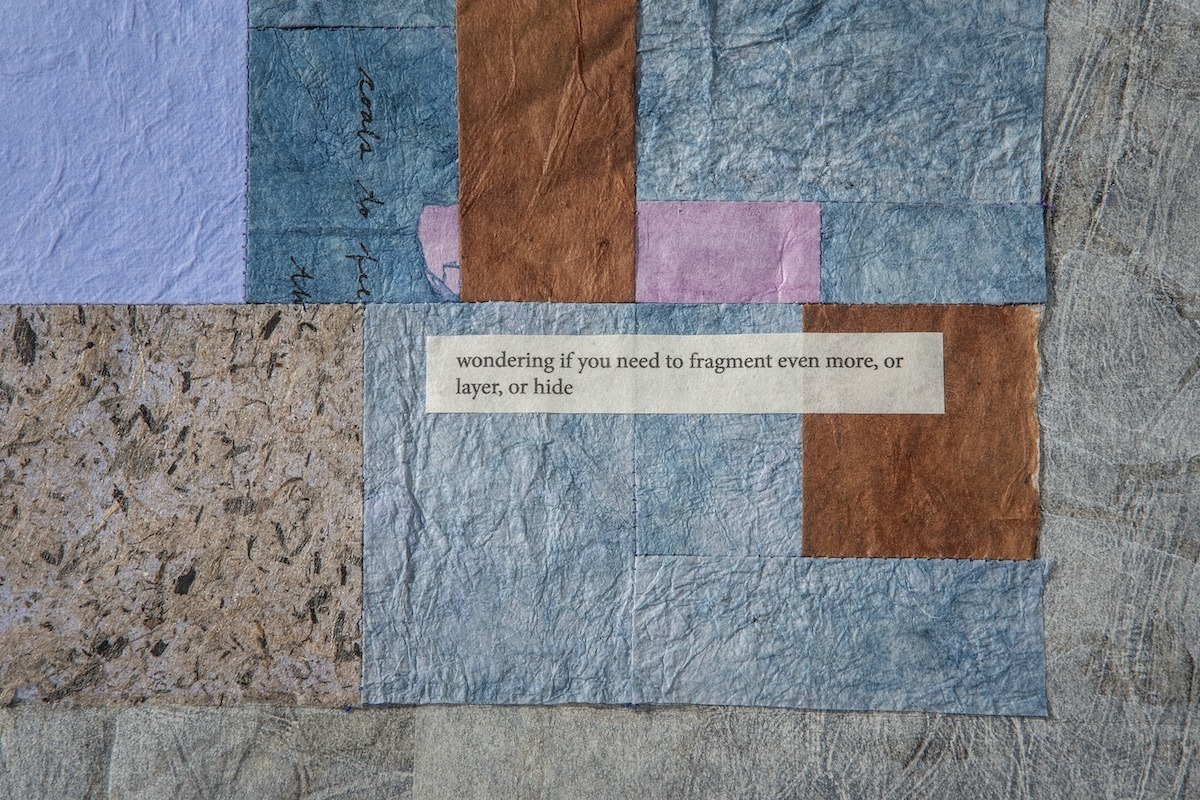
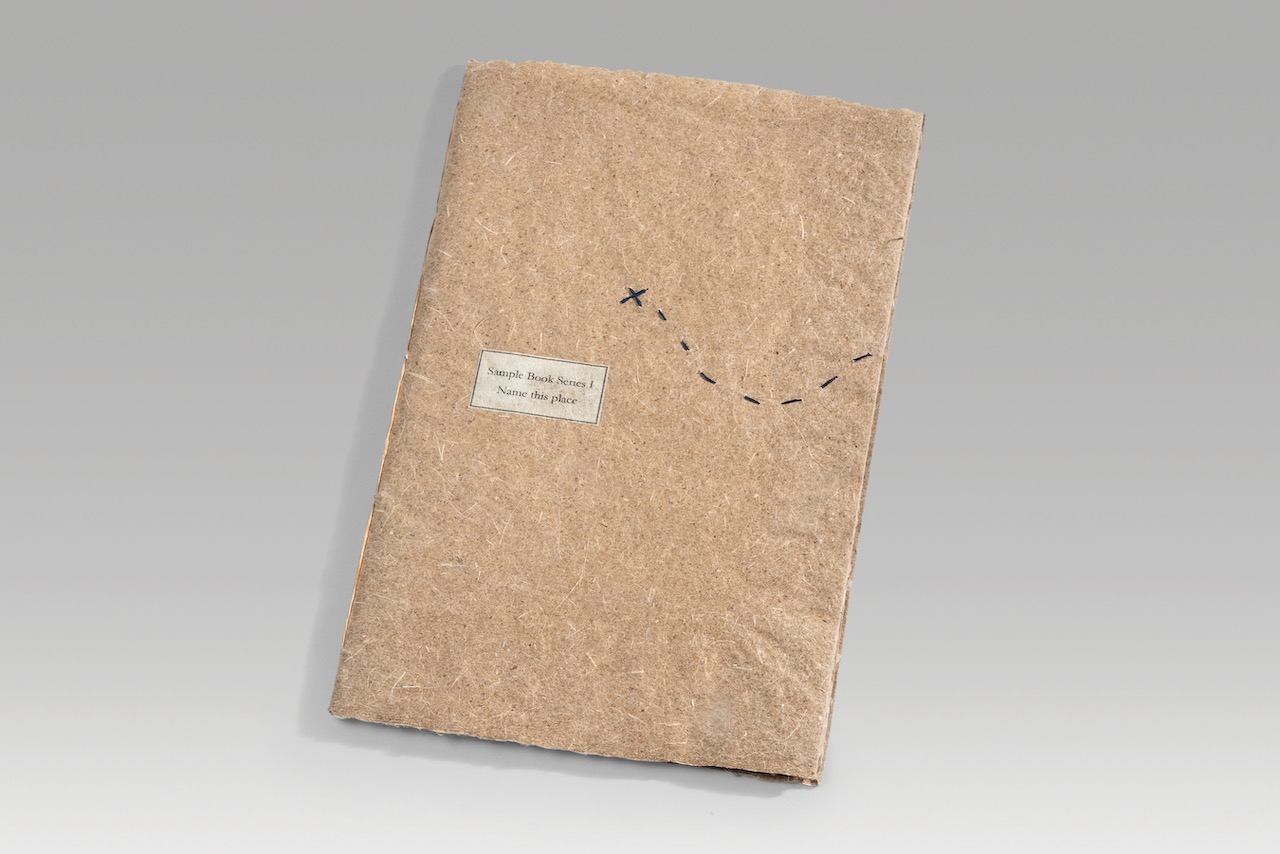
Sample Book Series I: Name this place (2023). Inkjet print on milkweed paper, indigo and persimmon paper string, assorted handmade botanical papers. 11.75 x 7.1 x 0.25” closed, 14.3” wide open. 26 pages, full and half sheets. One of a kind. Cynthia Sears collection.
Ideal not only for collections that house artists’ books, but those that value horticulture and plant products. This is the first in a series of books that highlights the legibility of sample books and their possibilities for storytelling, record keeping, organization, and collecting precious bits of time, labor, and photosynthesis. It also doubles as a sample book as it contains 14 unique samples of plant papers gathered in the Cleveland area in 2013.
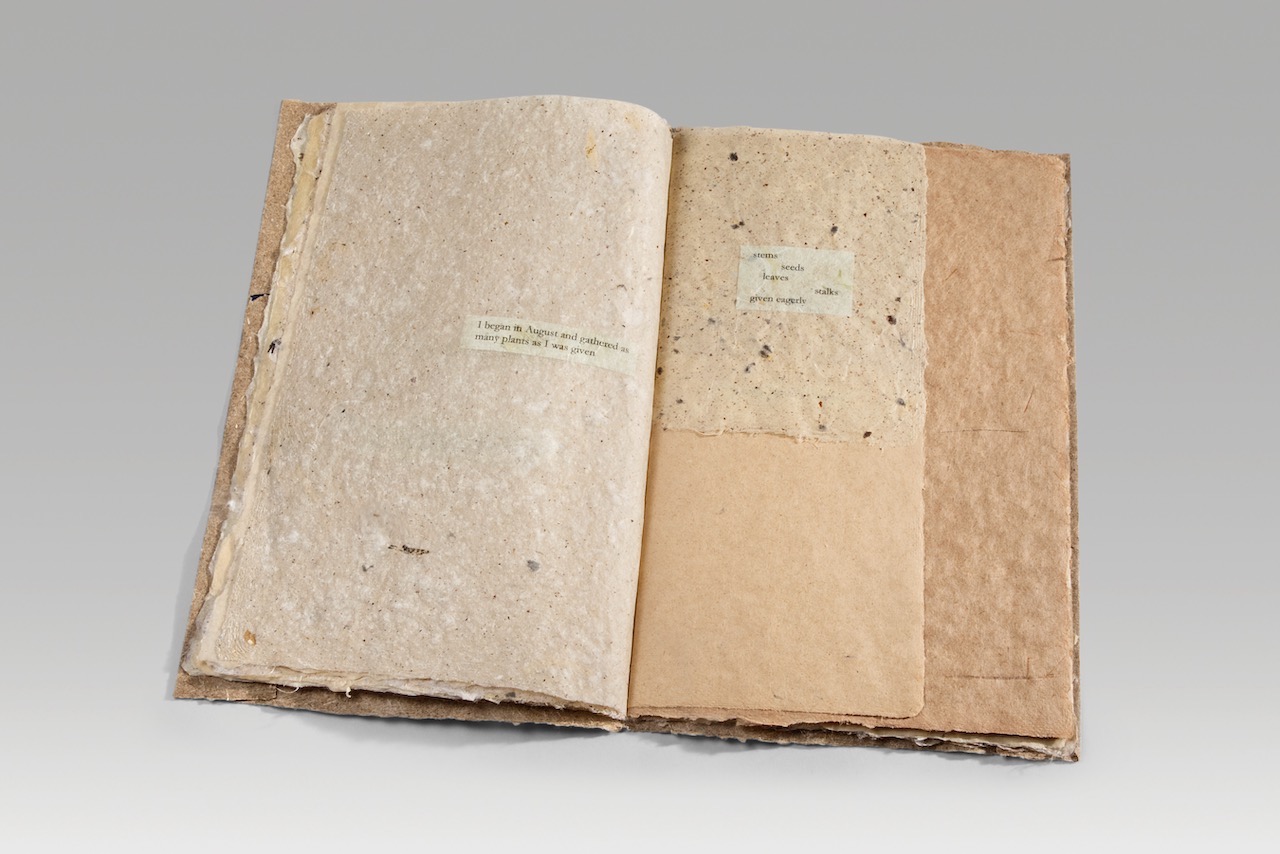
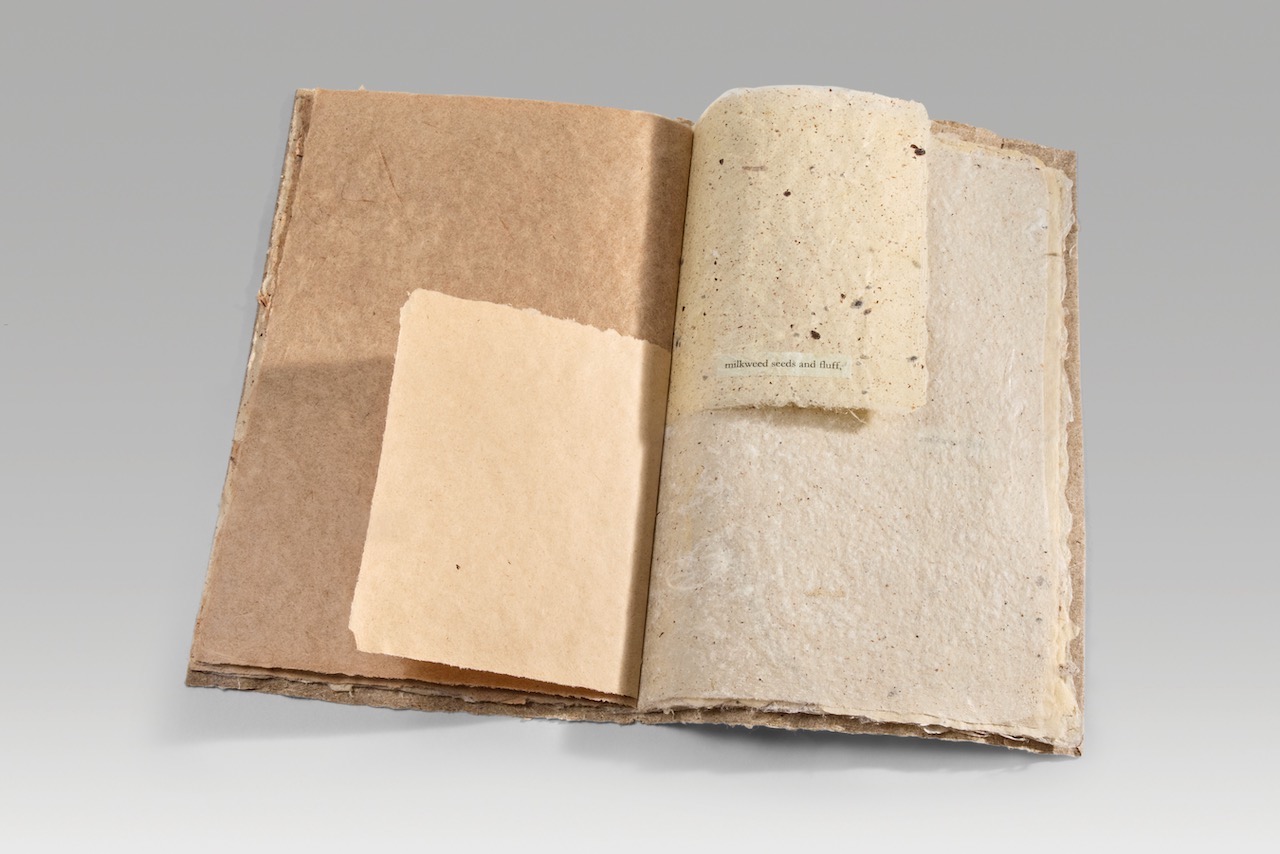
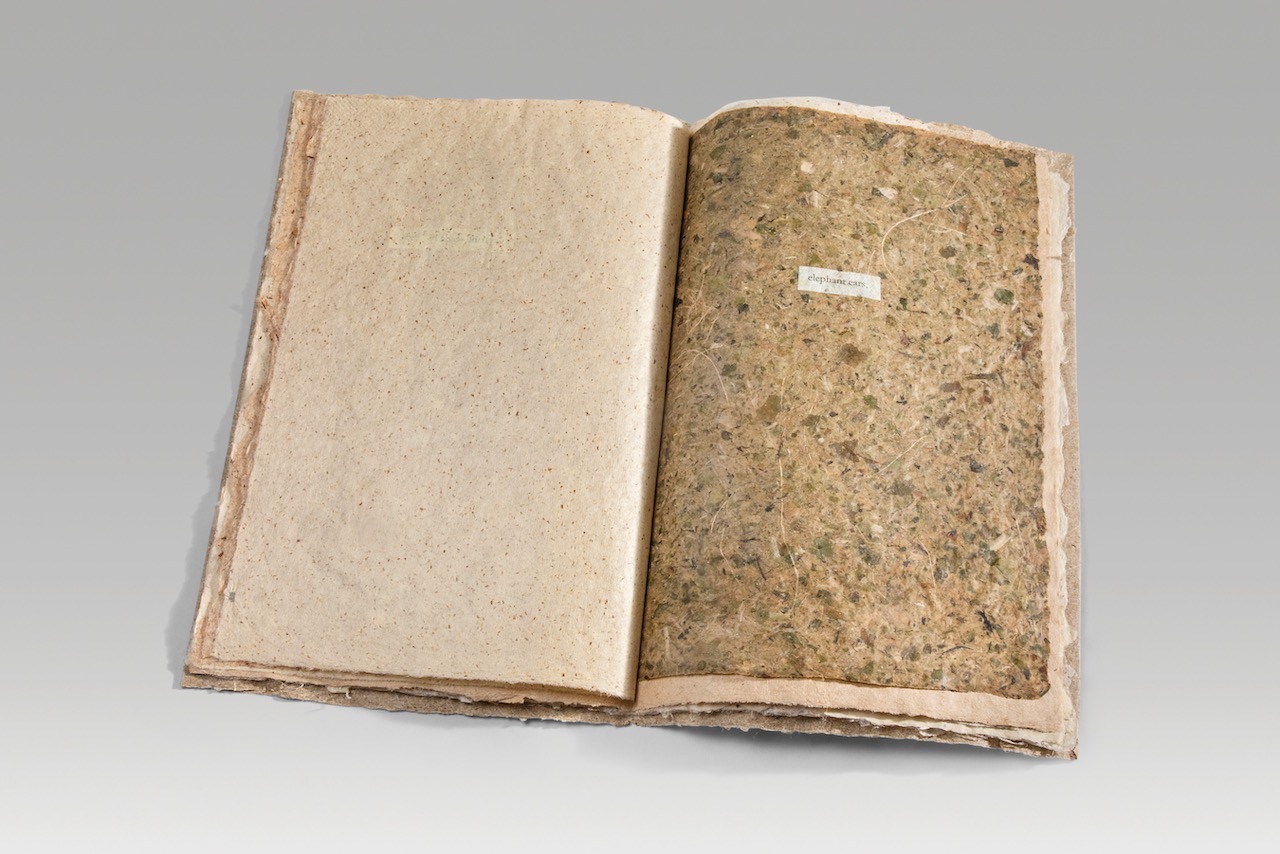
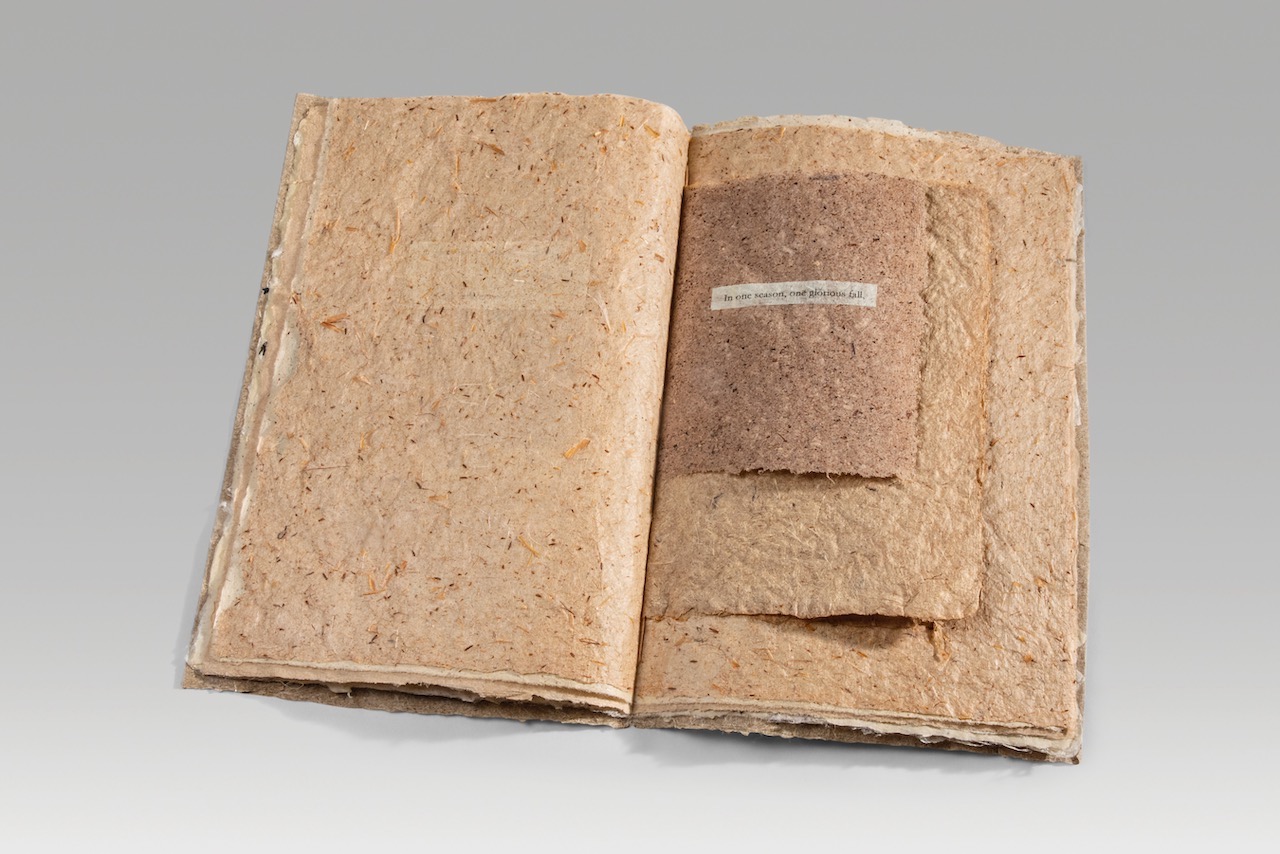
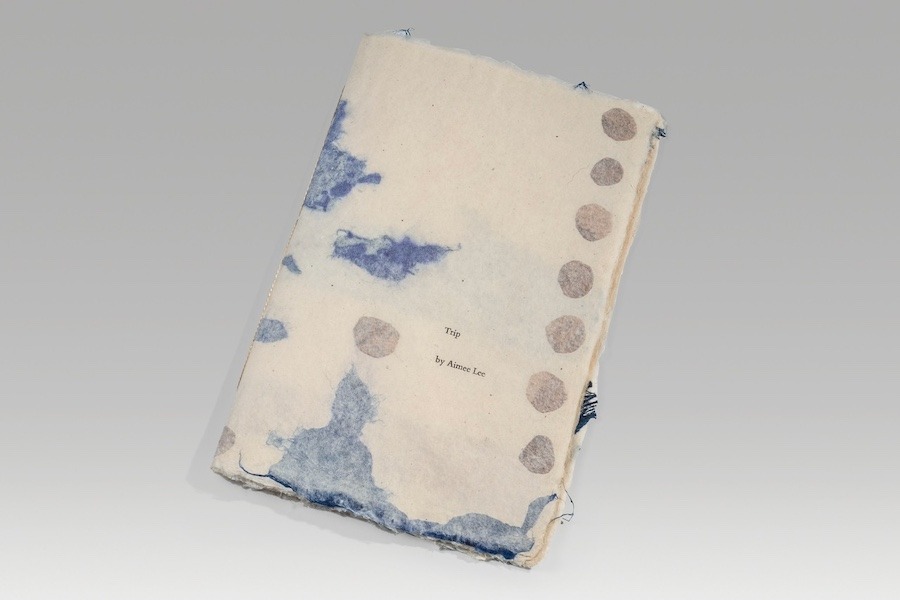
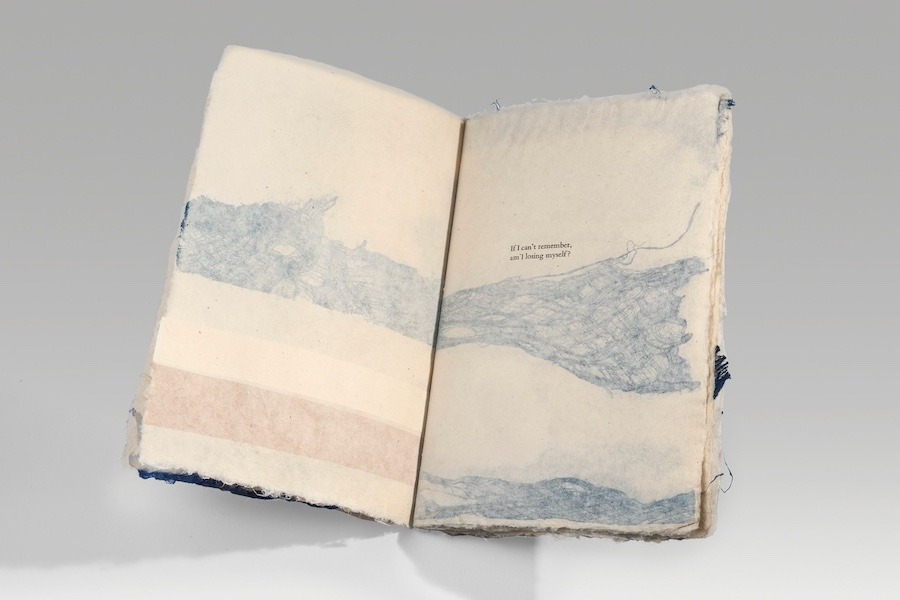
Trip
Trip (2024). Letterpress on handmade abaca paper encasing dye on hanji and bark. 9 x 5.6 x 0.35” closed, 11.25” wide open. 12 leaves including covers. One of a kind.
False calm
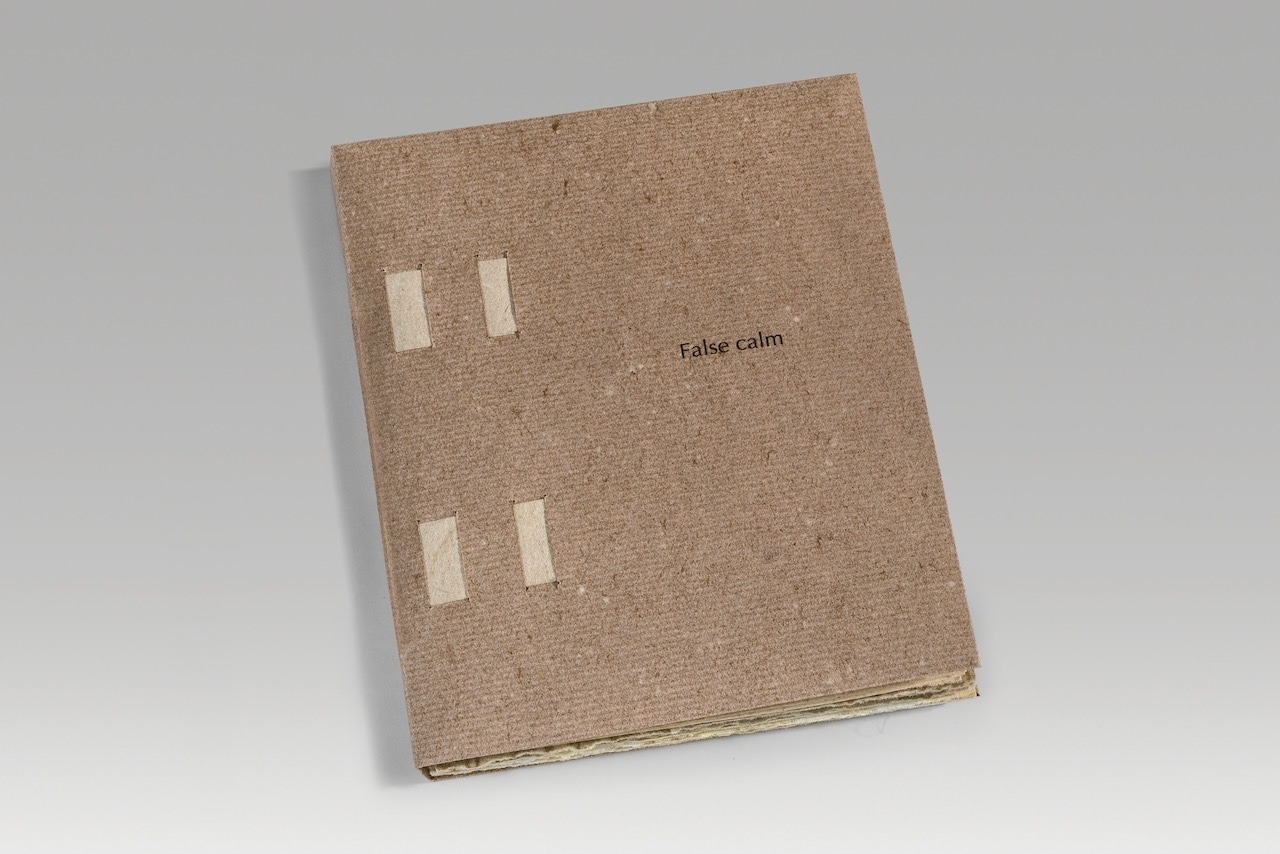
False calm (2024). Inkjet on botanical contact prints by Velma Bolyard, hanji, cotton/abaca paper, thread. 5.1 x 4.1 x 0.5” closed, 12.5” wide open. One of a kind. Cynthia Sears Collection.
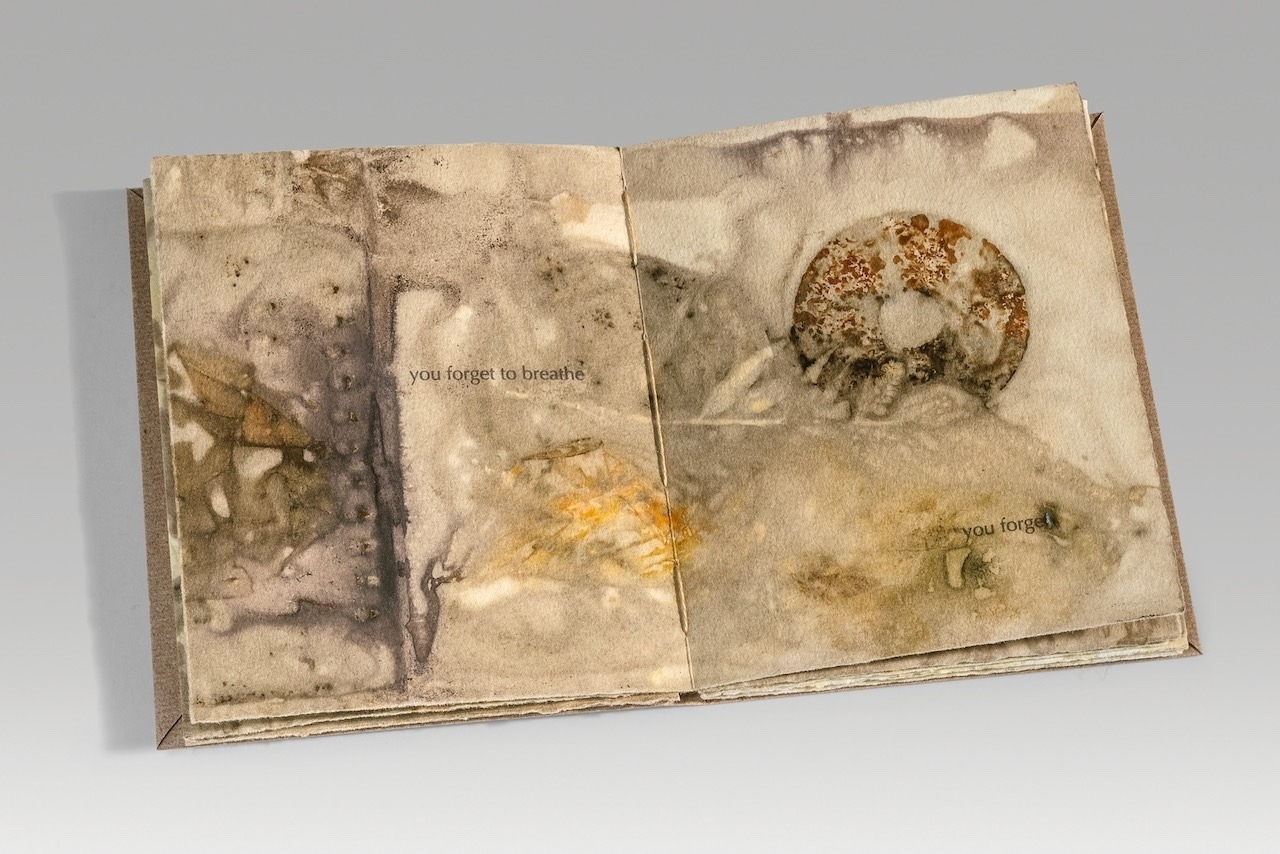
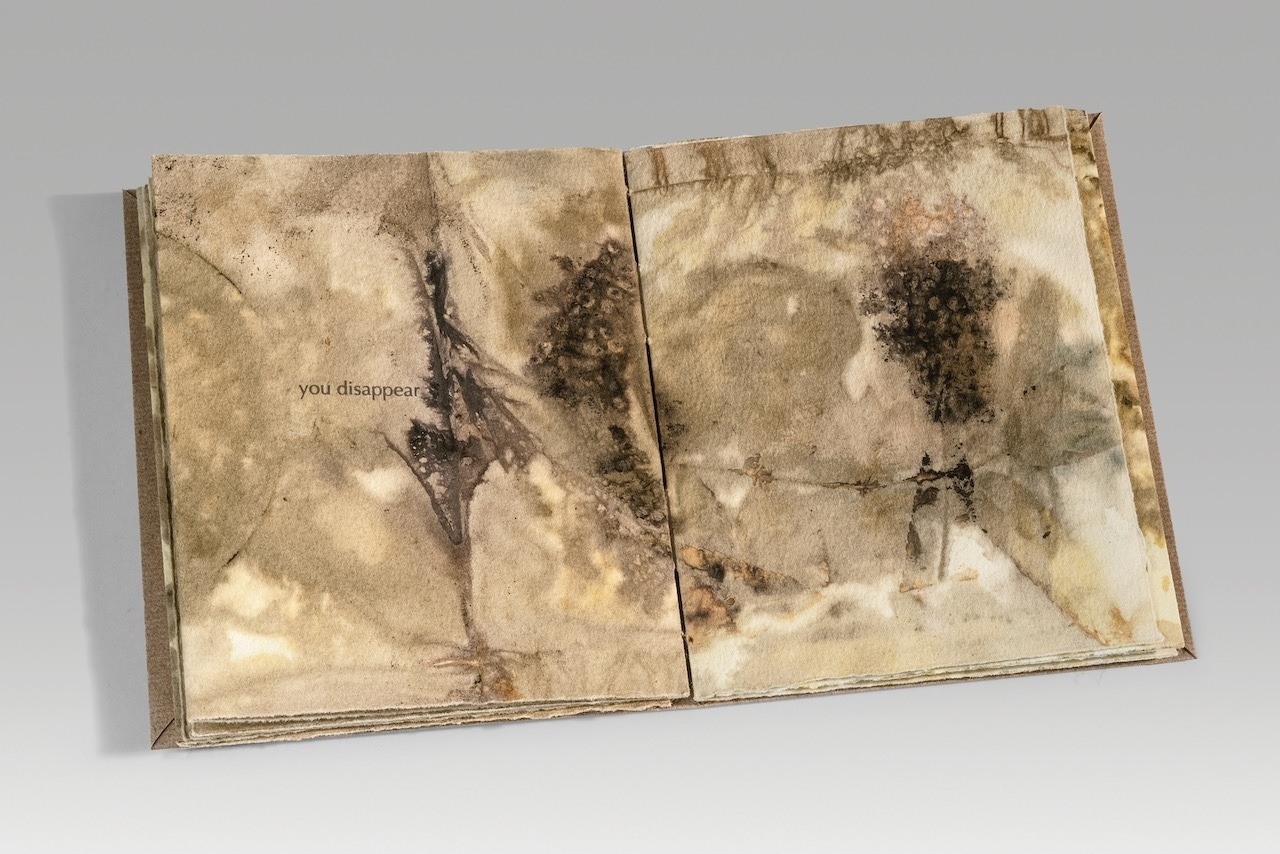
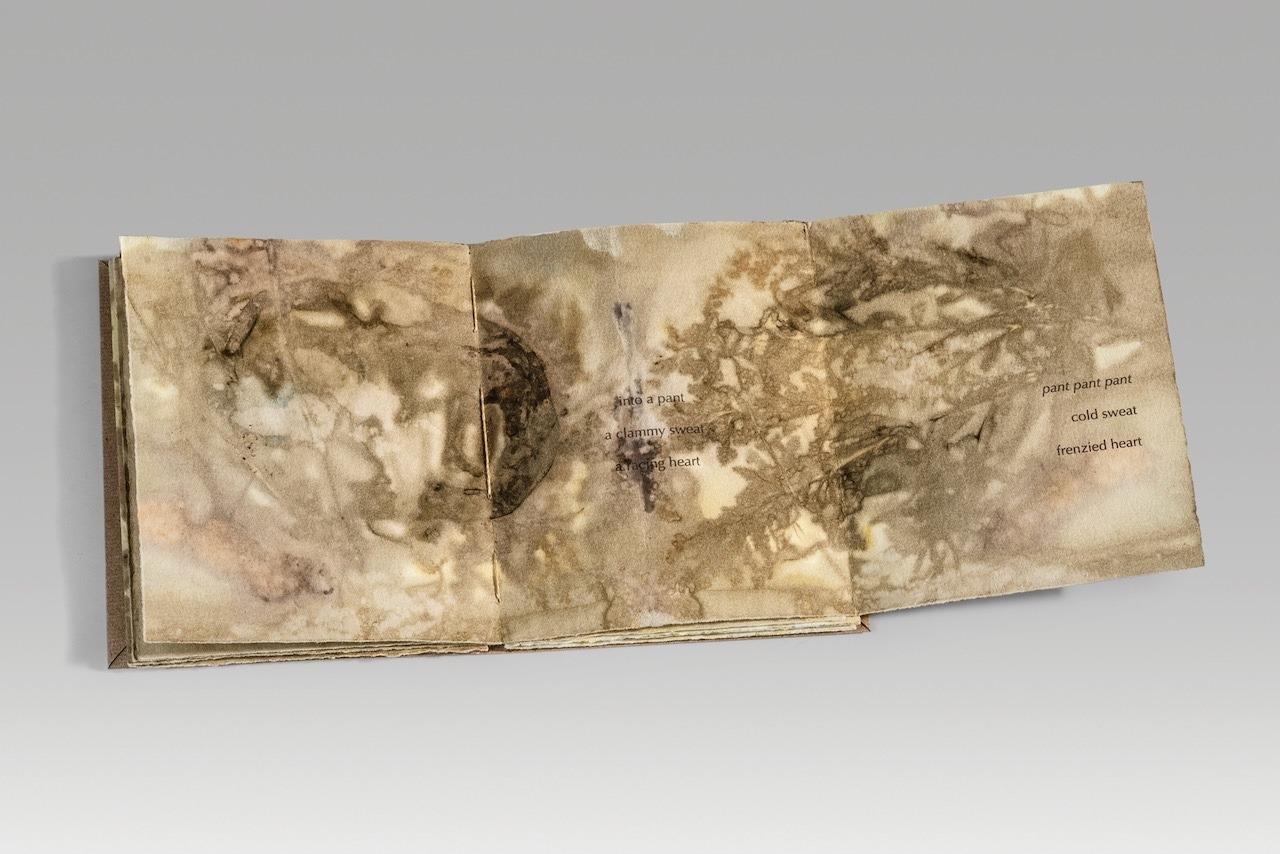
Aimee printed the text she wrote via inkjet onto Velma Bolyard’s botanical contact prints. Endsheets are hanji made from ‘waste’ fibers of paper mulberry bast. Aimee made the covers from abaca and cotton, colored with a mix of aqueous dispersed and dry pigments. Special thanks to somatic therapists who work with PTSD clients.
Feral
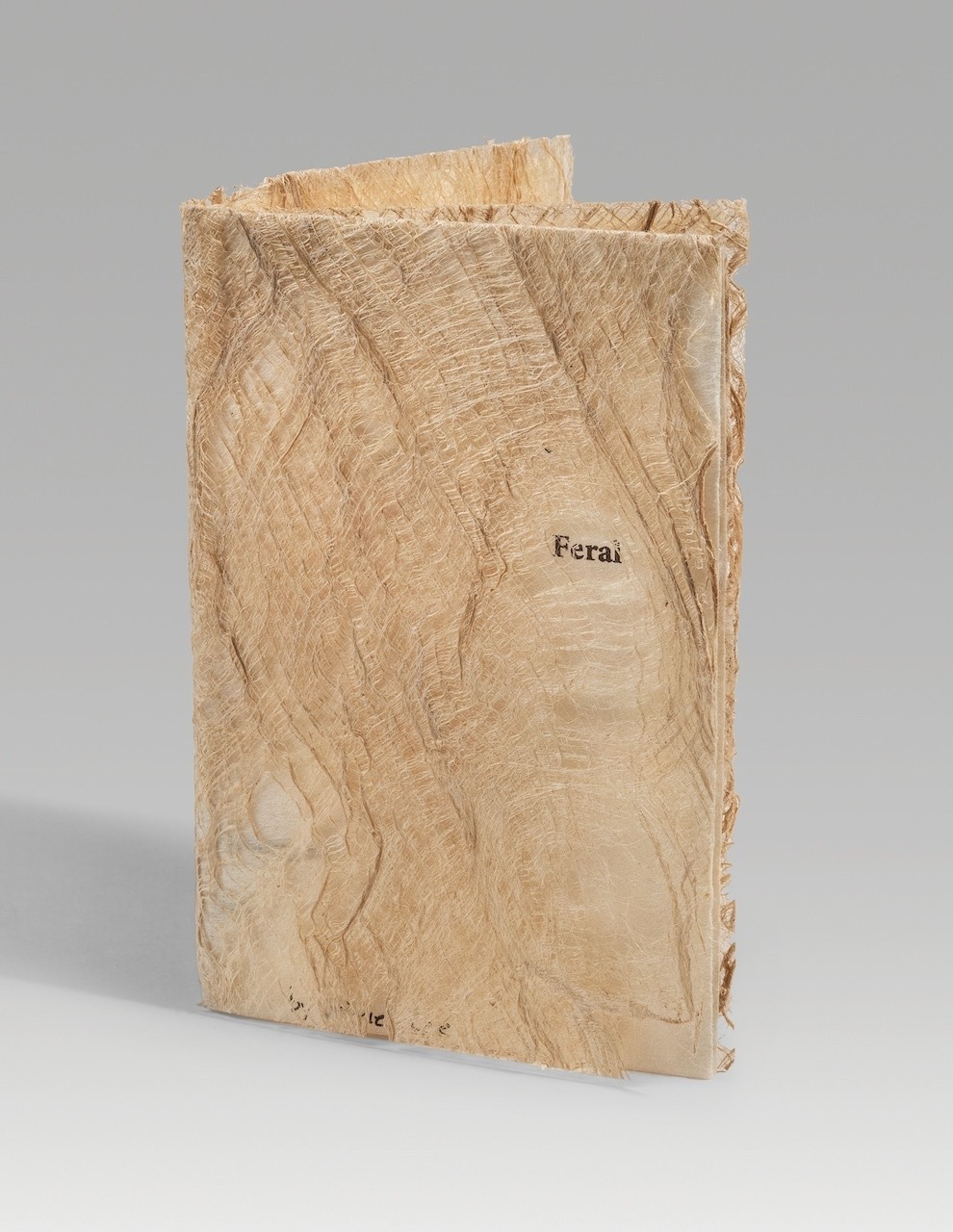
Feral (2024). Inkjet on hanji, bark lace. 4.4 x 2.75 x 0.5” closed, 5.5” wide open. Private collection.
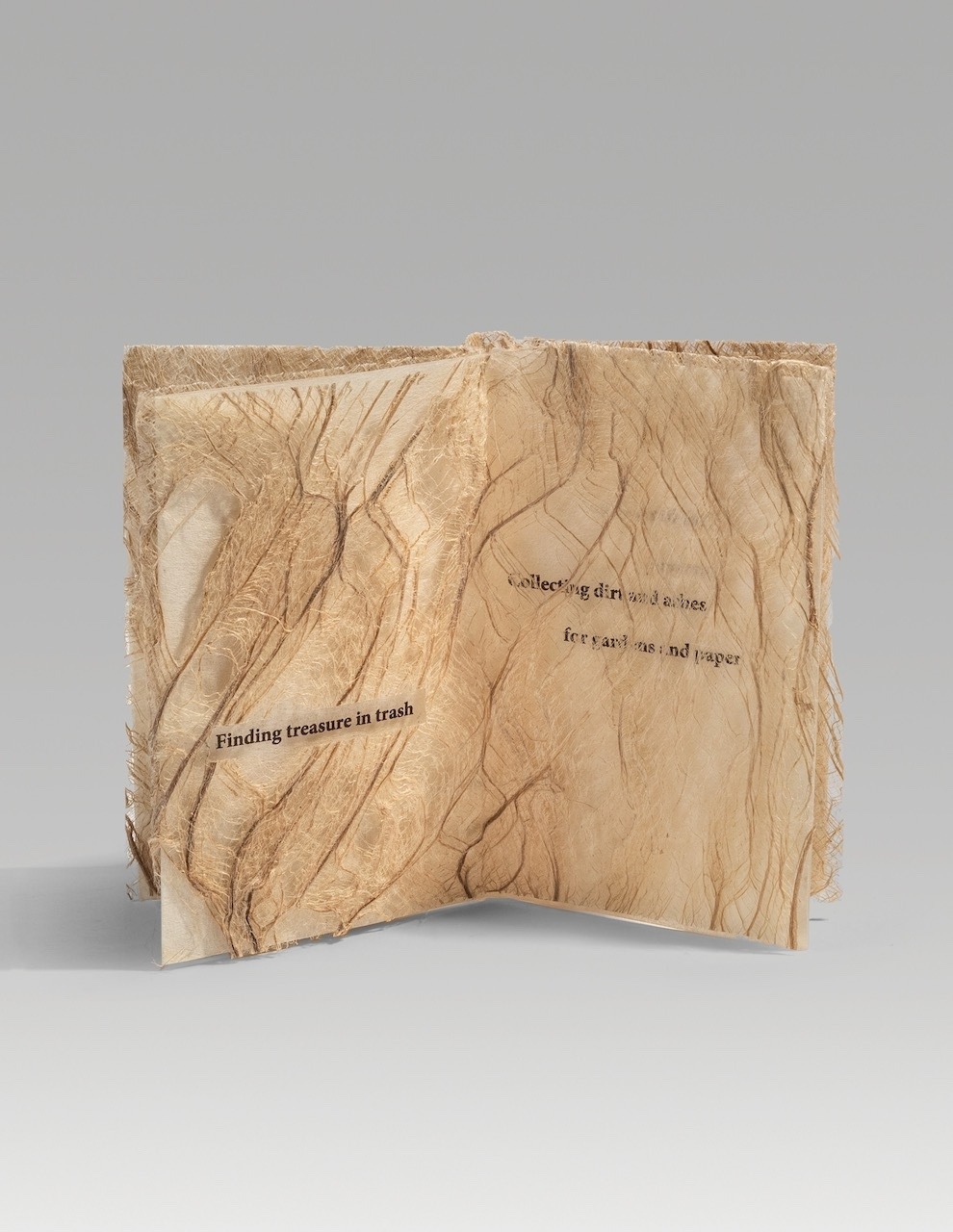
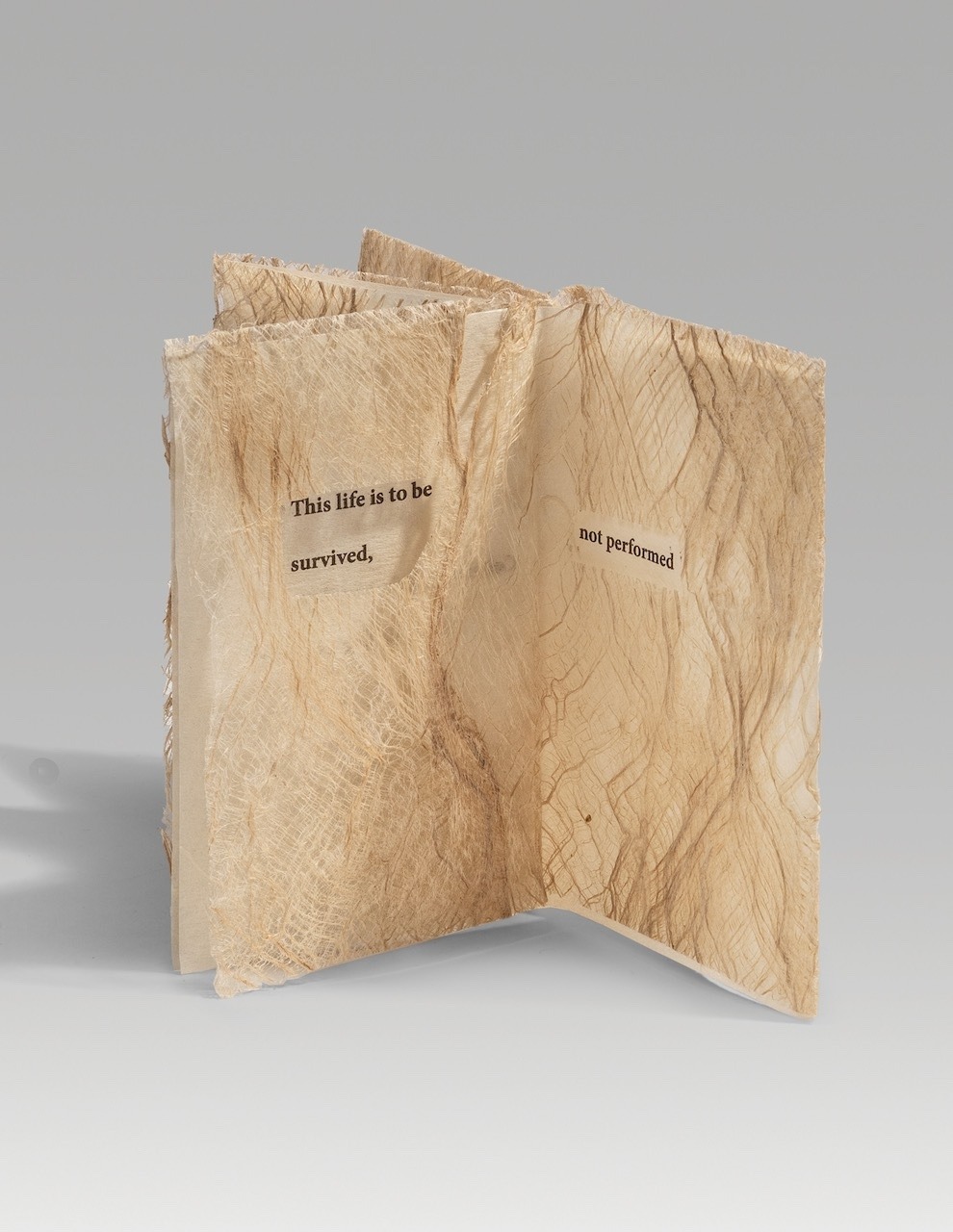
The text of this book is printed onto handmade paper, and sheathed with the bark that makes this paper, from the inner bast (cambium layer) of the paper mulberry tree. It echoes my life as an artist who does not work inside of traditional work settings.
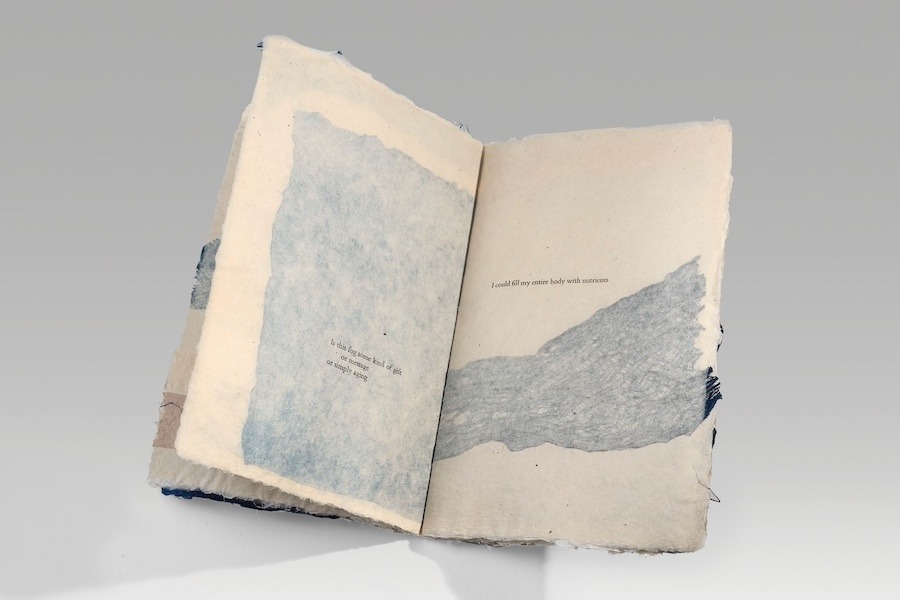
what’s the word
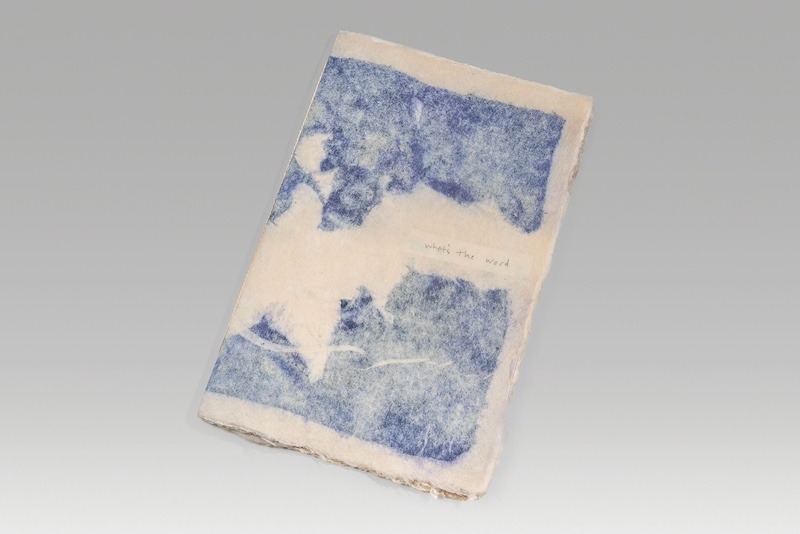
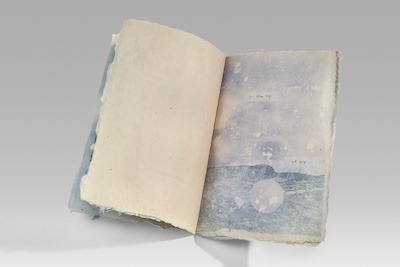
what’s the word (2024). Pen, ink, dye on handmade paper encased in abaca paper. 9 x 5.6 x 0.25” closed, 11.25” wide open. 8 leaves including covers. One of a kind.
This book tries to visualize brain fog and memory loss that comes with aging.
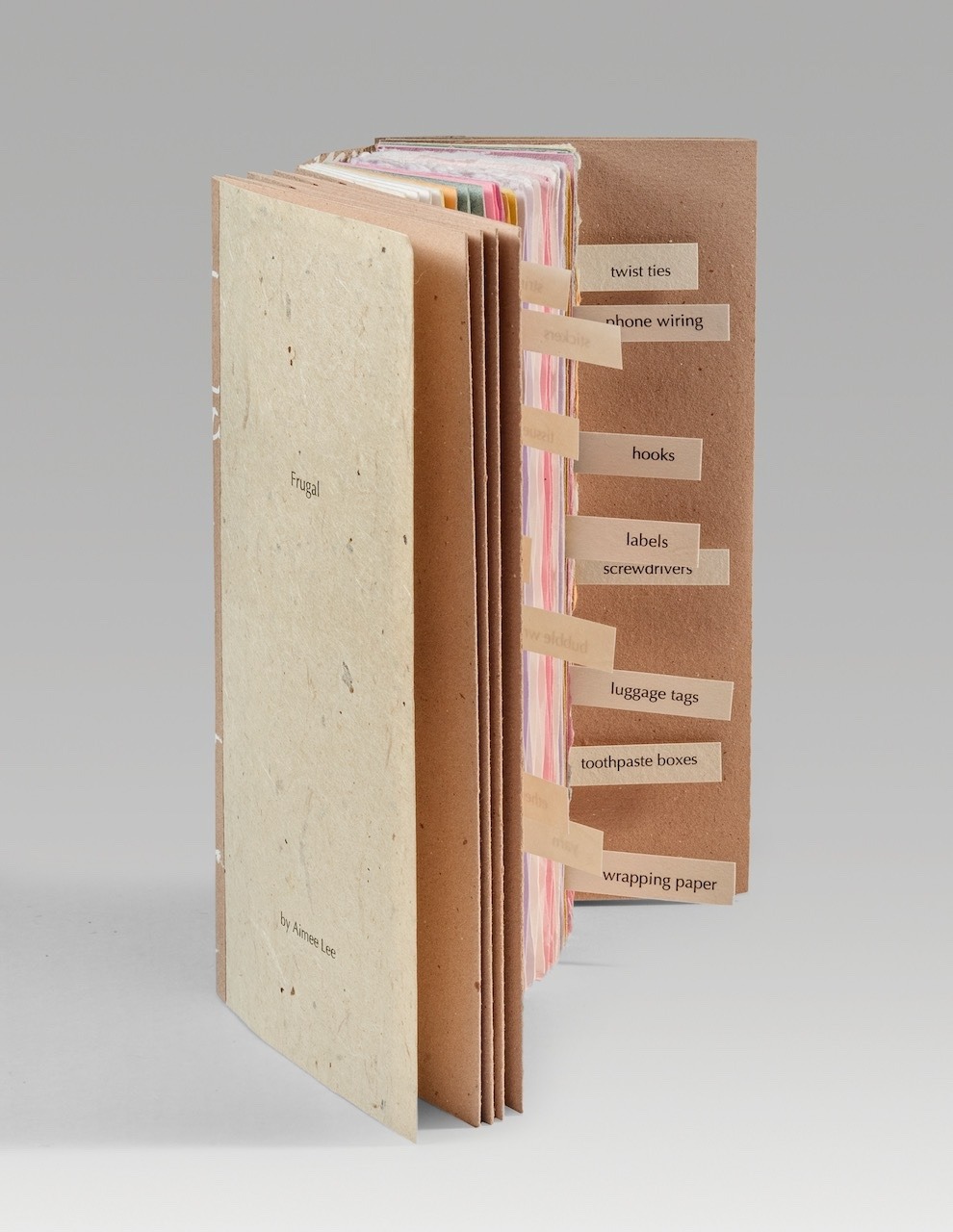
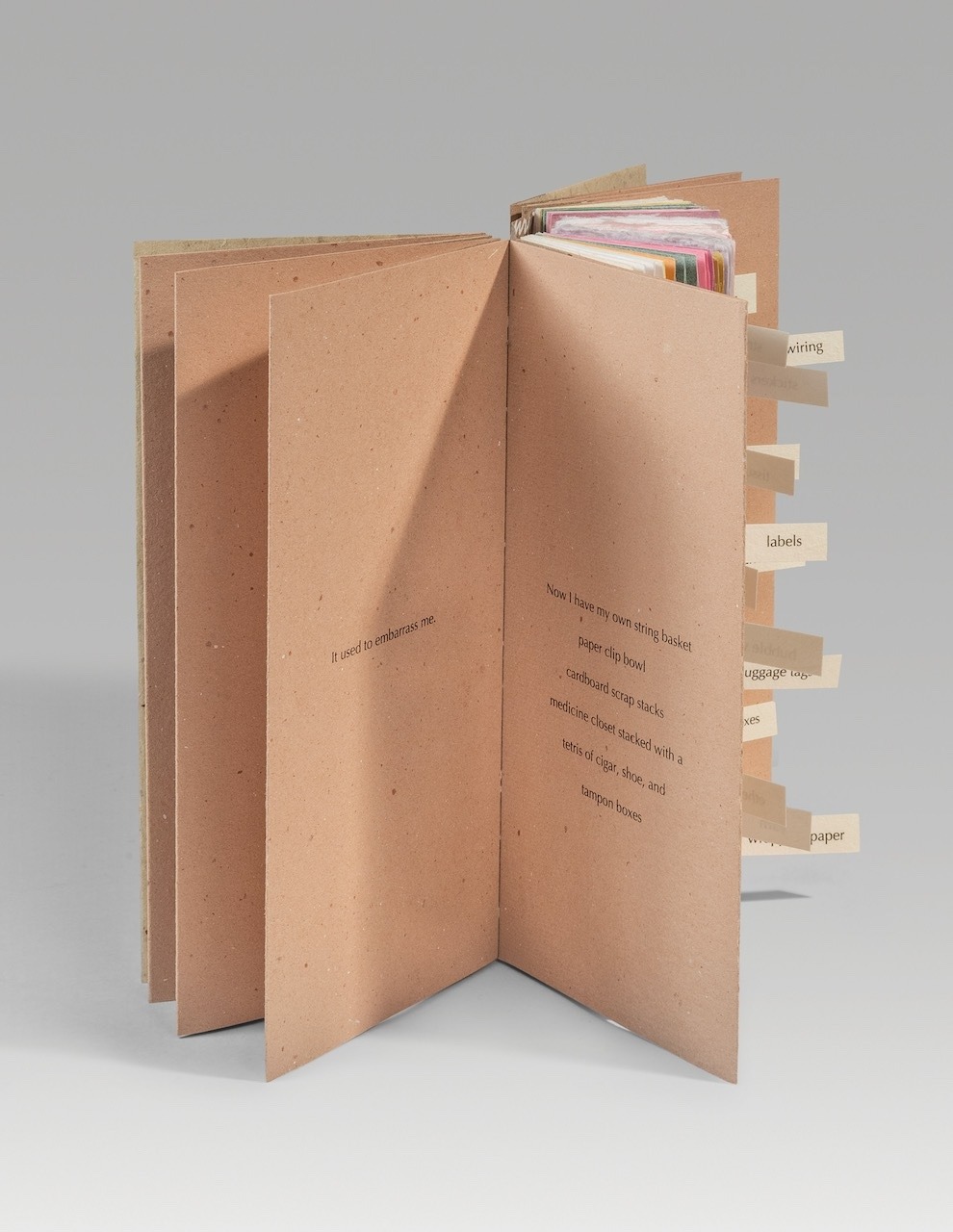
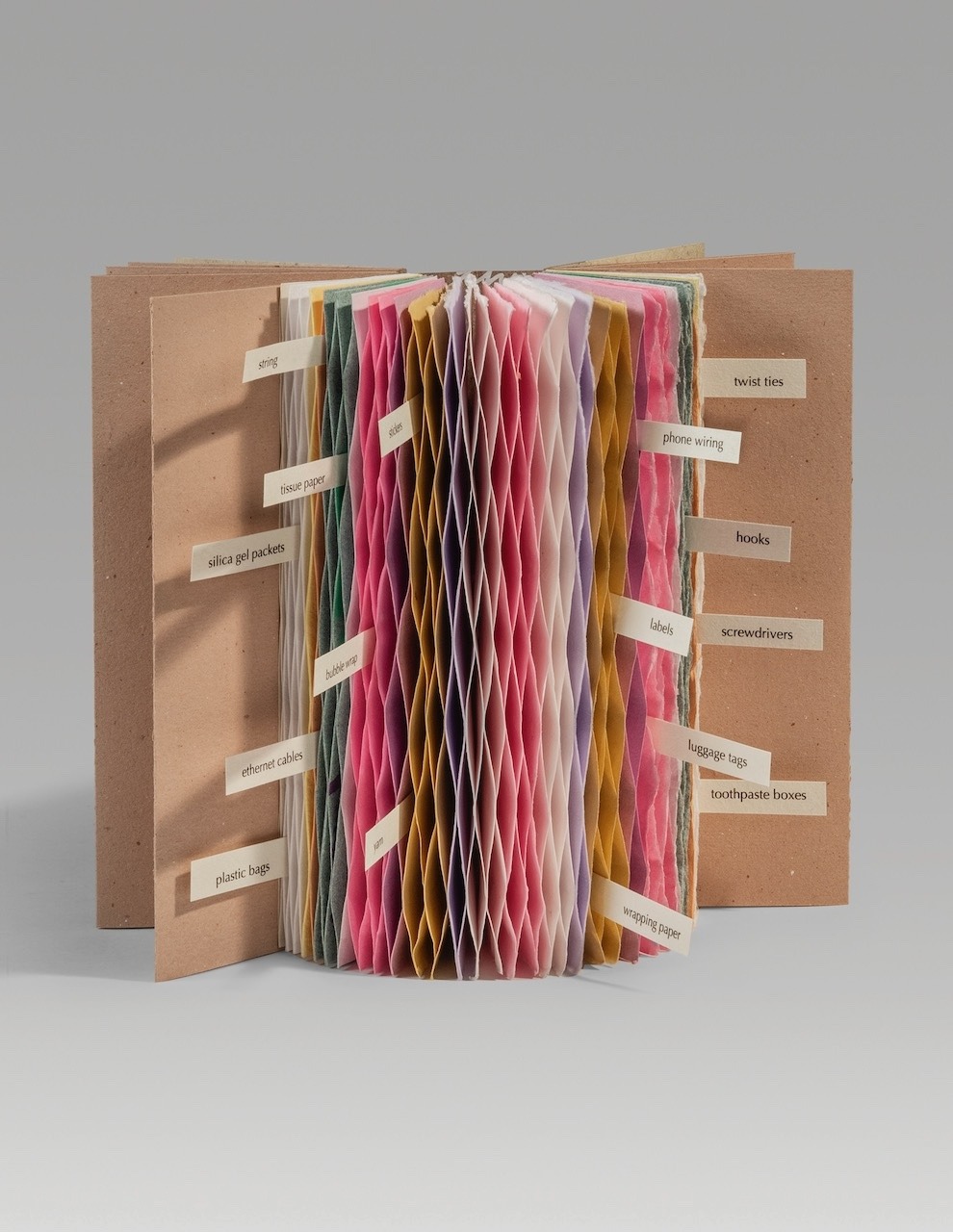
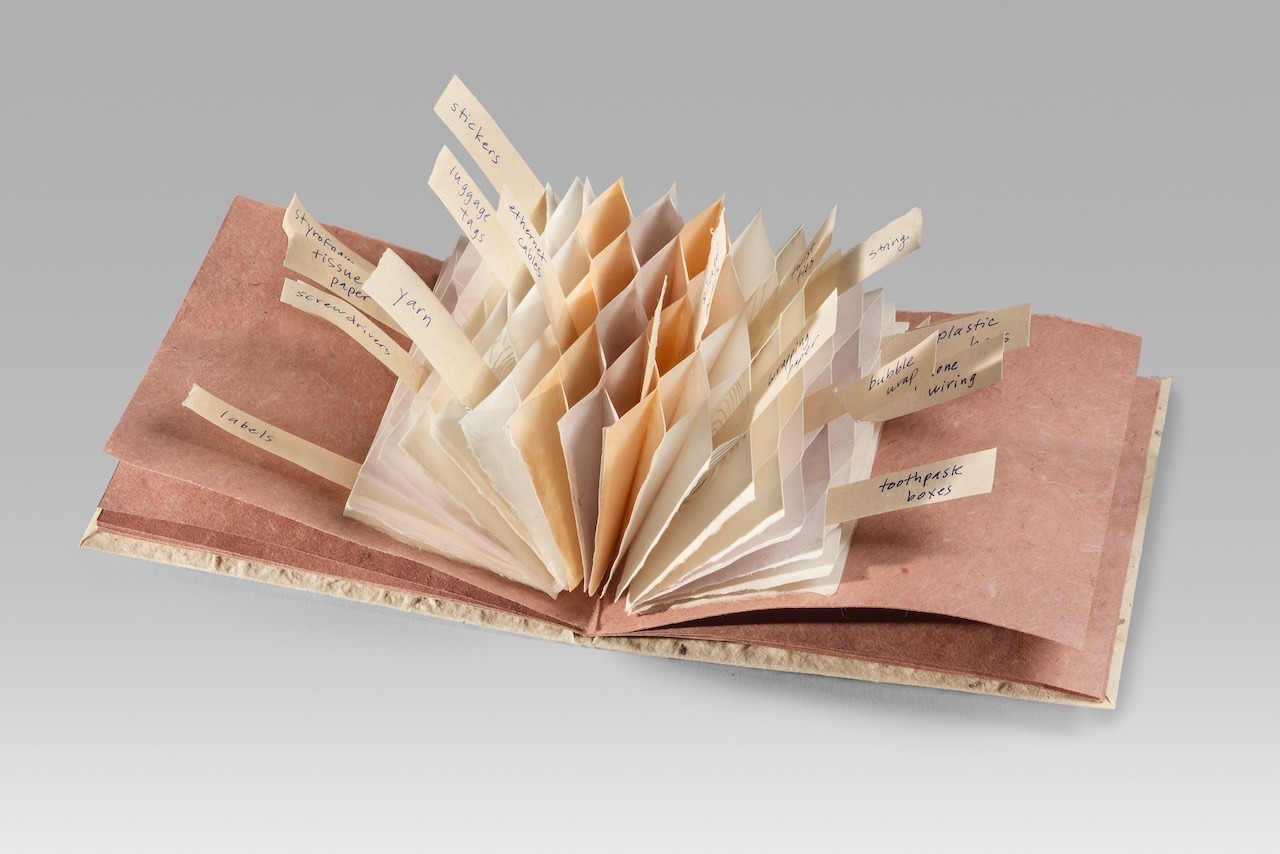
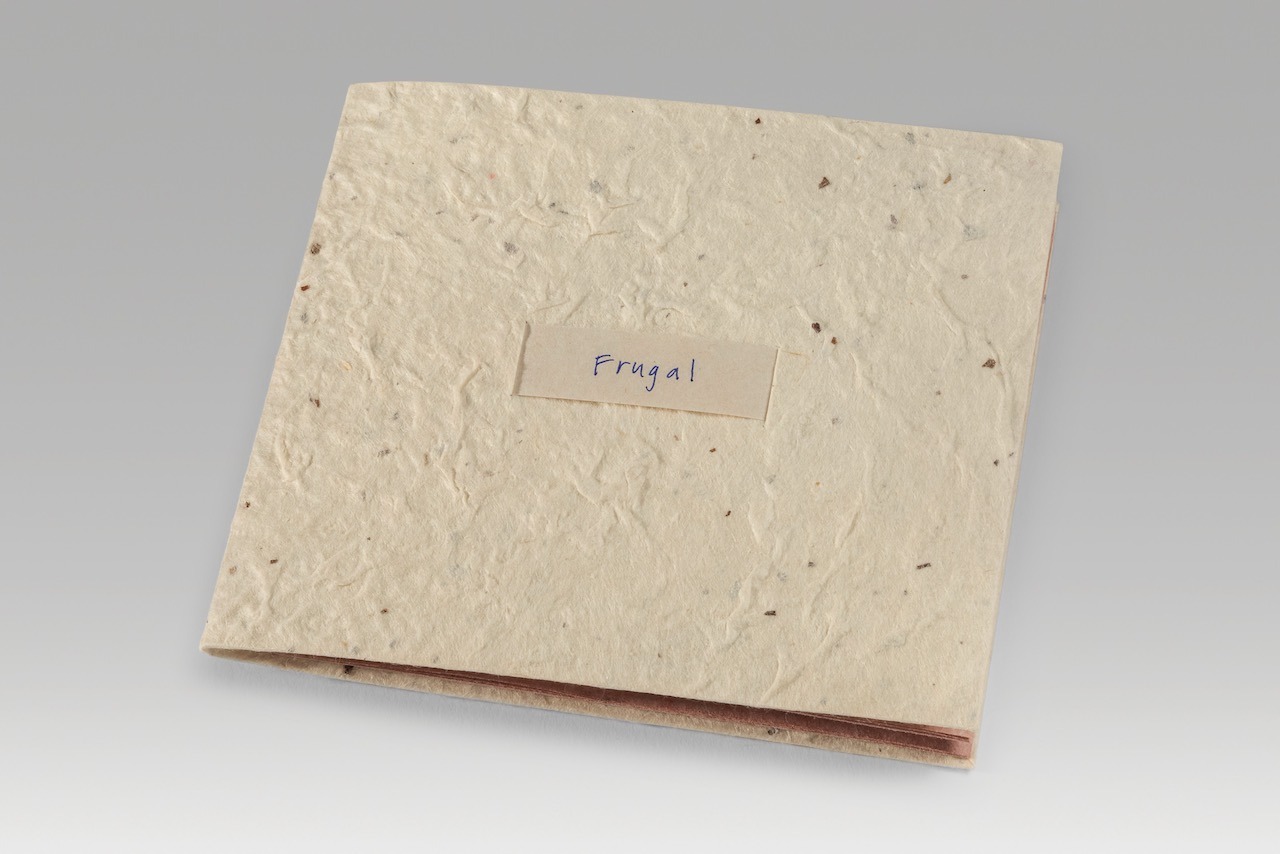
Frugal (version 3)
Frugal (version 3) (2024). Inkjet on handmade paper. 8 x 4.75 x 2” closed, 9.5” wide open. One of a kind.
Frugal (version 2)
Frugal (version 2) (2024). Pen and natural dye on handmade paper, thread. 6.2 x 4.5 x 0.75” closed, 9.1” wide open, 5” tall open. Lost by USPS.
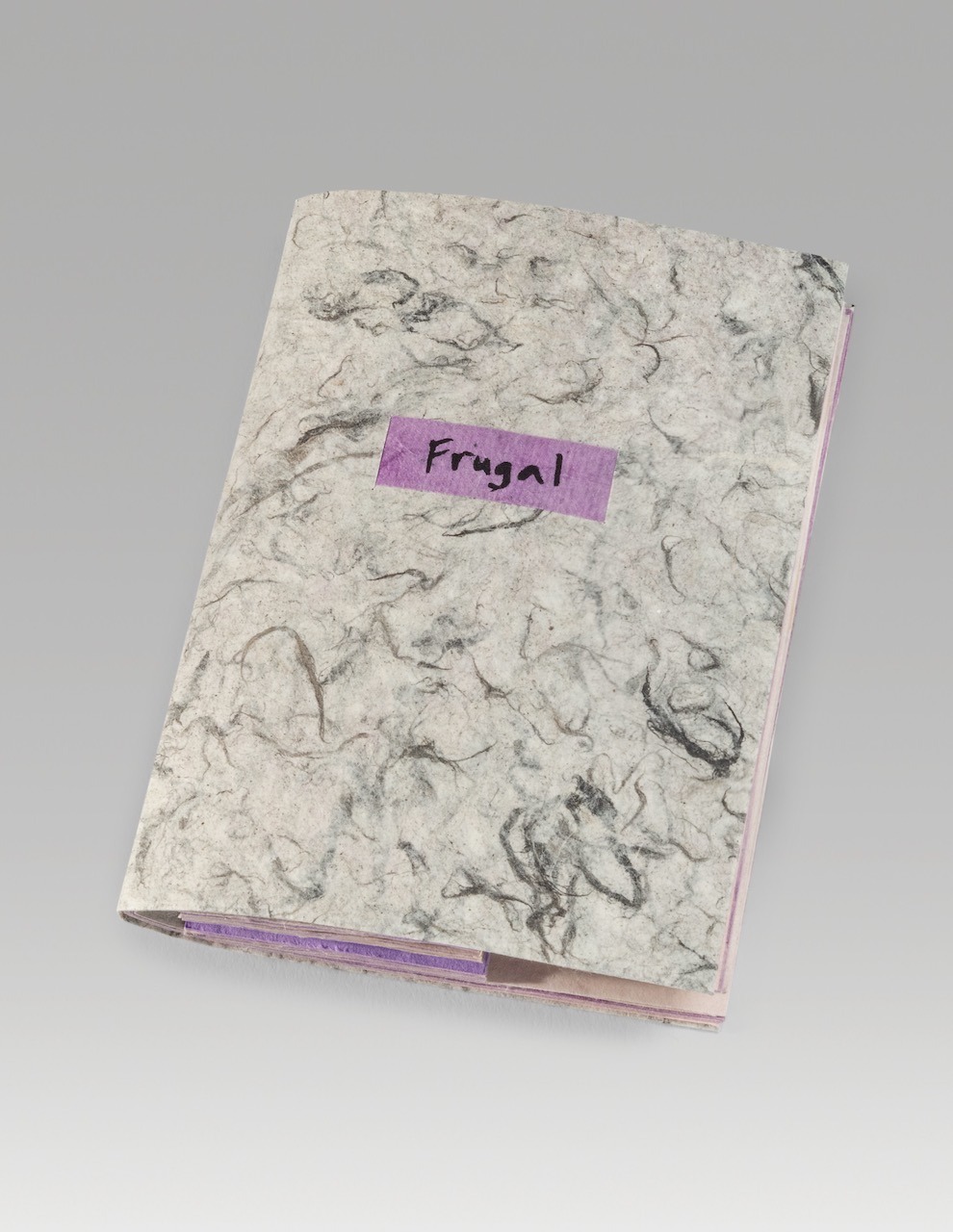
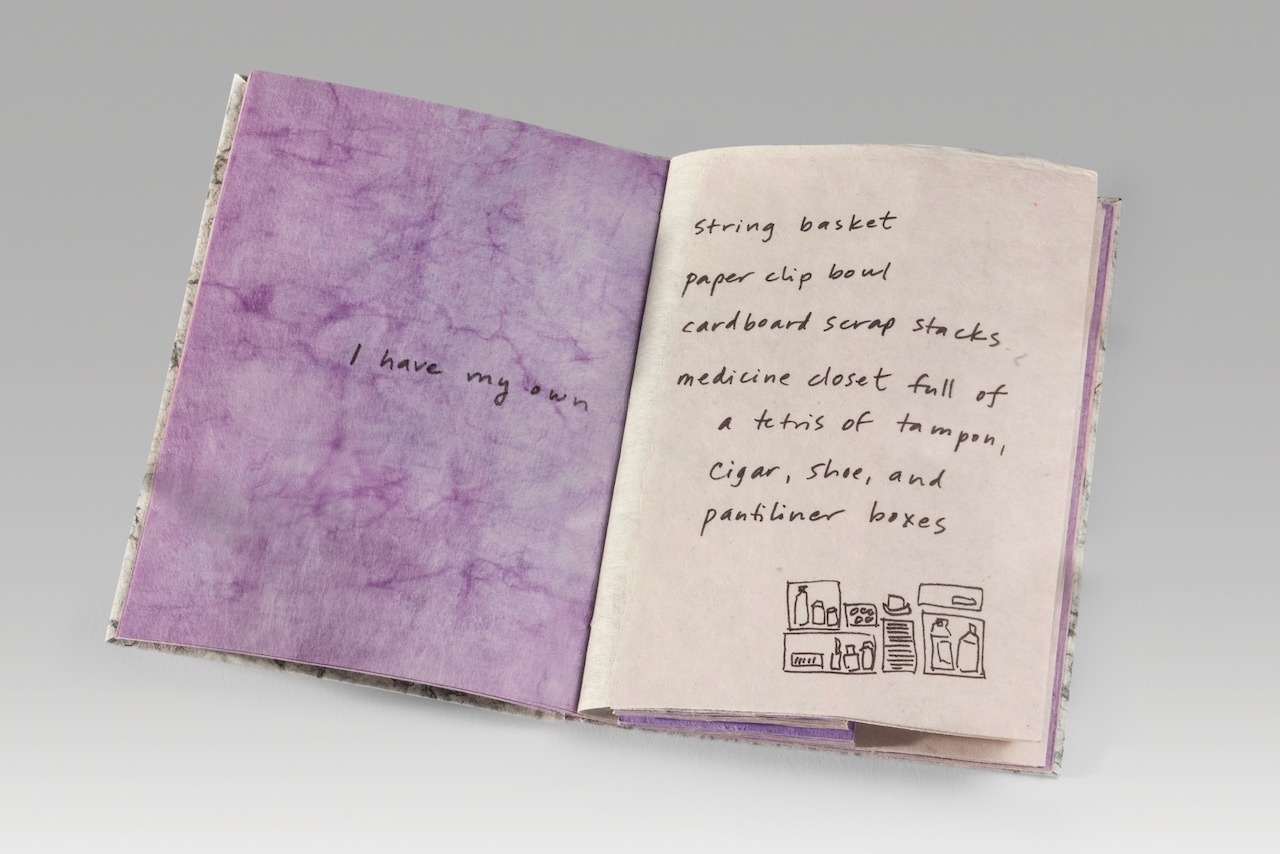
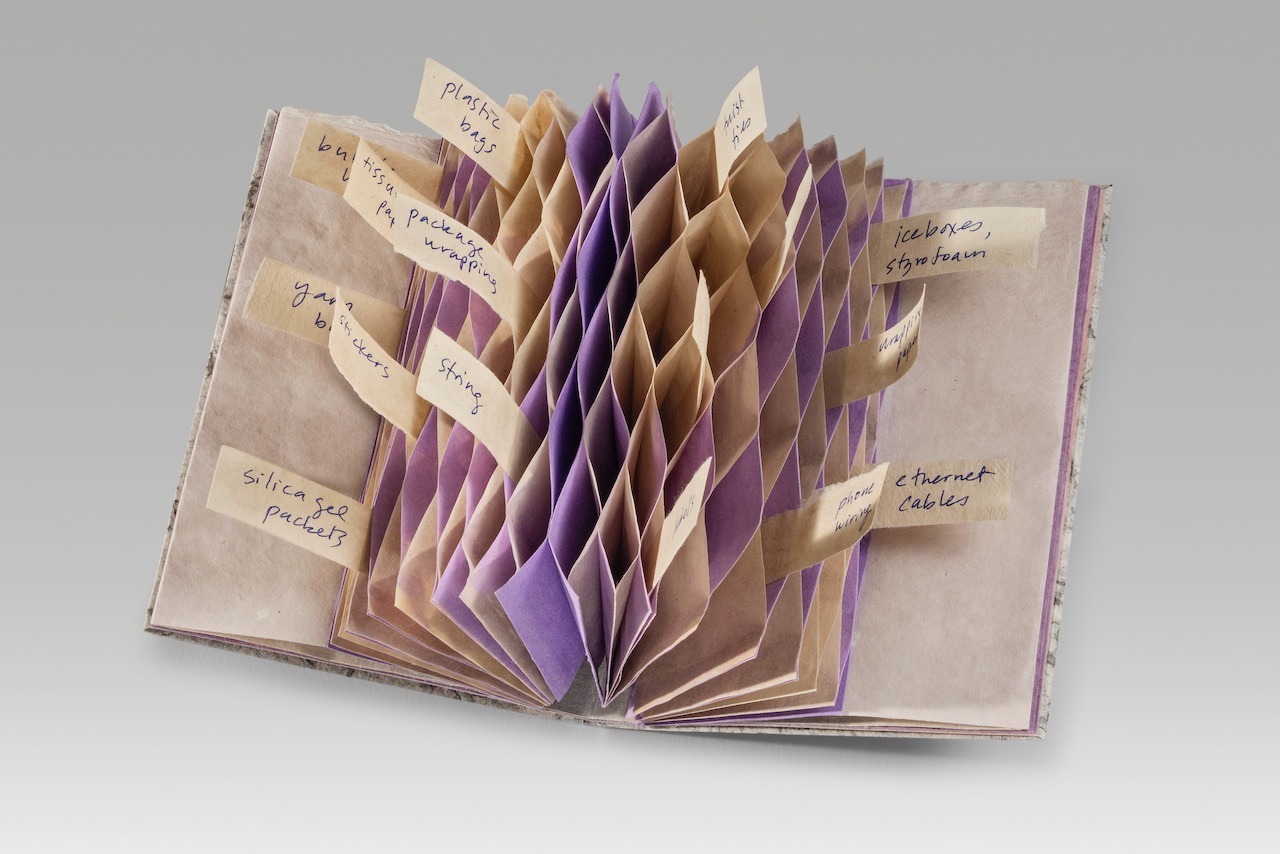
Frugal (version 1)
Frugal (version 1) (2024). Pen on handmade paper, thread. 5.9 x 7 x 1” closed, 14.1” wide open, 5” tall open. Lost by USPS.
Each of these versions has the same text (with slight variation in the tip-ins located inside the honeycomb), which honor a father whose tendencies toward gathering and organizing every little bit that crosses his path might seem ridiculous in the late 20th century and early 21st. But with perspective and age, this habits make more sense given some fathers grew up in the clutches and aftermath of devastating war.
There you are
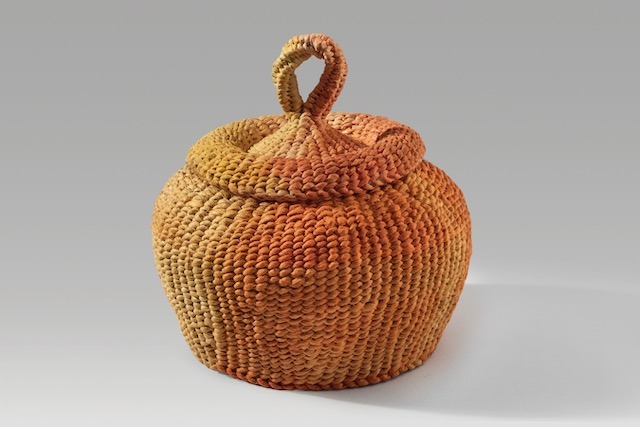
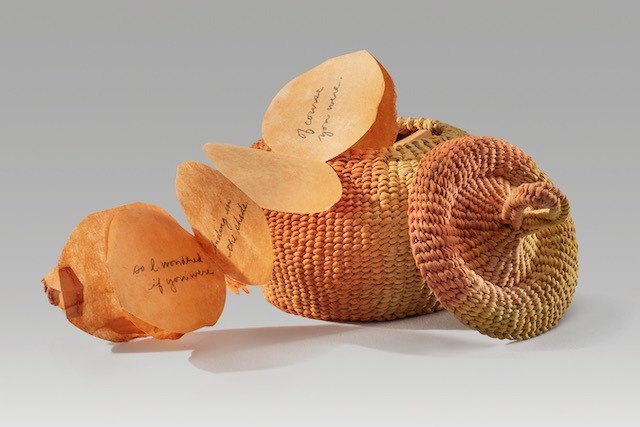
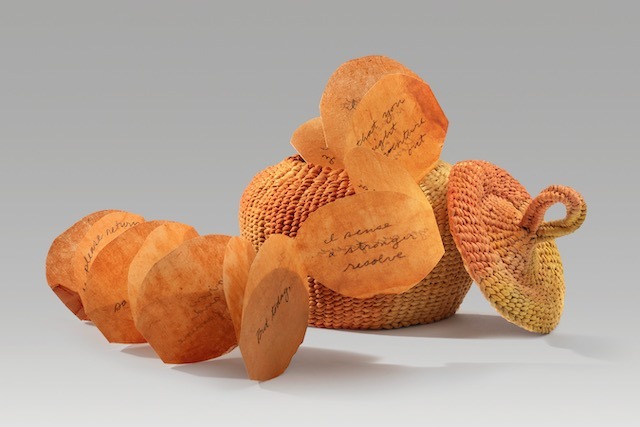
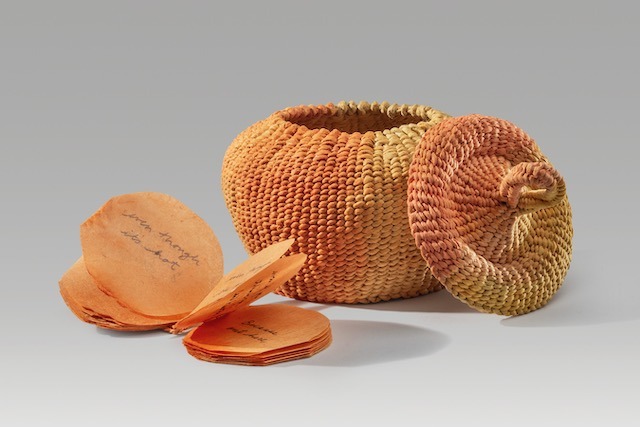
There you are (2023). Basket: coreopsis dye & gouache on corded and twined hanji; 5 x 5.5 x 5.5′. Book: pencil on coreopsis dye on hanji, thread, 7” hanji cord; 2.5 x 2.5 x 0.5” closed, 2.5 x 60” open. One of a kind. Cynthia Sears Collection.
This book in a basket examines the desire to hide from the world when it becomes too overwhelming, and tries to coax a return to the outdoors through gathering flowers for color.
This cover/container/basket is made from corded and twined hanji (Korean paper), dip dyed afterwards in coreopsis dye from Aimee’s garden, with acrylic and gouache touchups on the lid. The accordion is brush dyed with coreopsis dye onto hanji, and inscribed in pencil.
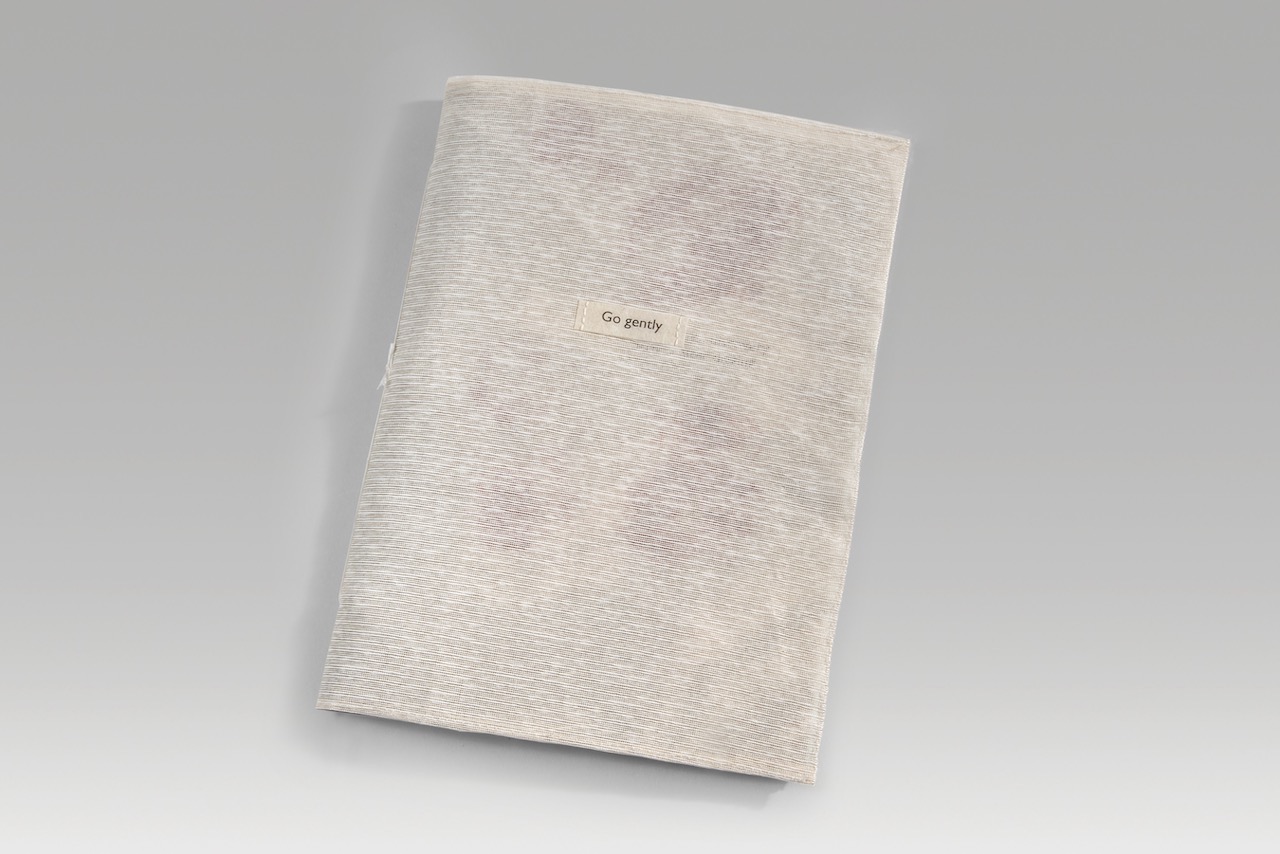
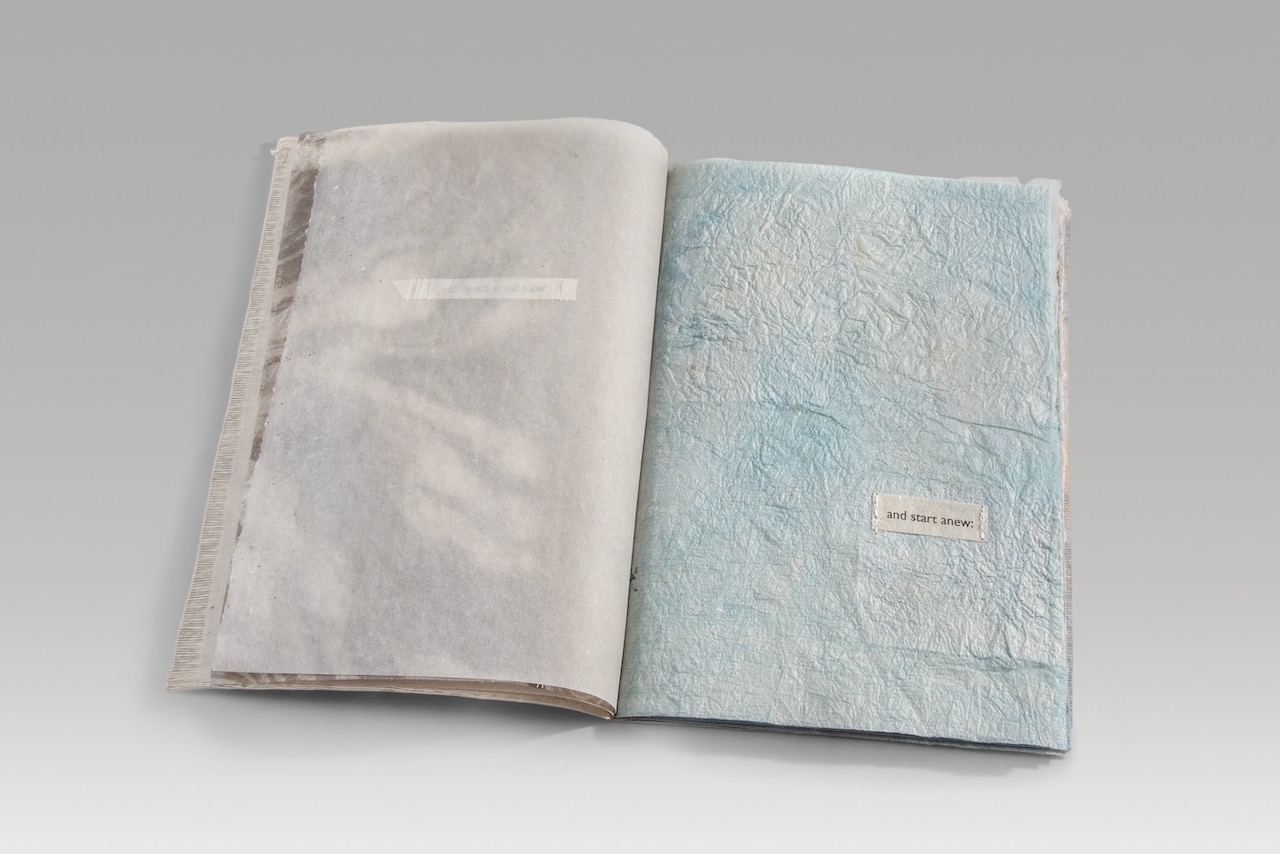
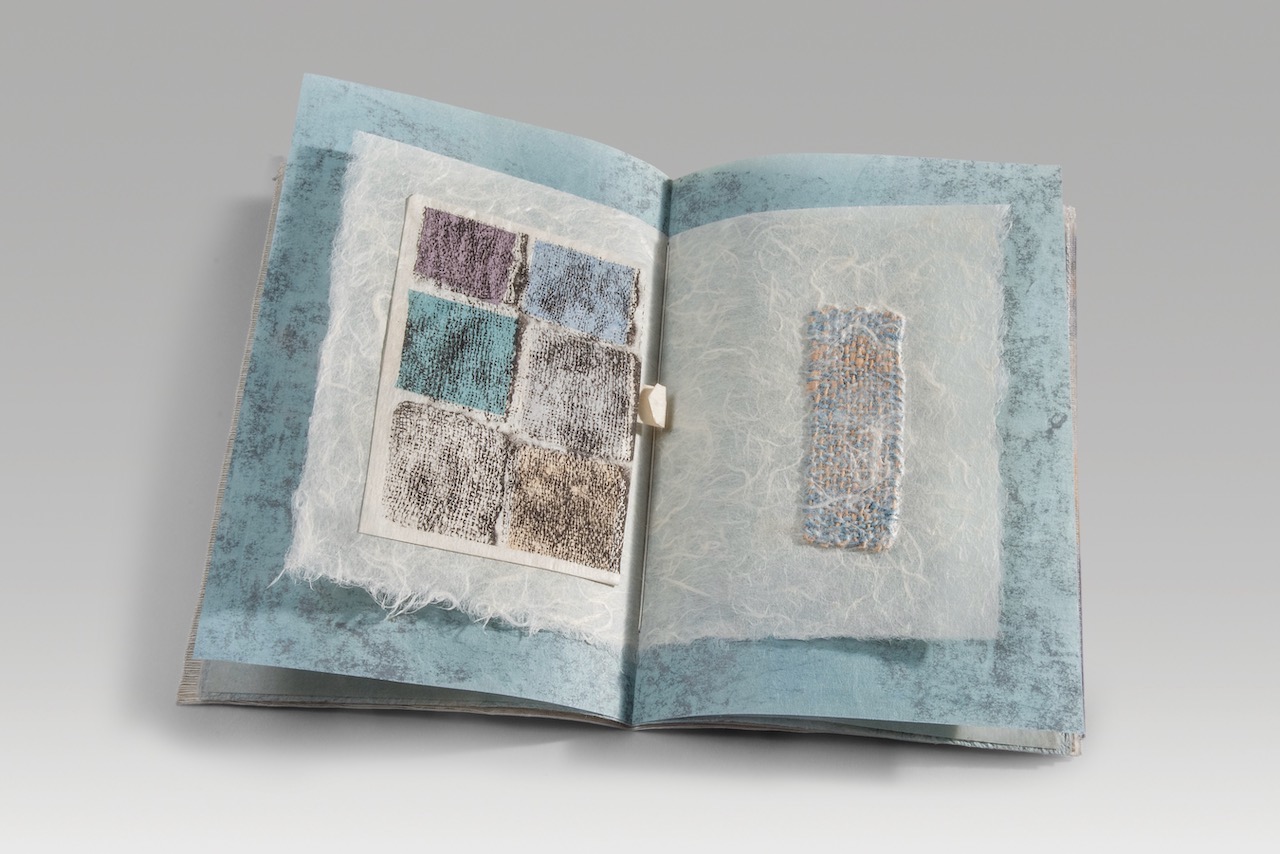
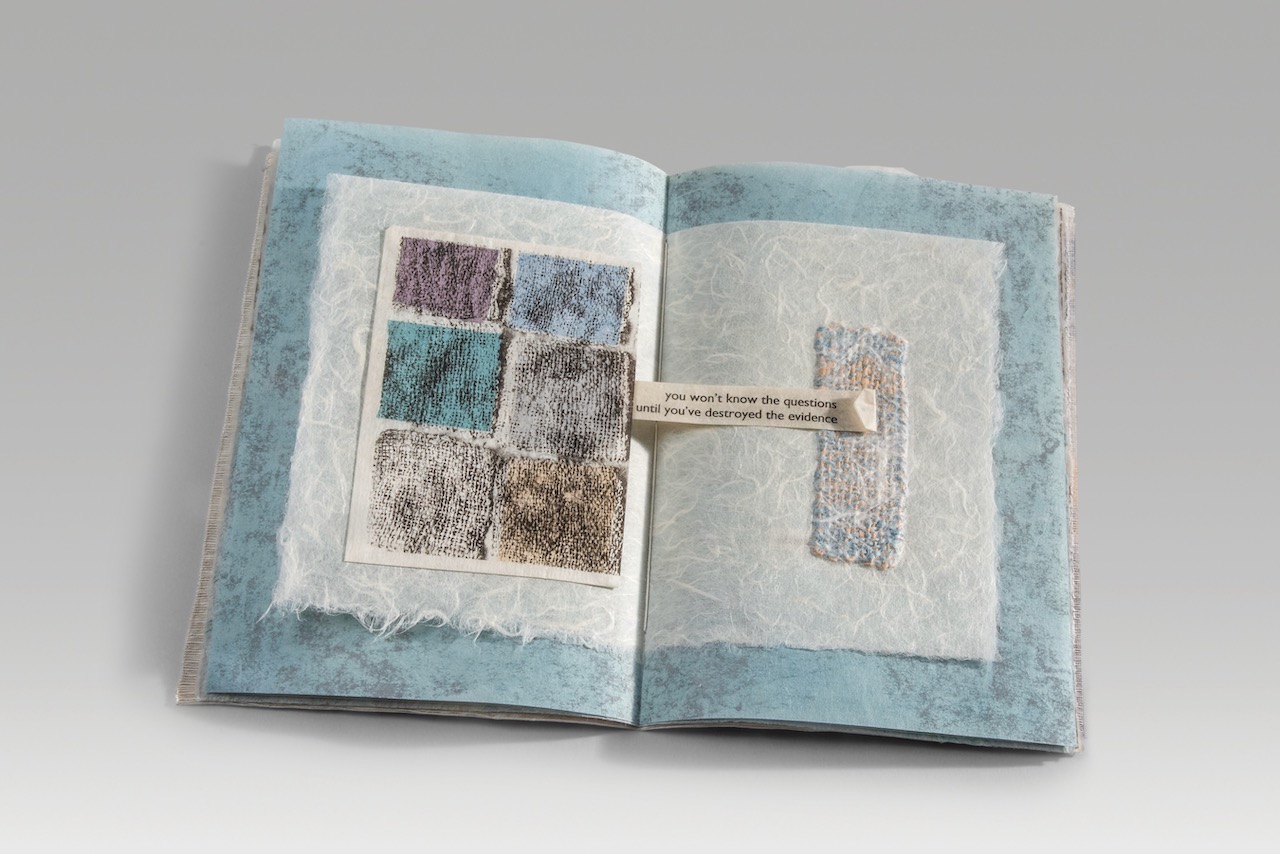
Go gently
Go gently (2023). Inkjet print on handmade papers (hanji, abaca, paper mulberry), thread, woven paper thread, silk/hanji fabric, natural dyeing, crayon grave rubbing, paper lithography, suminagashi, joomchi, pulp painting. 7.25 x 5.25 x 0.3” closed, 10.5” wide open. 14 leaves, variable edition of two. Cynthia Sears Collection; Newberry Library.
This book was inspired by the egregiously mishandled 1971 tomb excavation of King Muryeong (462–523) and his queen. At the time, it was the only intact royal tomb of that period, and had interred the 25th king of Baekjae (18 BCE–660 CE). It was the first solo Korean archaeological project since the peninsula was divided and indelibly affected by war and colonization. After monsoon rains stopped long enough to unseal the tomb, its contents were removed overnight. The junior researcher did not understand his new camera so his photos were useless. Valuable information about the placement of objects was lost in a mad dash to deter the press, which had accessed the tomb ahead of the National Museum team. Ironically, only the press images remain.

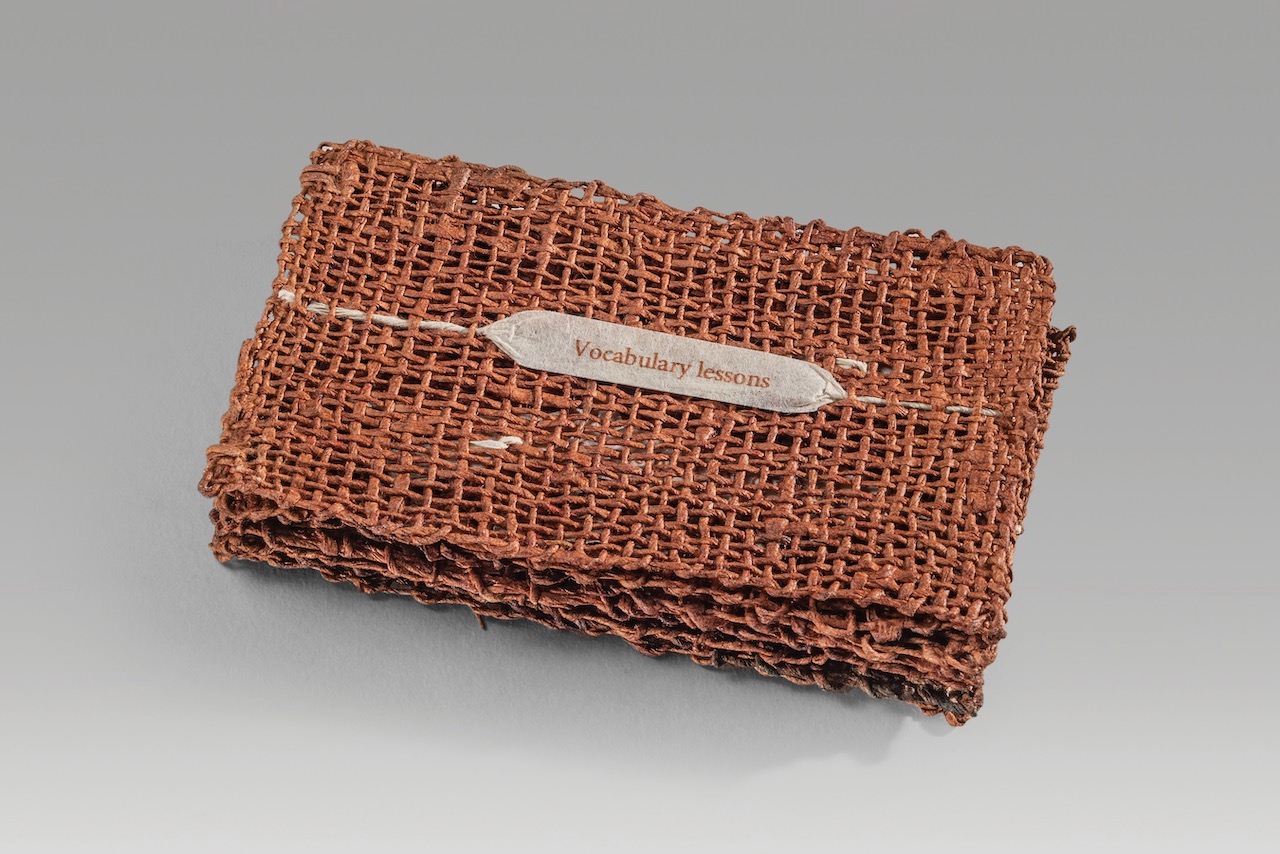
Vocabulary lessons (Version 2)
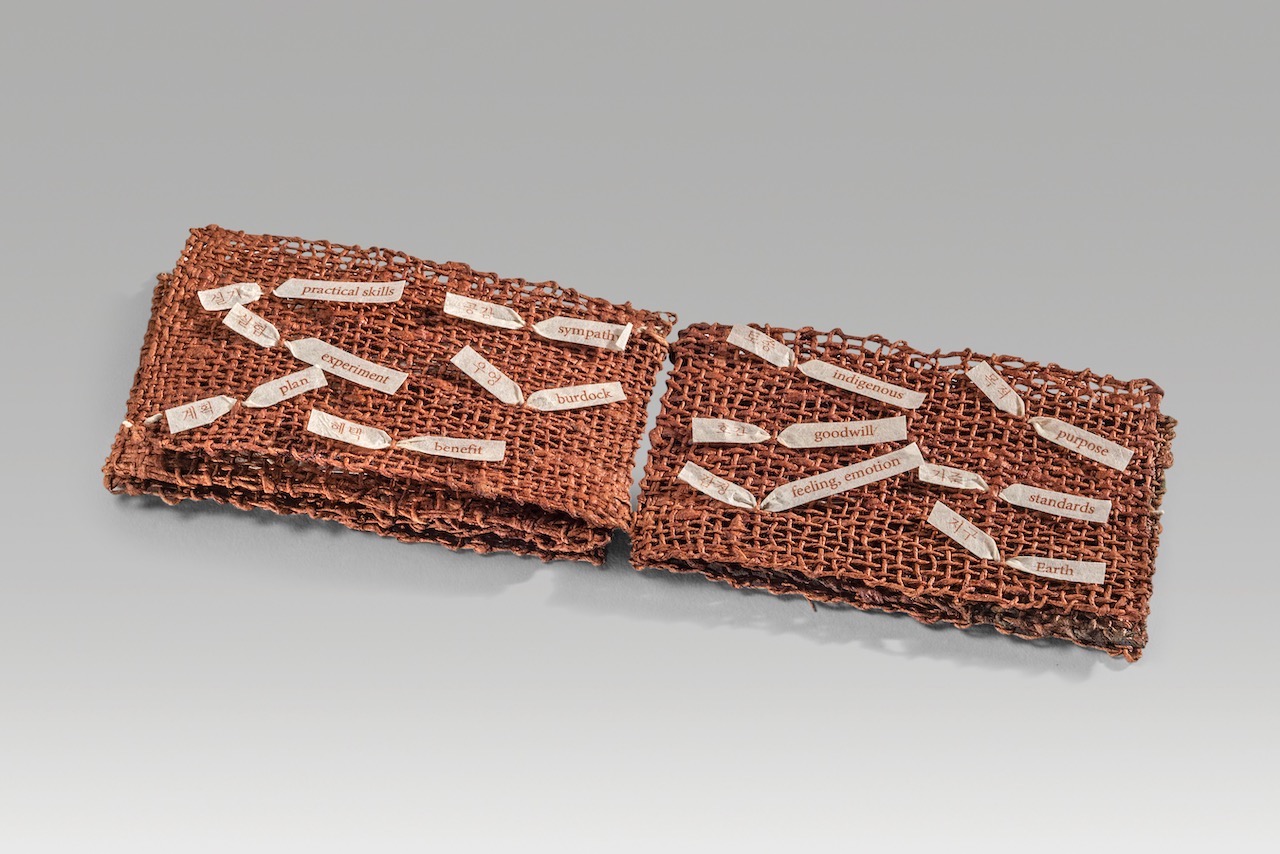
Vocabulary lessons (Version 2) (2023). Inkjet print and persimmon juice on hanji; woven paper thread. 2.5 x 4.25 x 0.75” closed. Smithsonian Institution.
The English translations here are of Korean words that I wanted to remember during my 2021 sojourn. I wrote the narrative text in 2007 while feeling inadequate about my language abilities. We are told that language learning takes best when young, but my Korean was the strongest it had ever been, in my 40s. Later I heard a new truth: older language learners do better because they understand the context behind the words.
Each woven page provides structure, the context with which I approach lifelong language study. The threads are spun from pages of my old sketchbooks; though the message of these marks is lost, they are part of the paper-thread-page as a new foundation for future words.
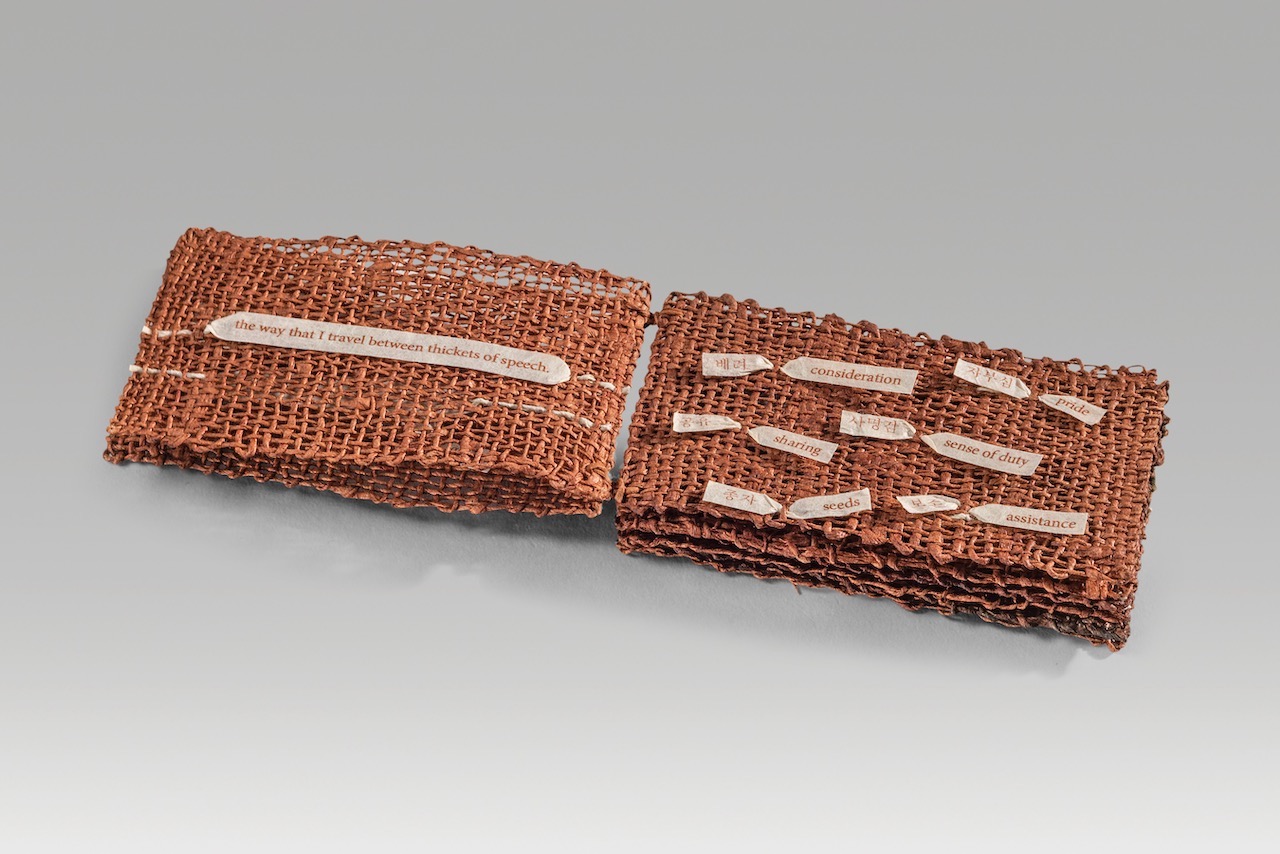
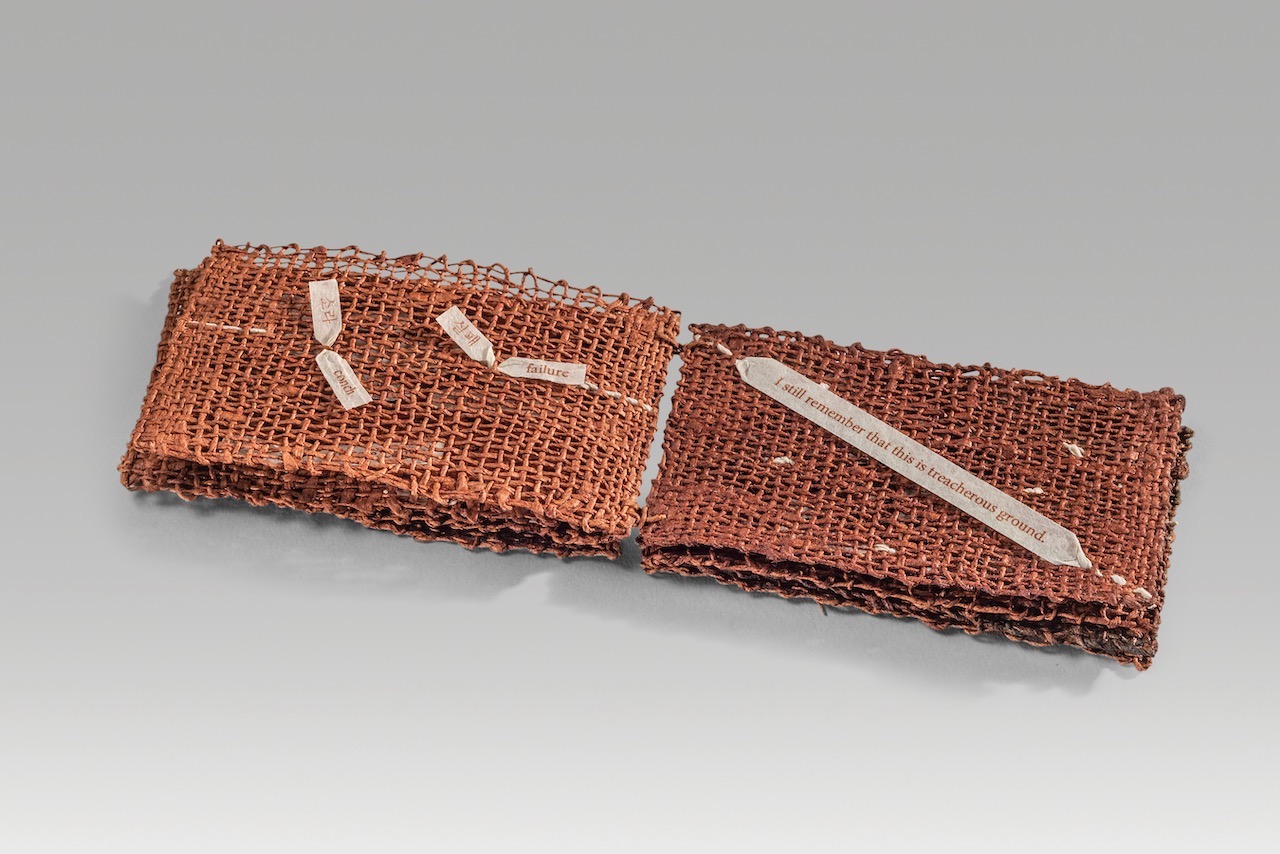
Vocabulary lessons (Version 1)
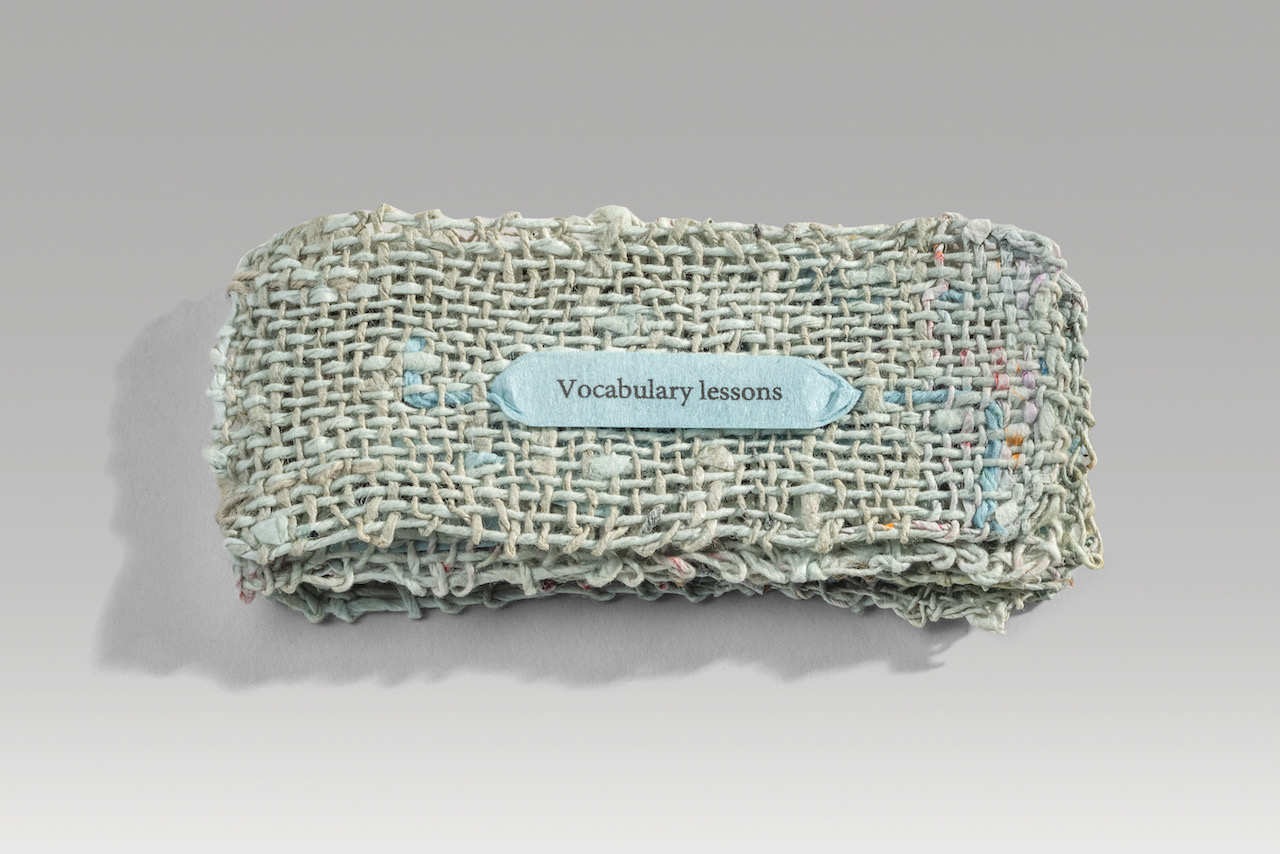
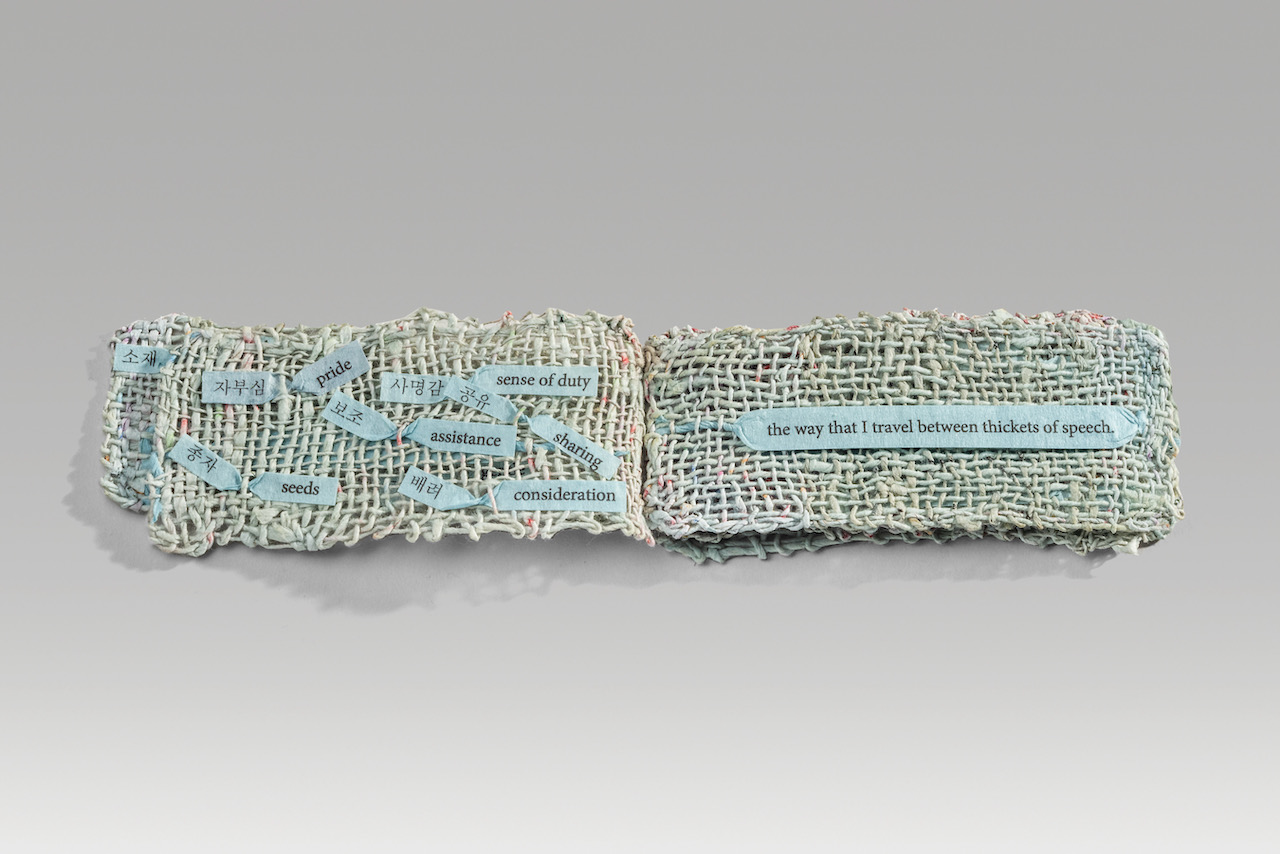
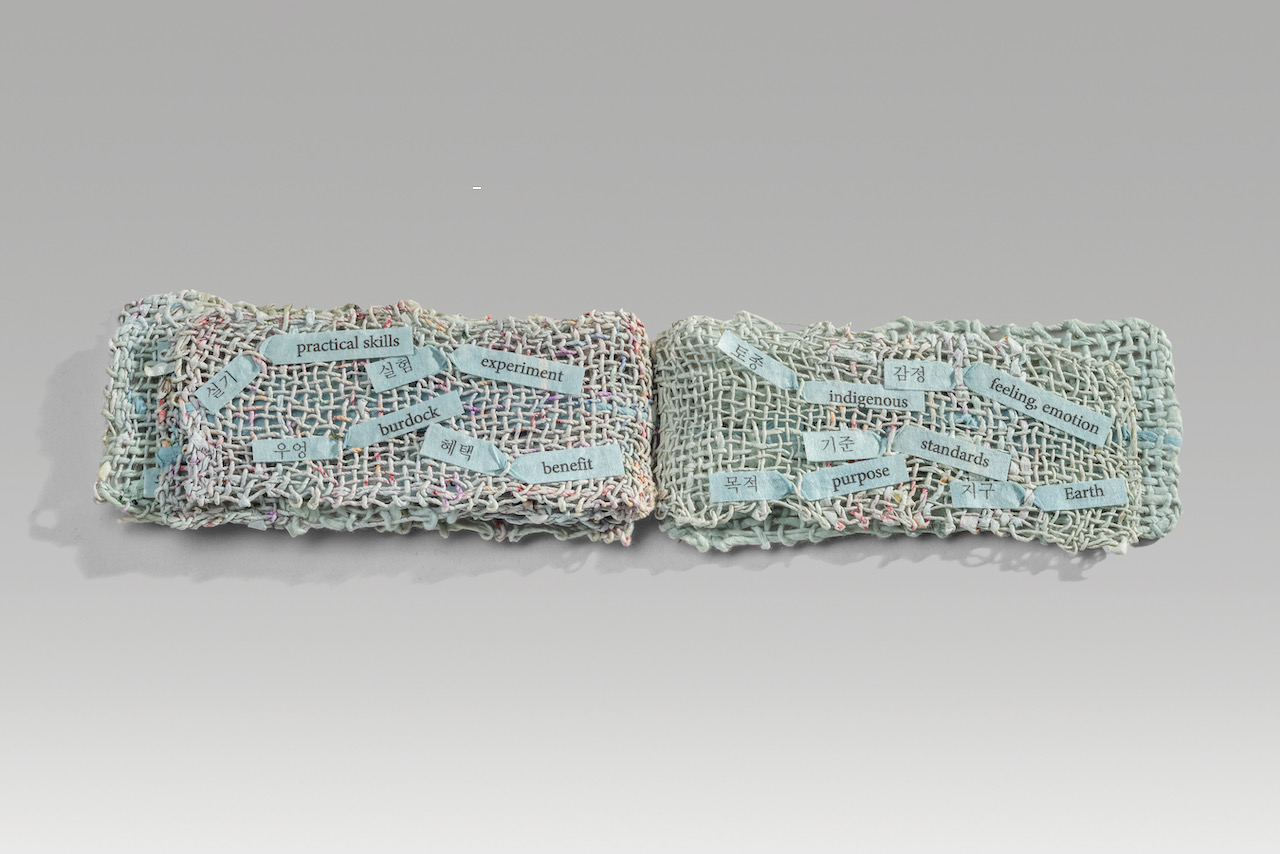
Vocabulary lessons (2021). Inkjet print and indigo dye on hanji and piña paper; thread made from colored pencil and indigo fresh leaves on handmade paper; linen thread. 7 woven leaves. 1.8 x 4.25 x 0.75” closed, 8.2” wide open. Cynthia Sears Collection.
The English translations here are of Korean words that I wanted to remember during my 2021 sojourn. I wrote the narrative text in 2007 while feeling inadequate about my language abilities. We are told that language learning takes best when young, but my Korean was the strongest it had ever been, in my 40s. Later I heard a new truth: older language learners do better because they understand the context behind the words.
Each woven page provides structure, the context with which I approach lifelong language study. The threads are spun from pages of my old sketchbooks; though the message of these marks is lost, they are part of the paper-thread-page as a new foundation for future words.
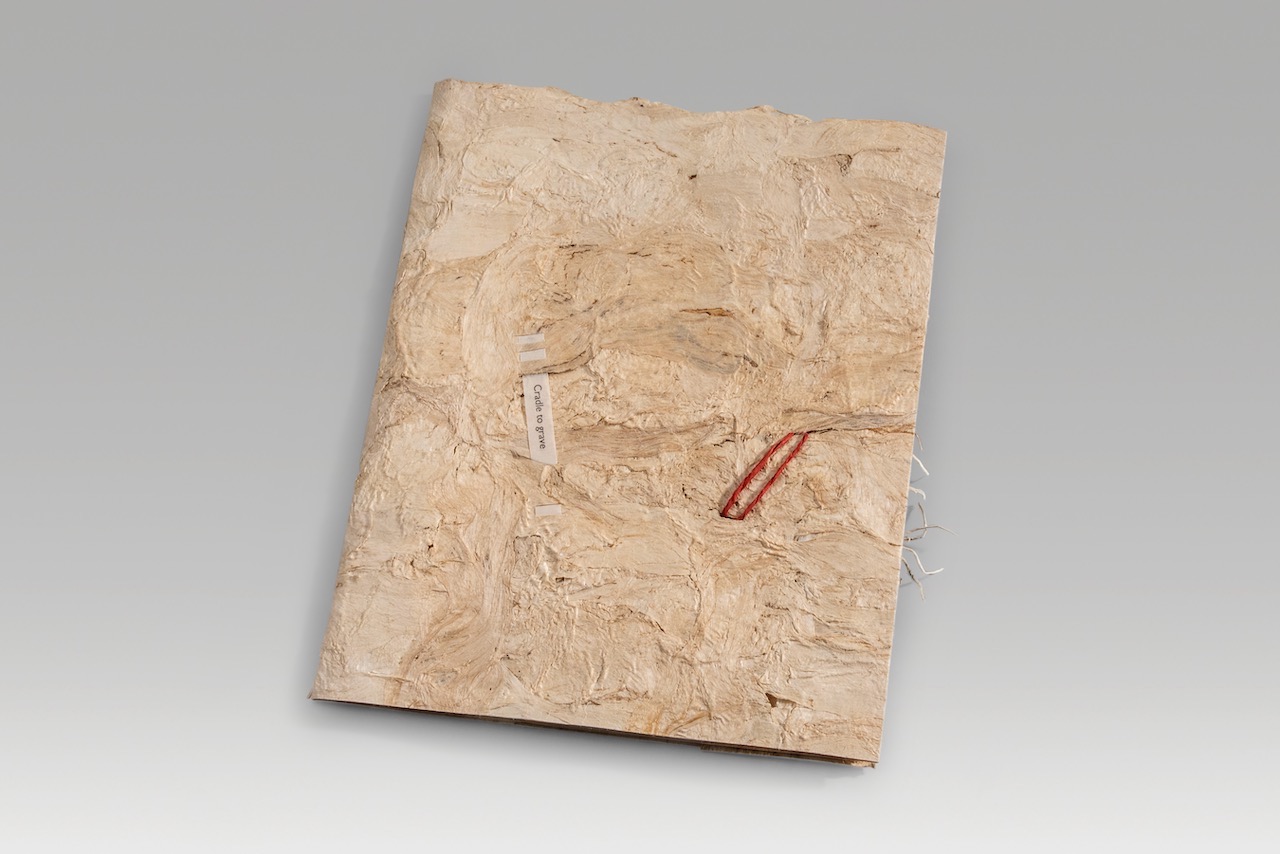
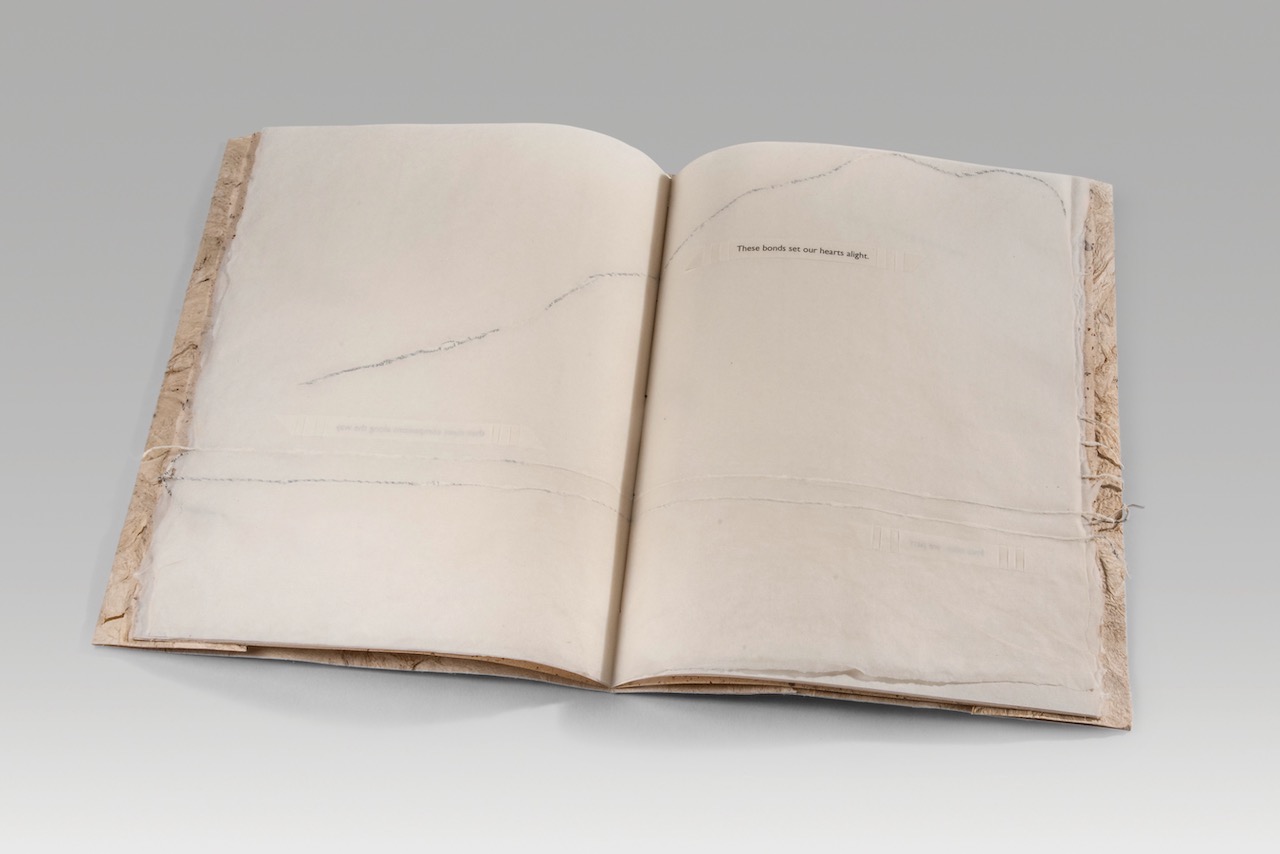
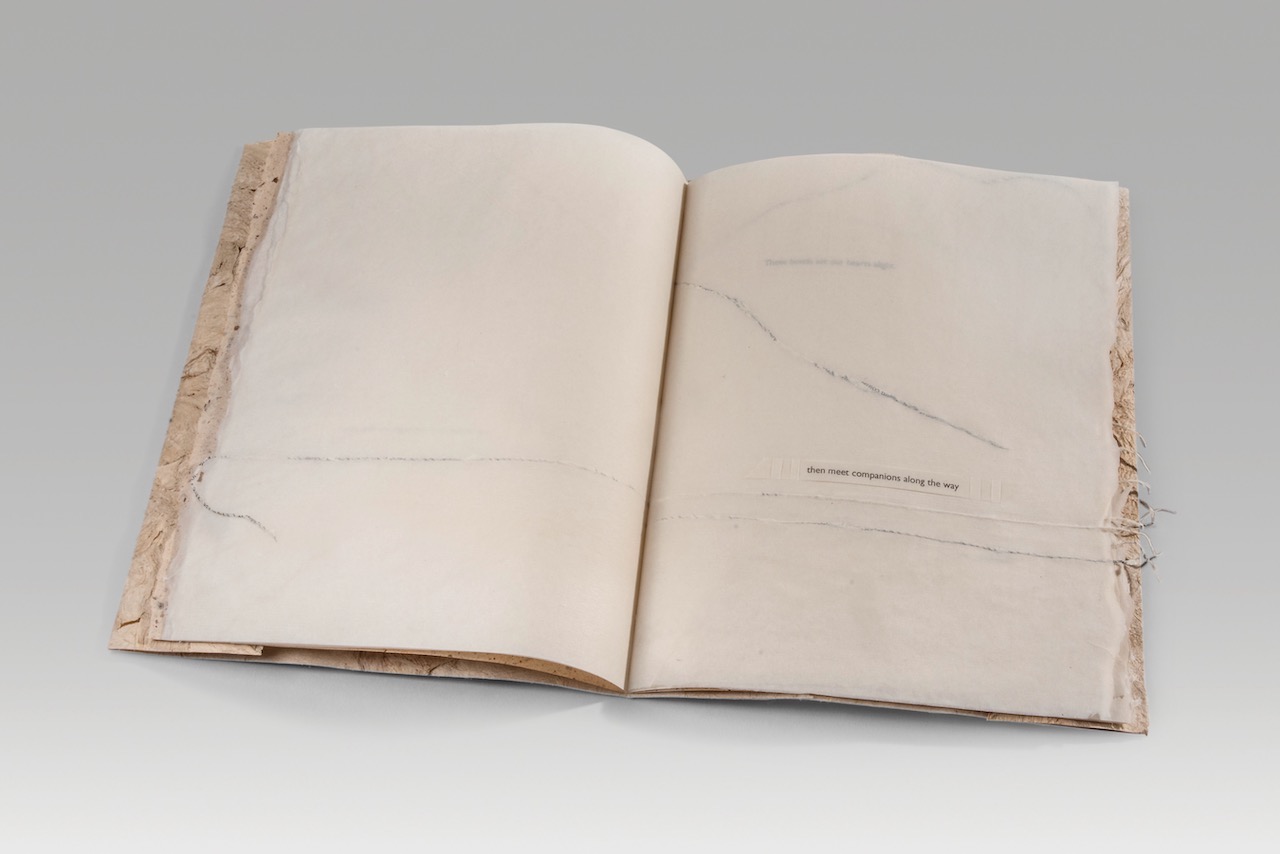
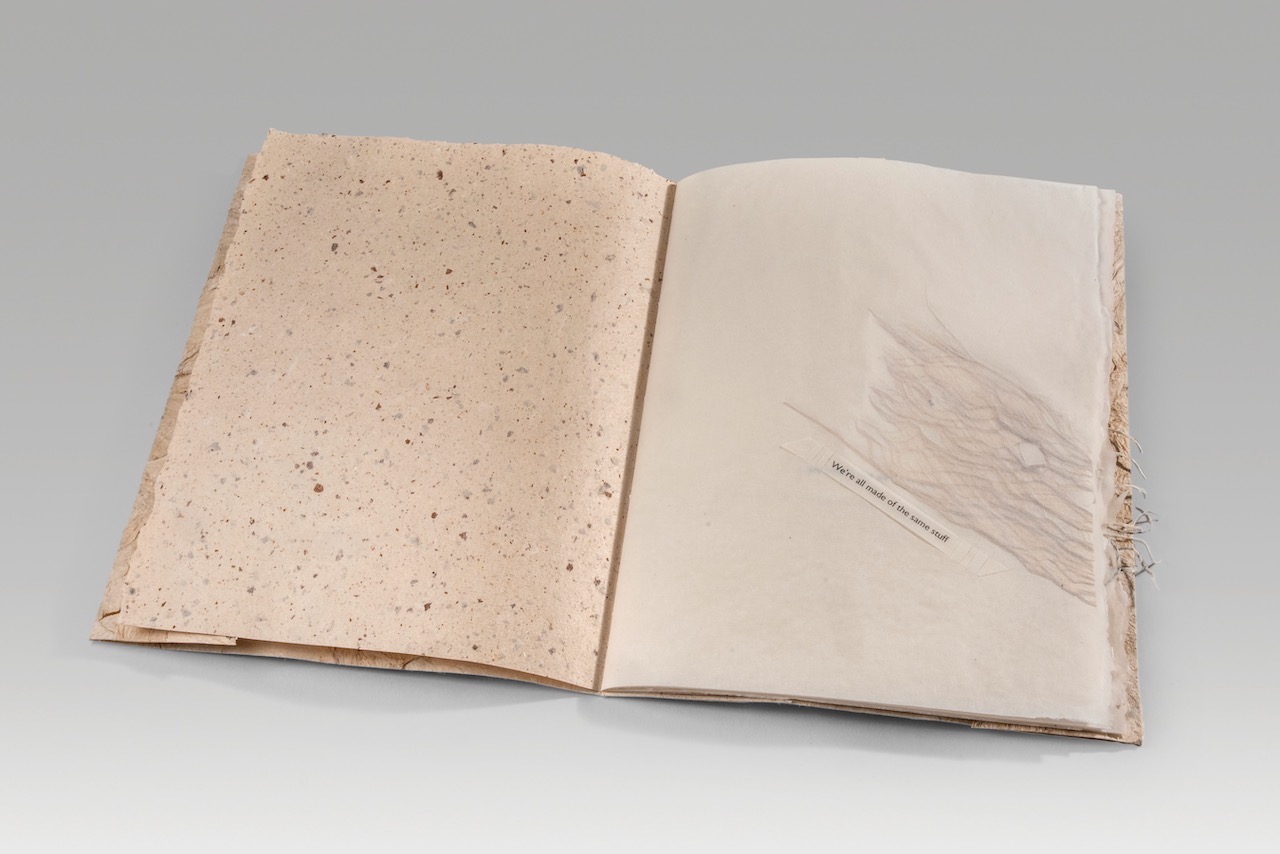
Cradle to grave
Cradle to grave (2023). Beaten Thai paper mulberry bark covers, abaca and milkweed coma/seed paper endsheets, bark lace and inkjet print on paper thread embedded into abaca paper pages. 10 x 8.25 x 0.5” closed, 16.6” wide open. Tufts University, W. Van Clark, Jr Library Collection.
Embedded paper thread (whose text is obscured in the process of making) and bark lace trace a universal arc of human life. The text, on translucent abaca paper, has been laced into the same paper for pages.
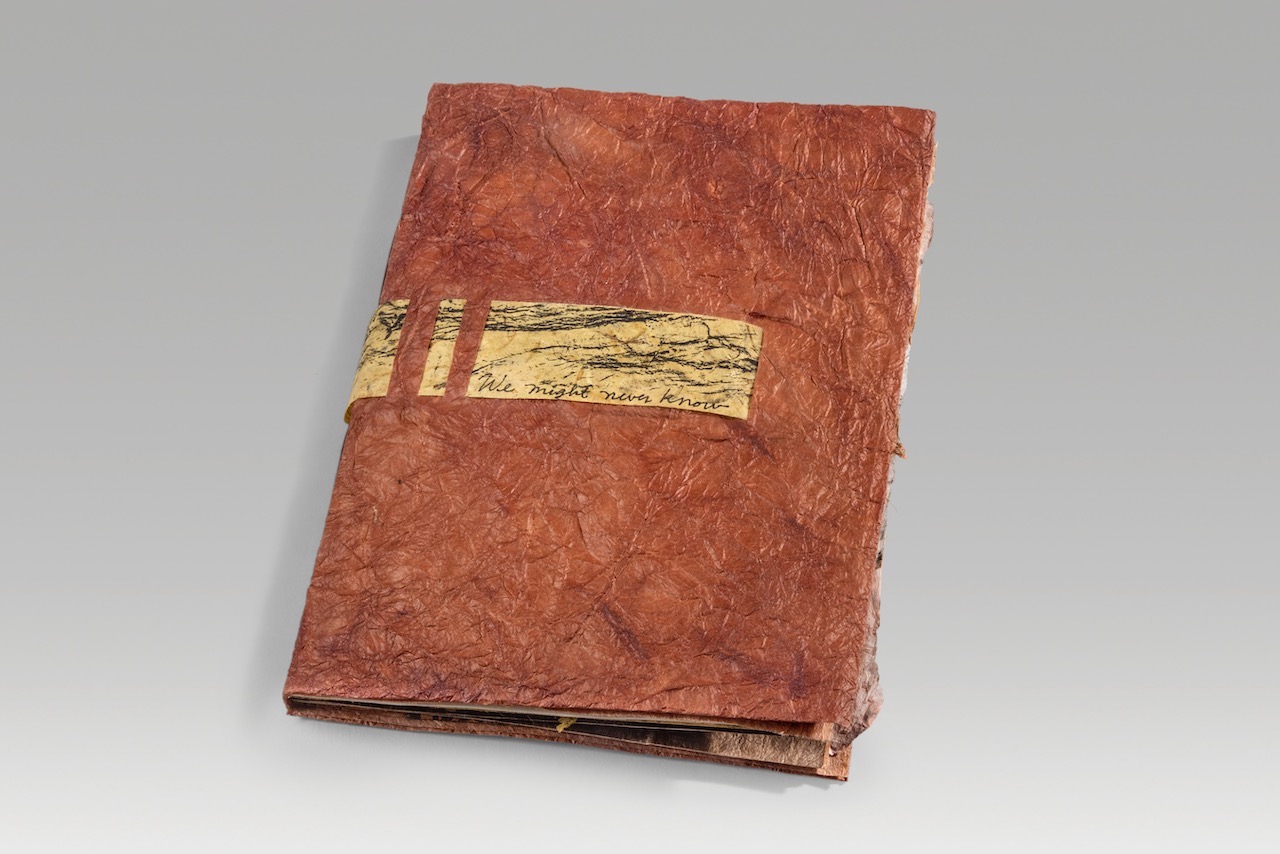
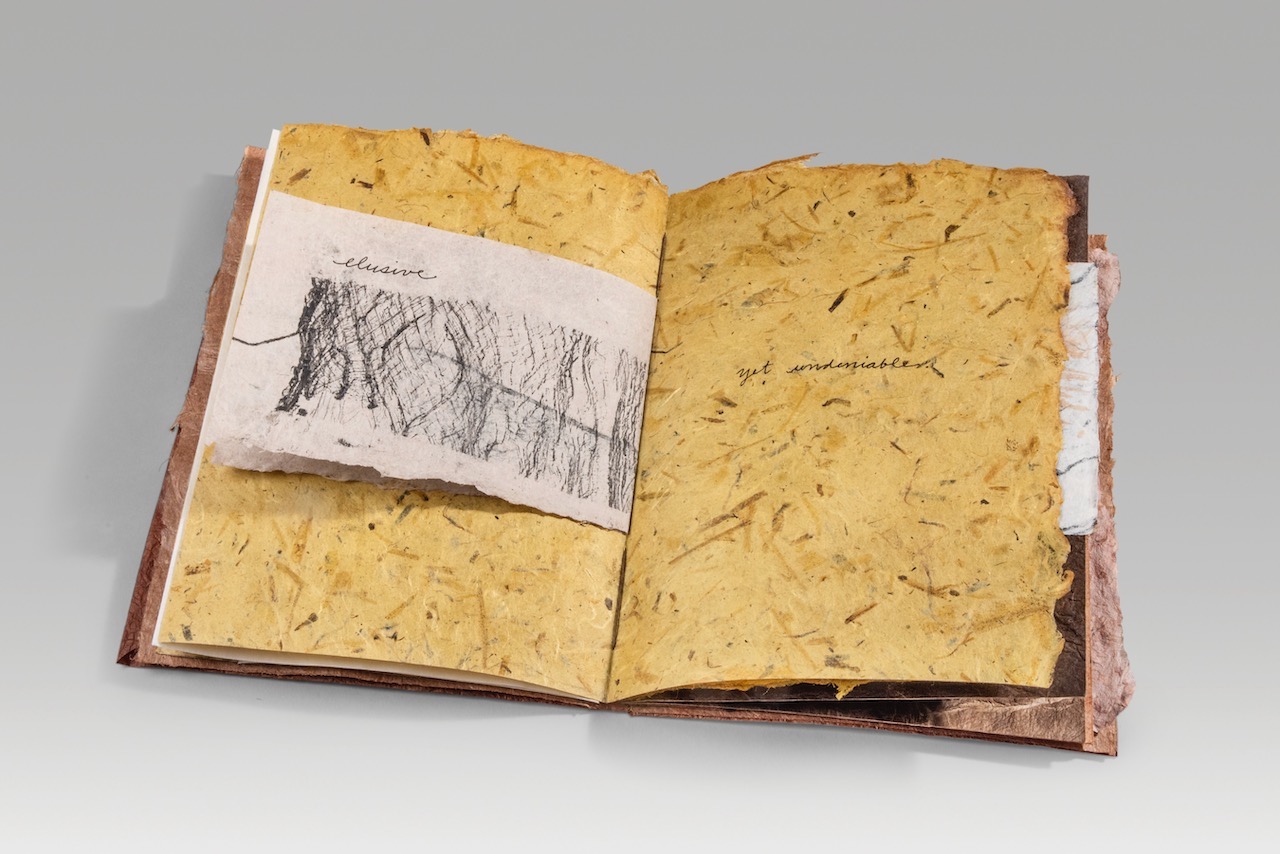
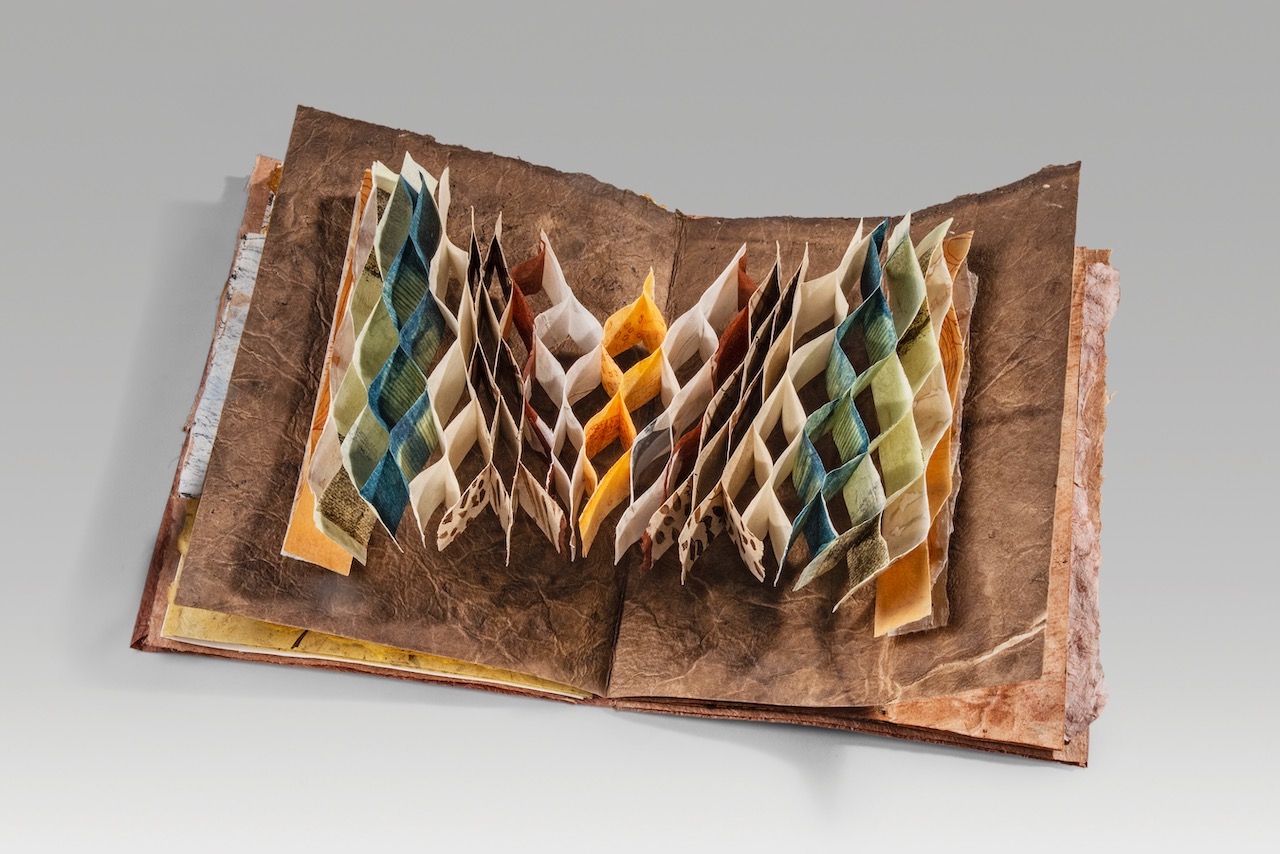
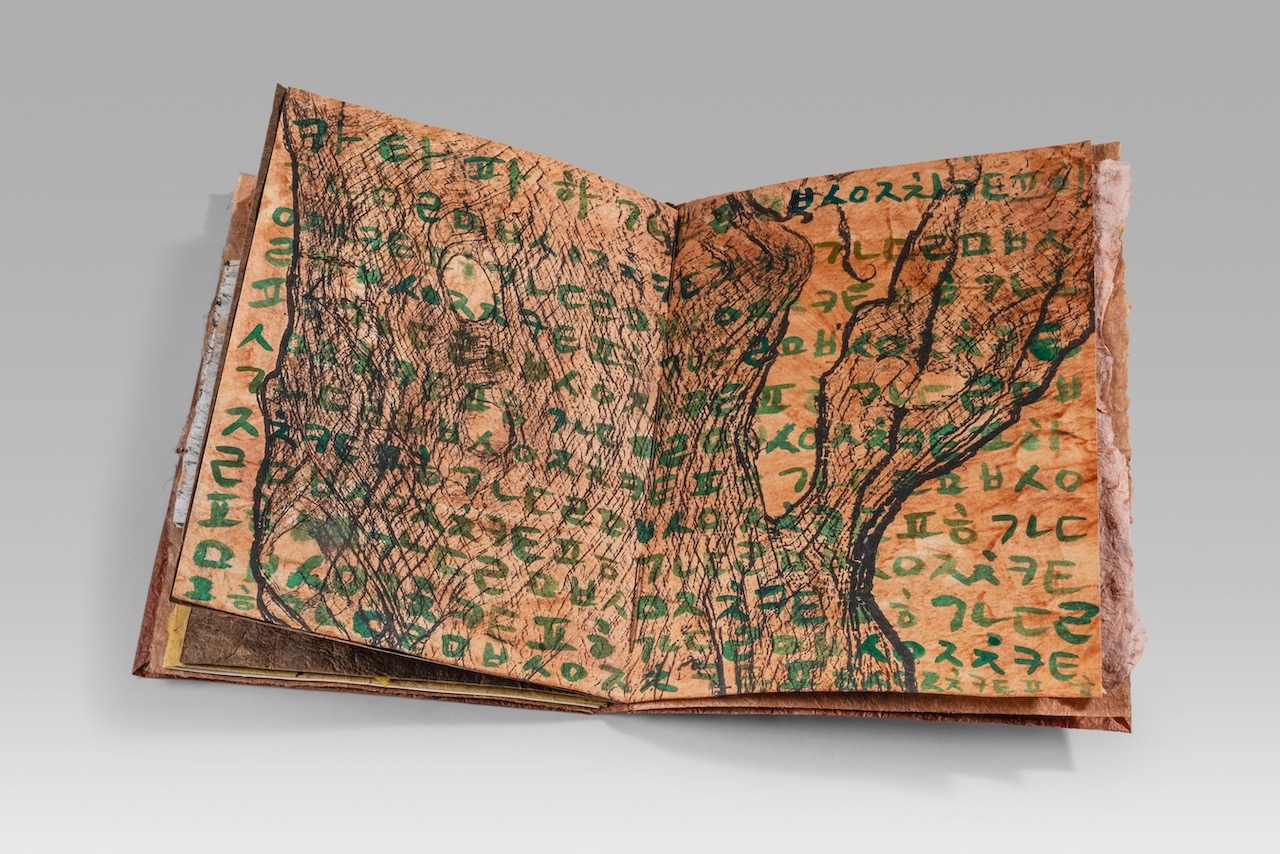
We might never know
We might never know (2023). Handmade papers, dyes, pen, ink prints of bark lace, acrylic paint. 8.6 x 6.5 x 1” closed, 13.3” wide open. One of a kind. Cynthia Sears collection.
Inspired by the fact that textiles disintegrate fastest when buried but their imprints remain on objects that survive, like clay pots.
A basket is a reminder (blue version)
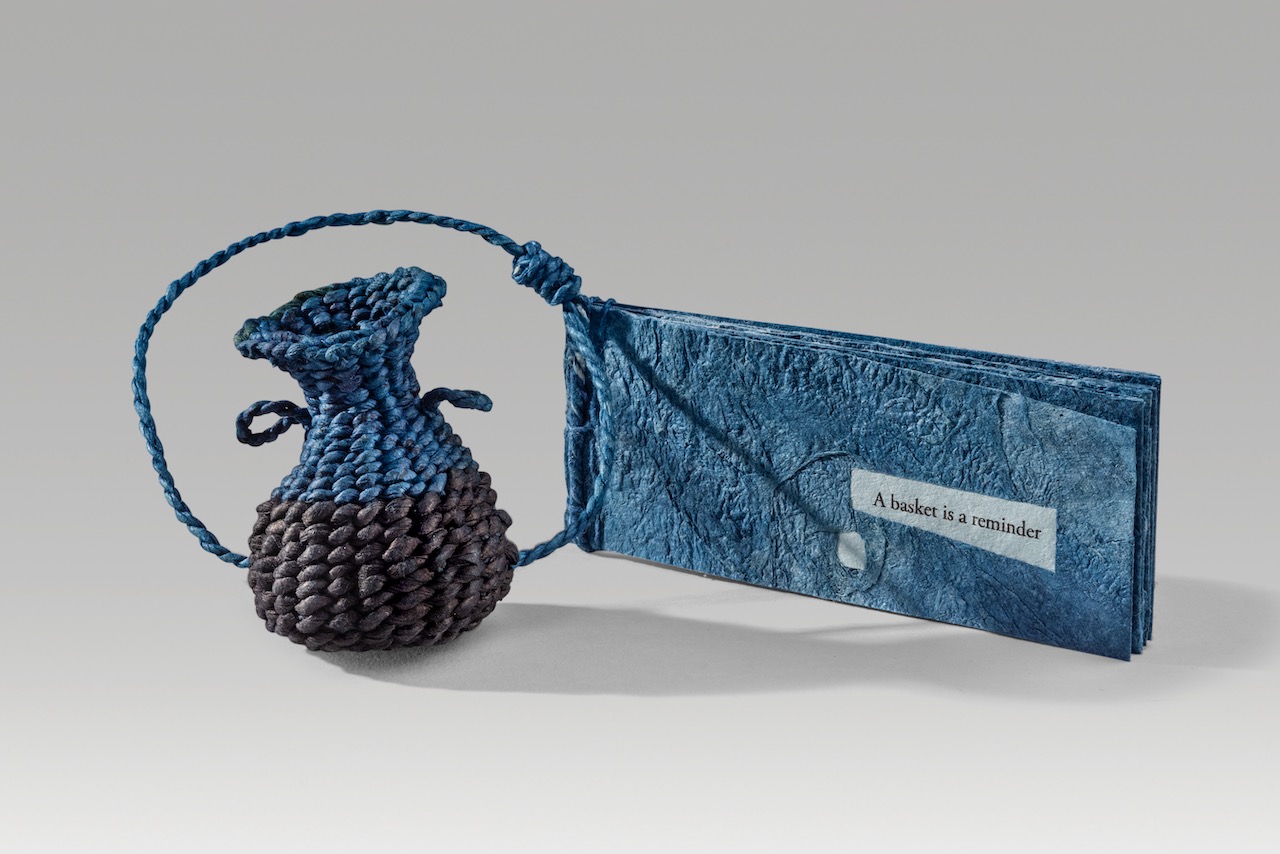
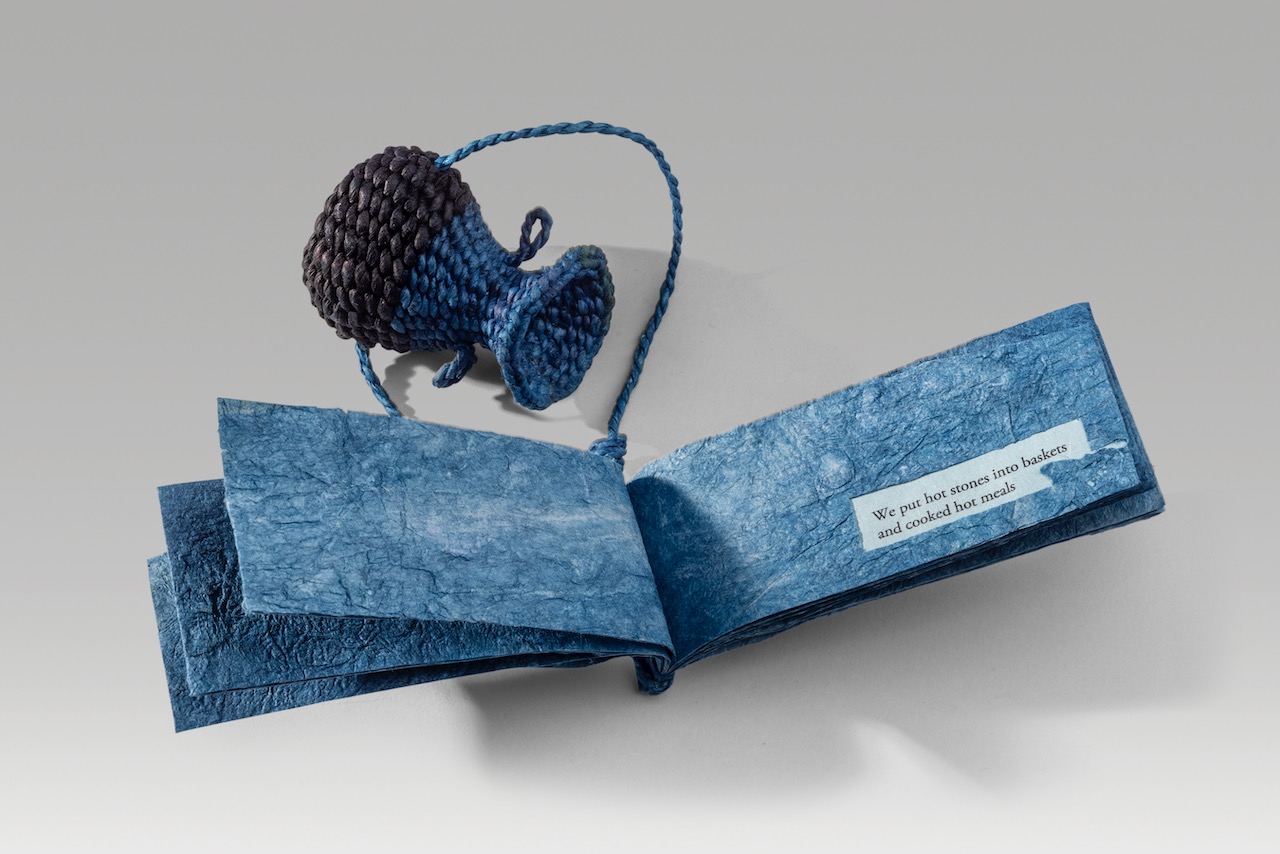
A basket is a reminder (blue version) (2022). Indigo dye in paper thread and paper cord, on corded and twined hanji, combined with joomchi and inkjet print on hanji. Basket: 2.6 x 2 x 2.25”; book: 2 x 5 x 0.4” closed. One of a kind.
The second version of a book that looks at the history of how humans and baskets came up together.
A basket is a reminder (Version 3)
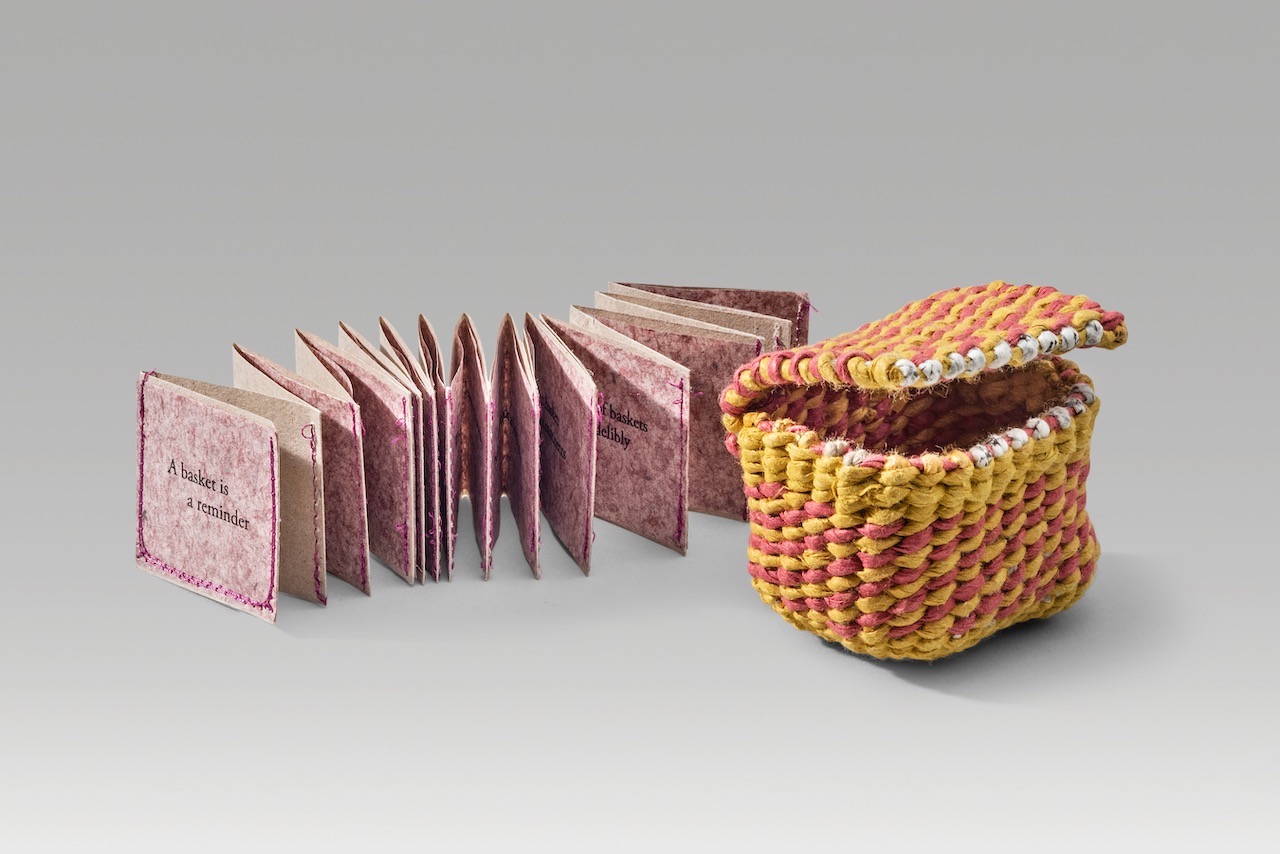
A Basket is a reminder (Version 3) (2023). Corded and twined hanji, thread and inkjet on handmade paper. Basket: 3 x 2.5 x 2″; book: 1.5 x 1.6 x 1” closed, 35” wide open. Cynthia Sears collection.
A Basket is a reminder (version 1)
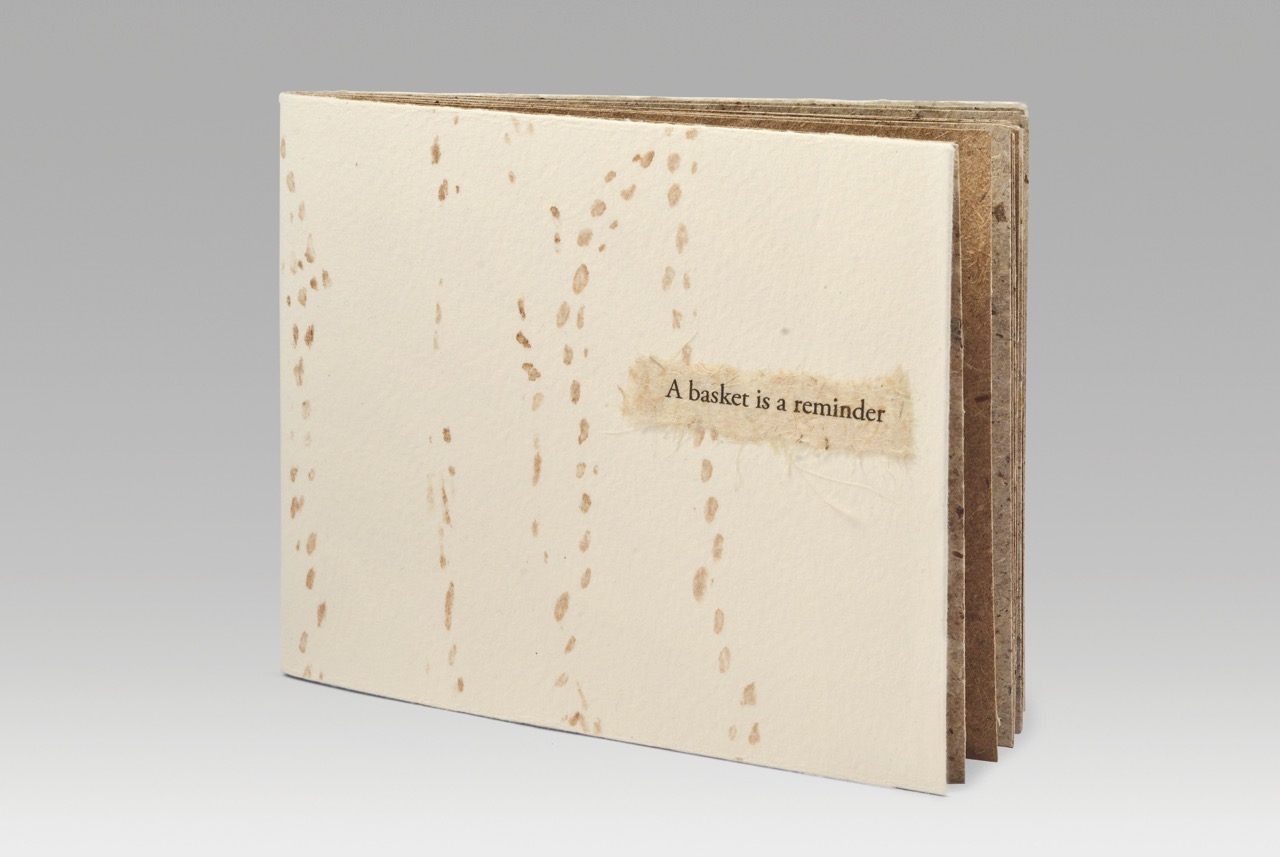
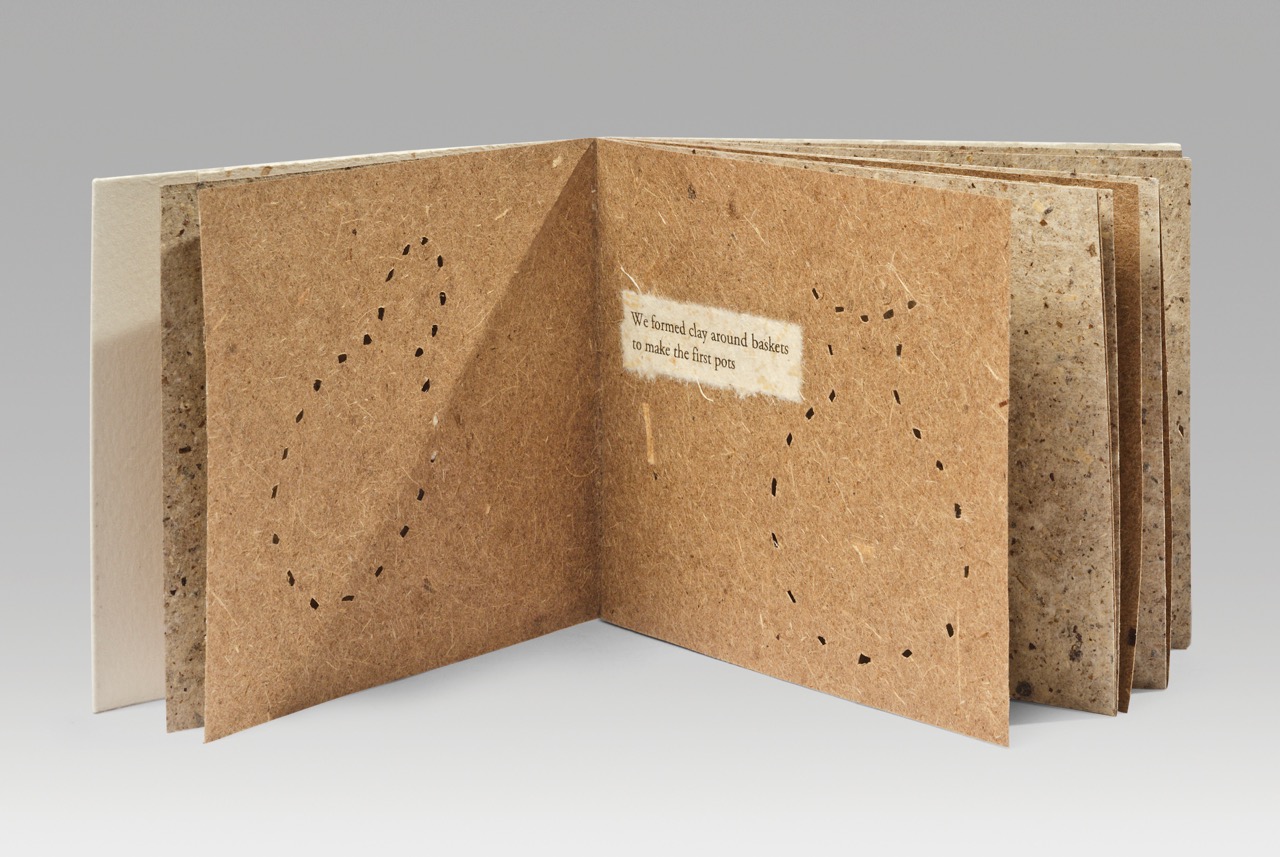
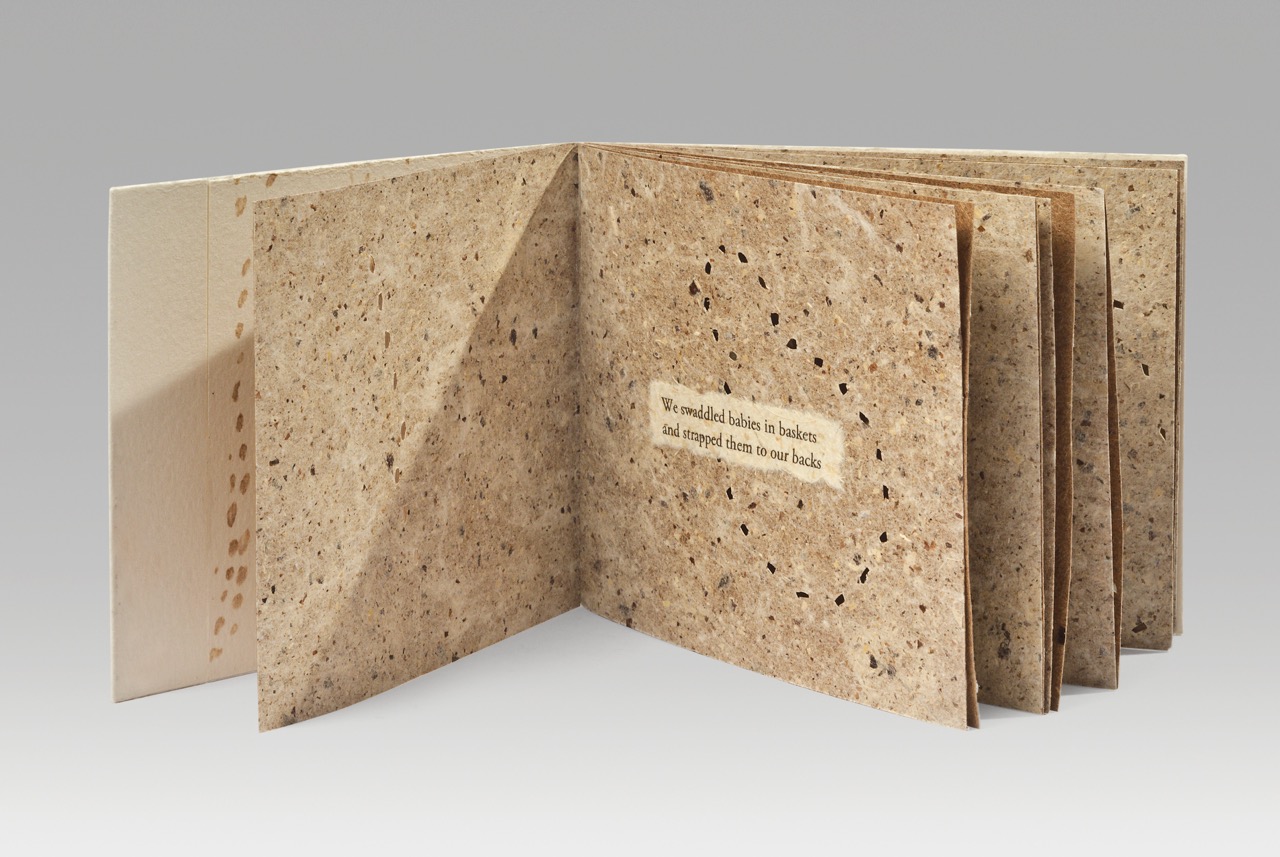
A Basket is a reminder (2017). Walnut ink, cutouts, ink on handmade laminated paper (iris + milkweed). Inkjet prints on handmade yucca paper. 12 leaves. 3.75 x 4.75 x 0.6″ closed, 9.4″ wide open. Cynthia Sears collection.
Pelagic inheritance
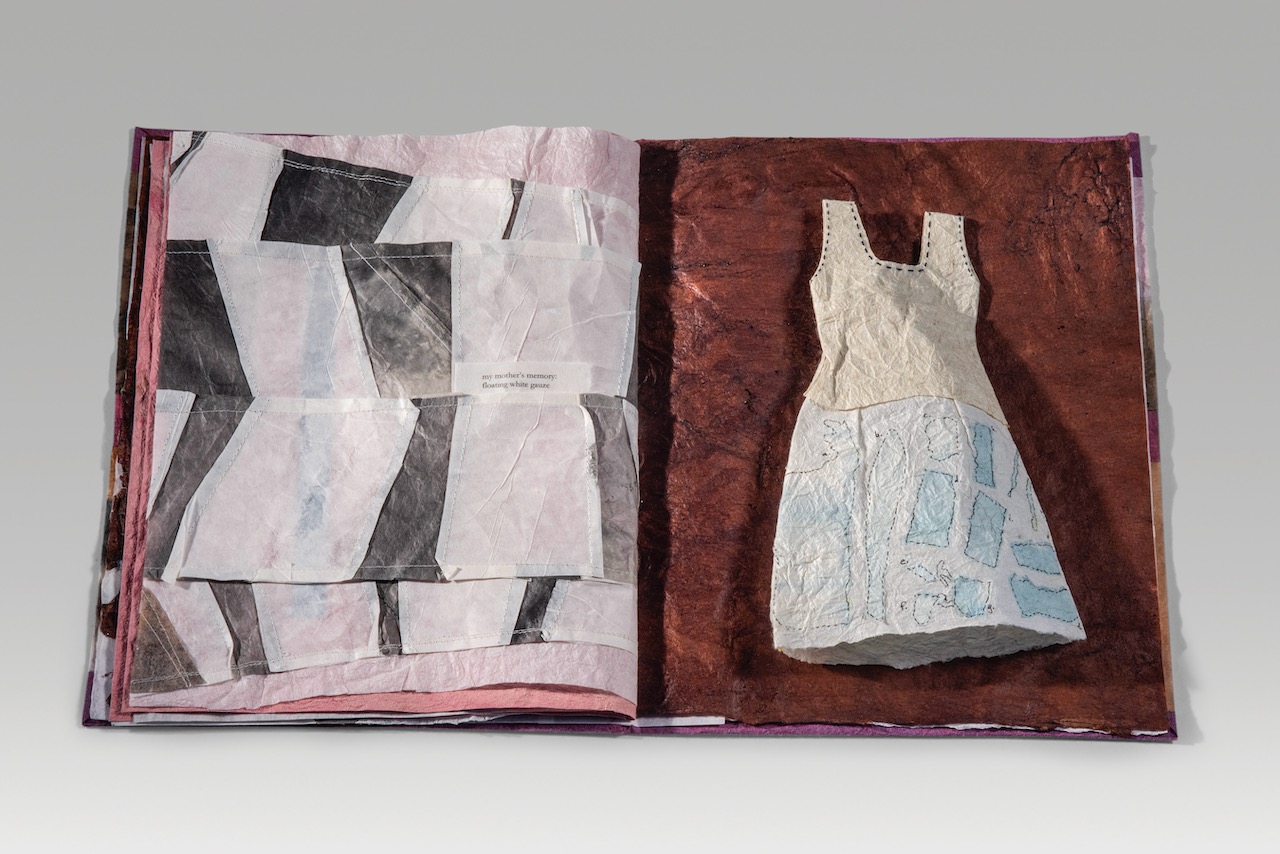
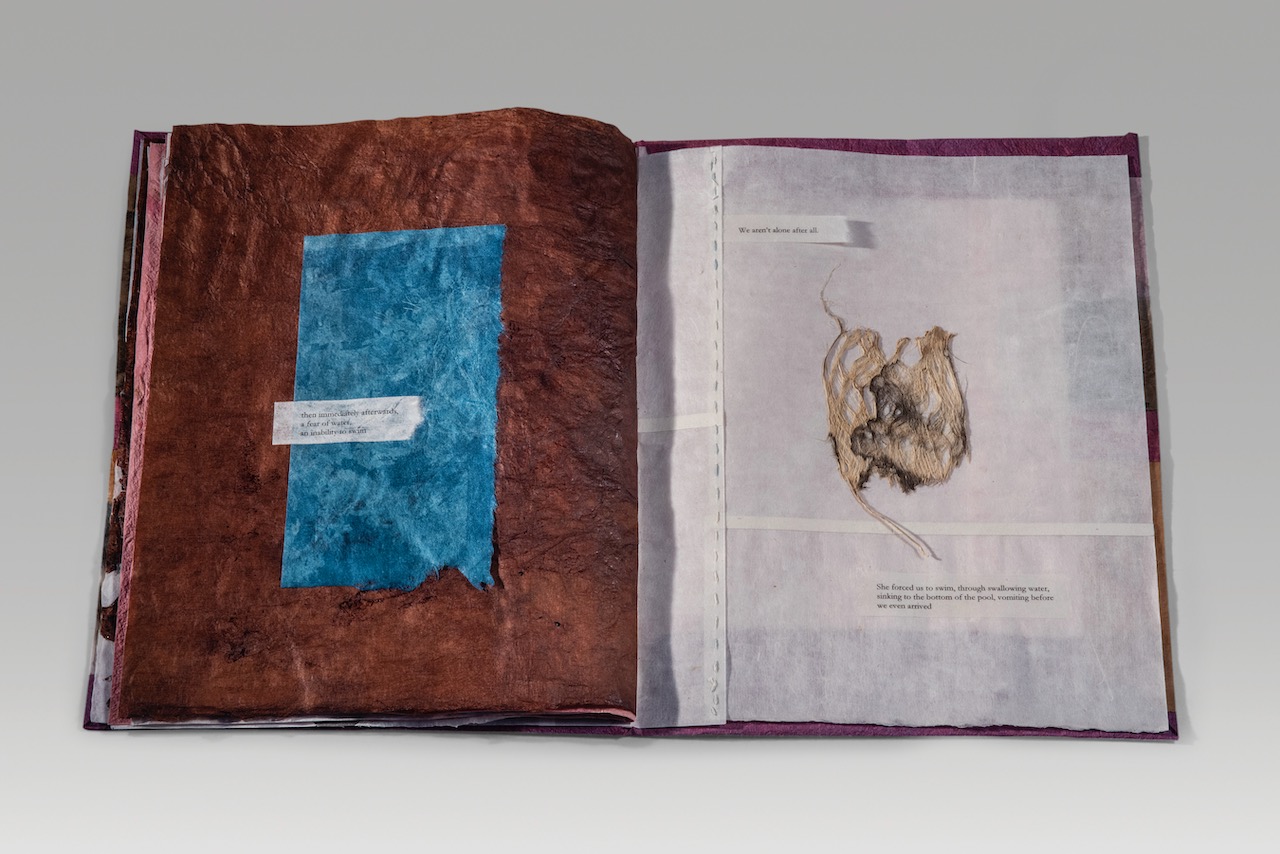
Pelagic inheritance (2022). Inkjet print and natural dyes on handmade papers, thread, paper thread, bark lace, woven paper, deconstructed paper dresses. 12.75 x 8 x 0.5” closed. One of a kind. Cynthia Sears collection.
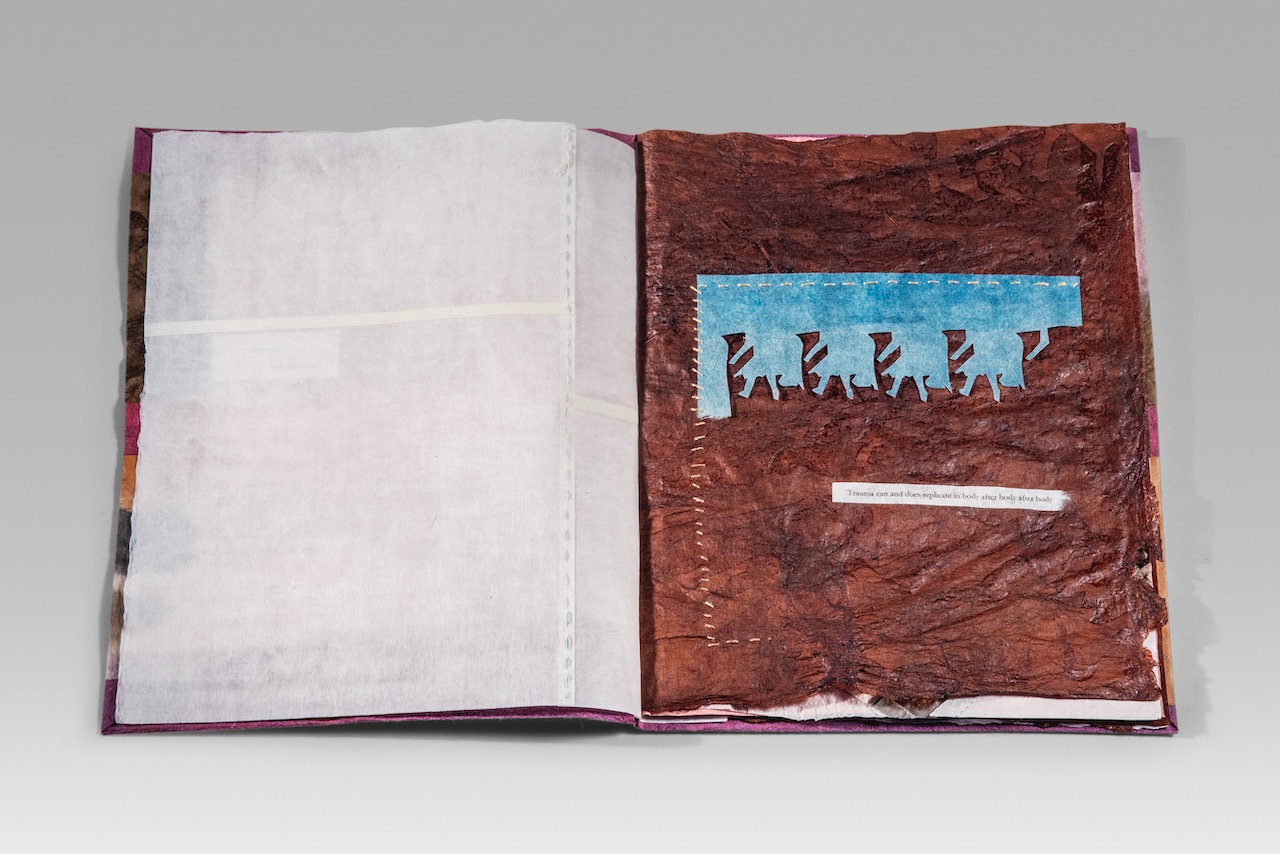
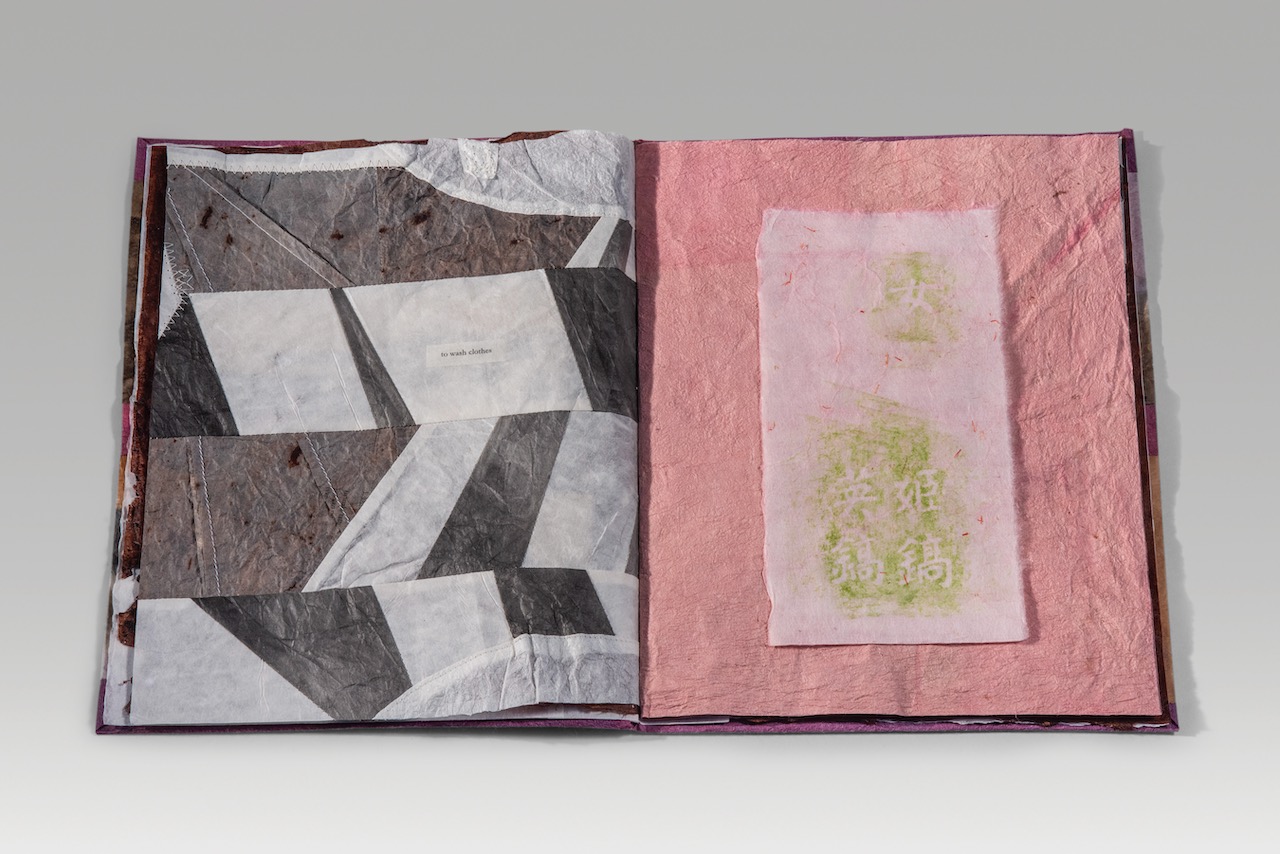
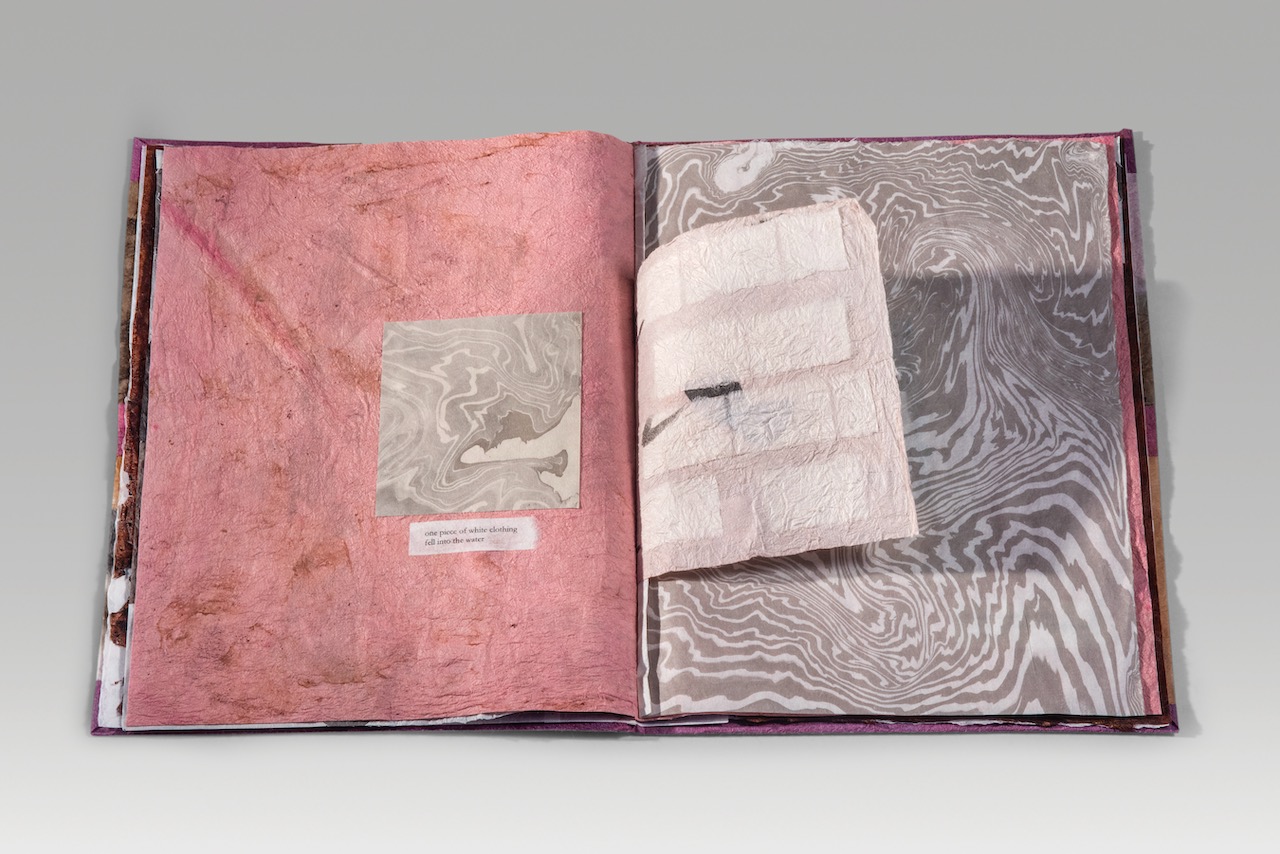
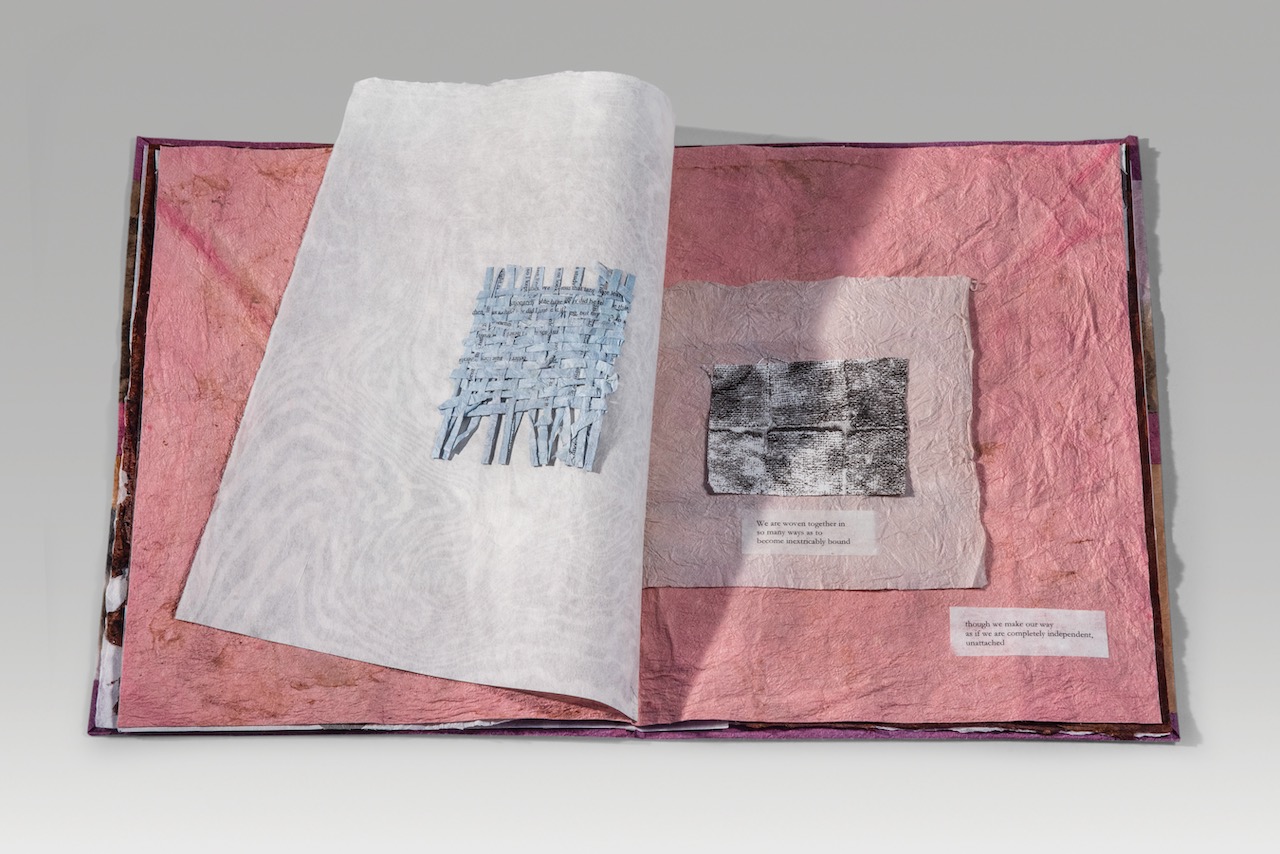
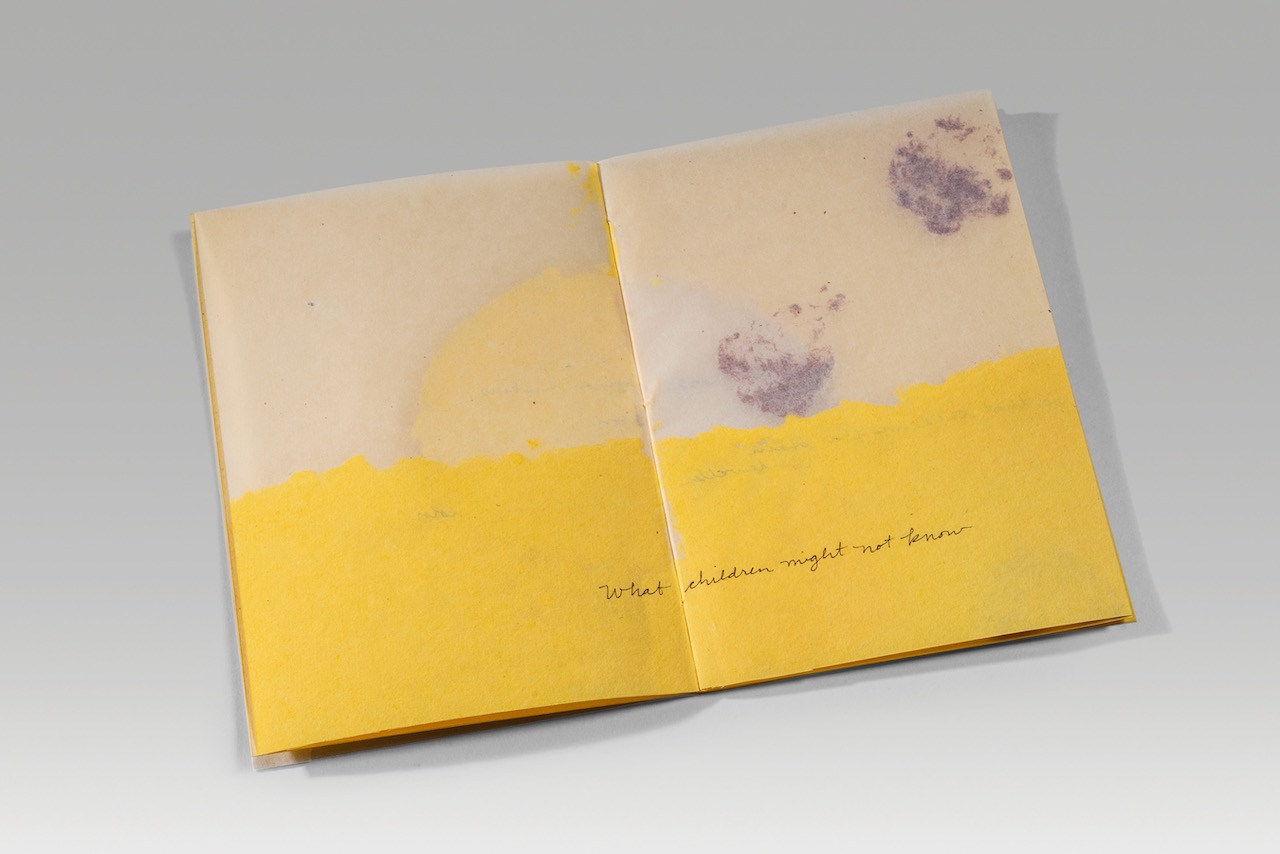
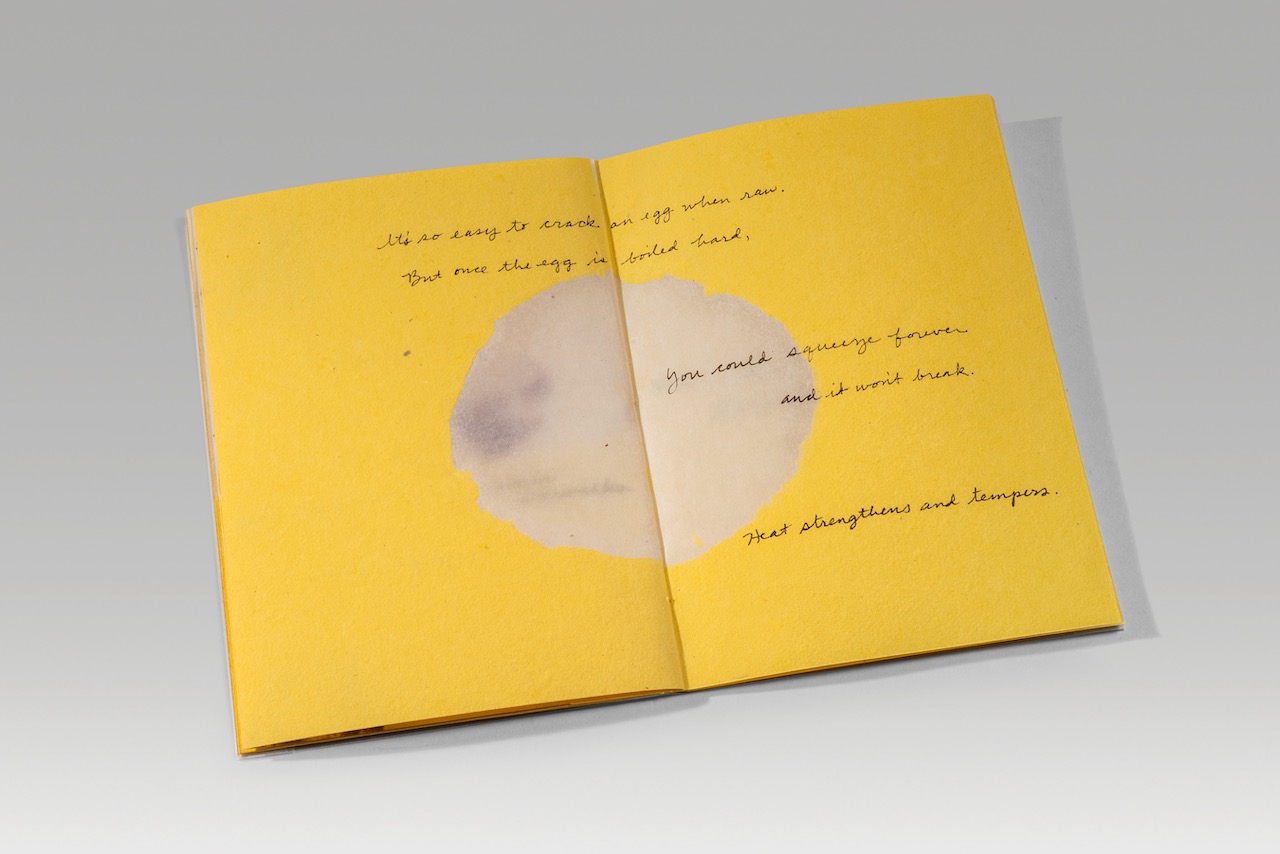
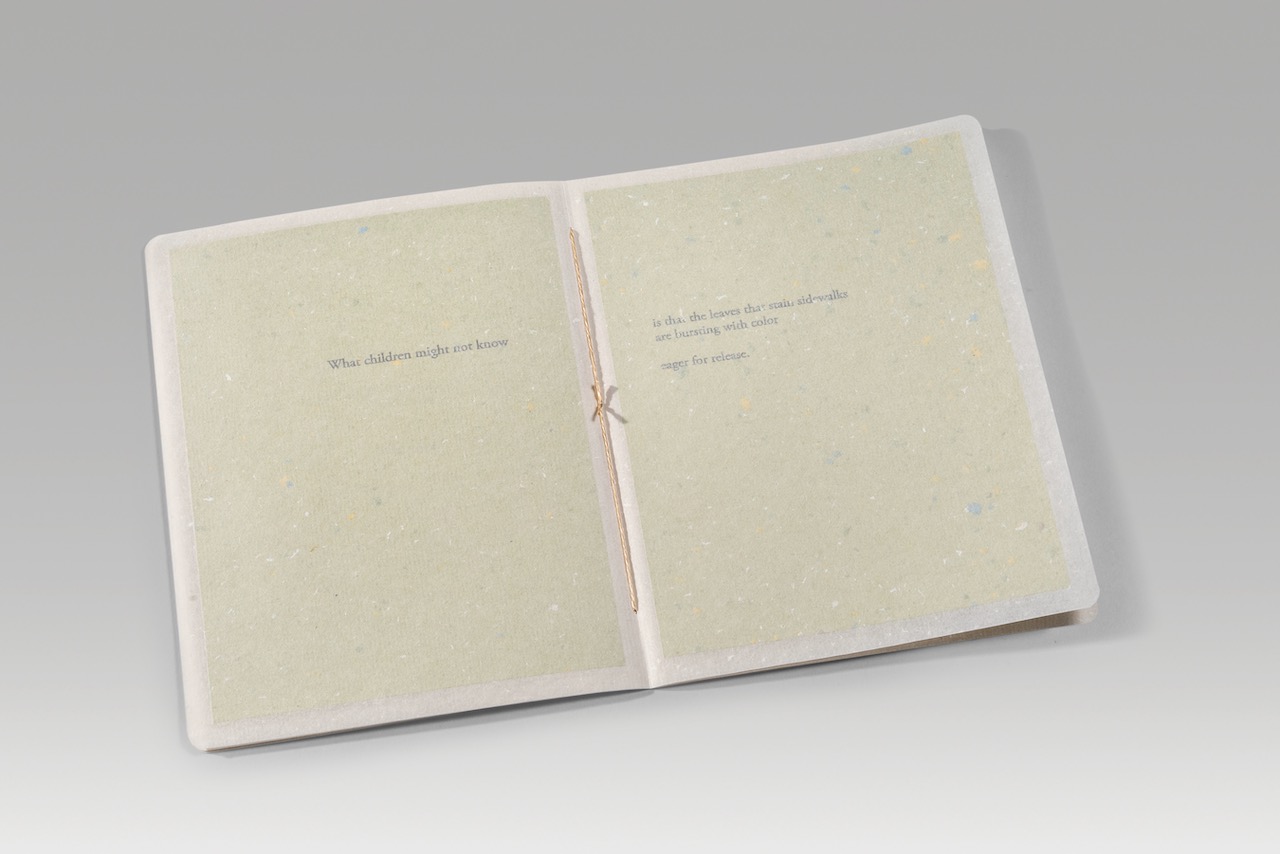
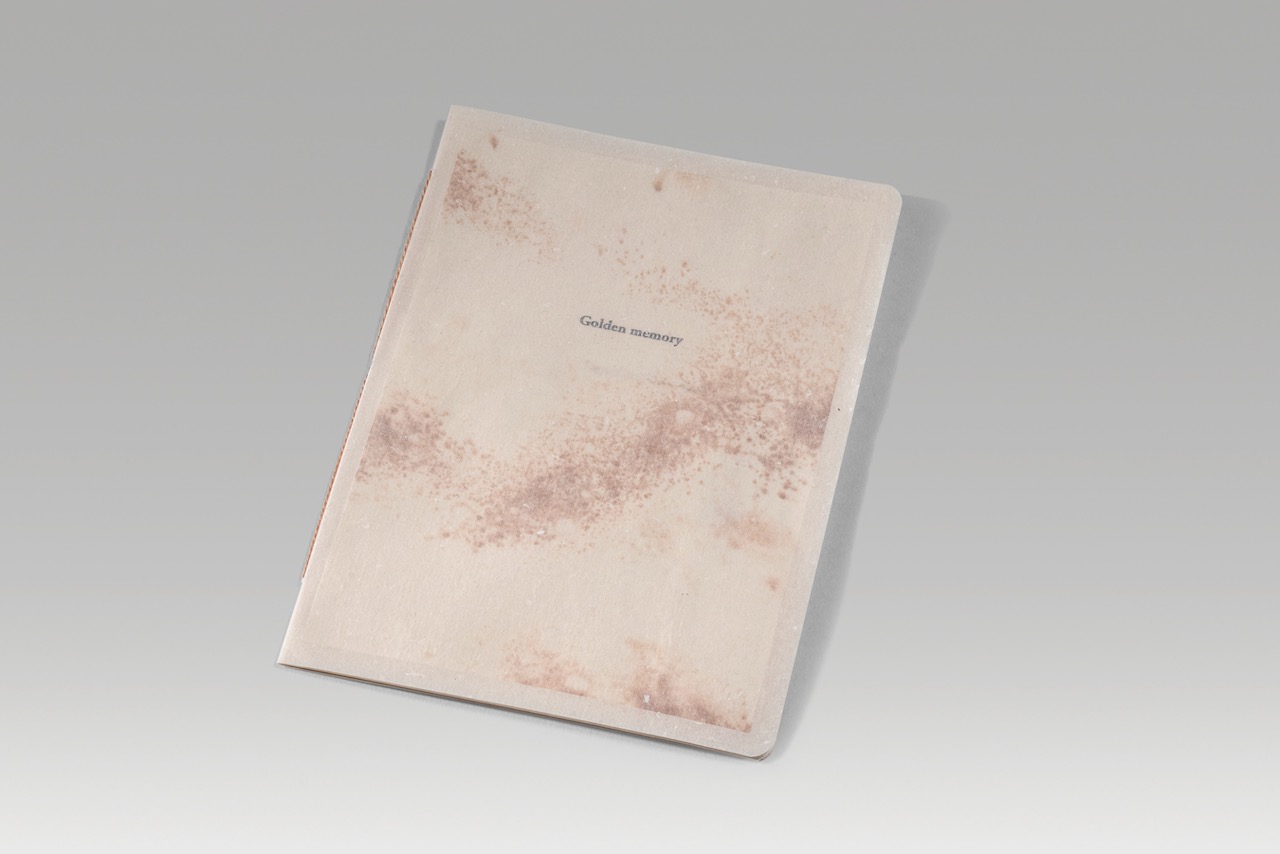
Golden memory
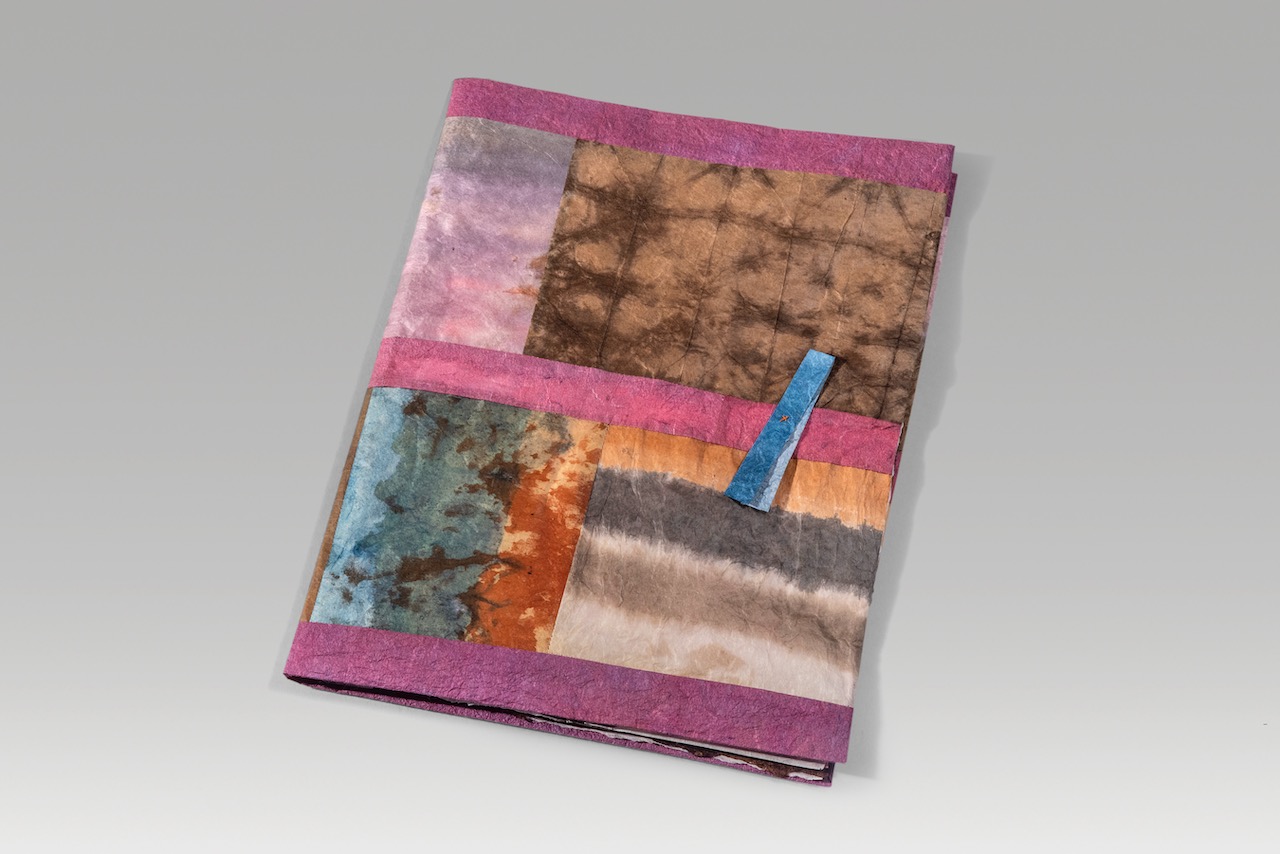
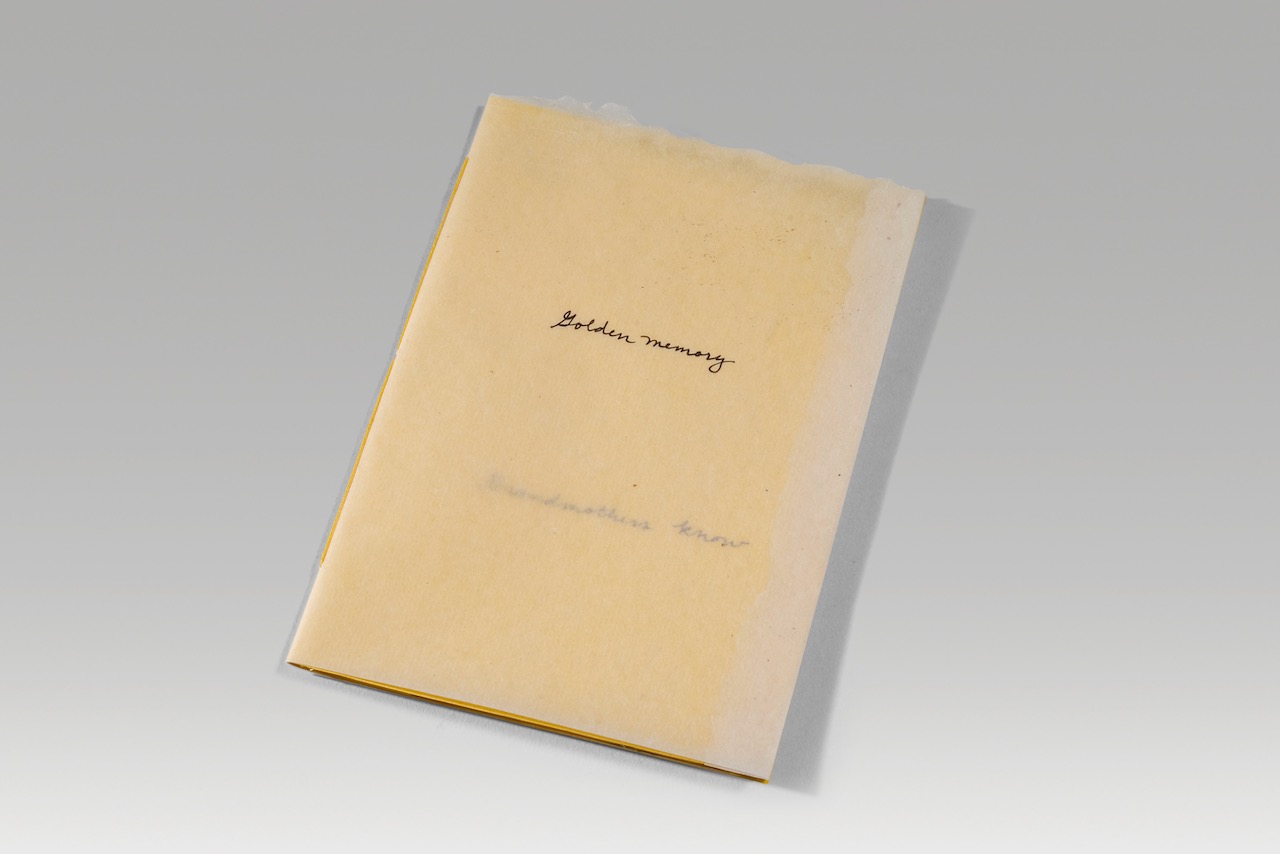
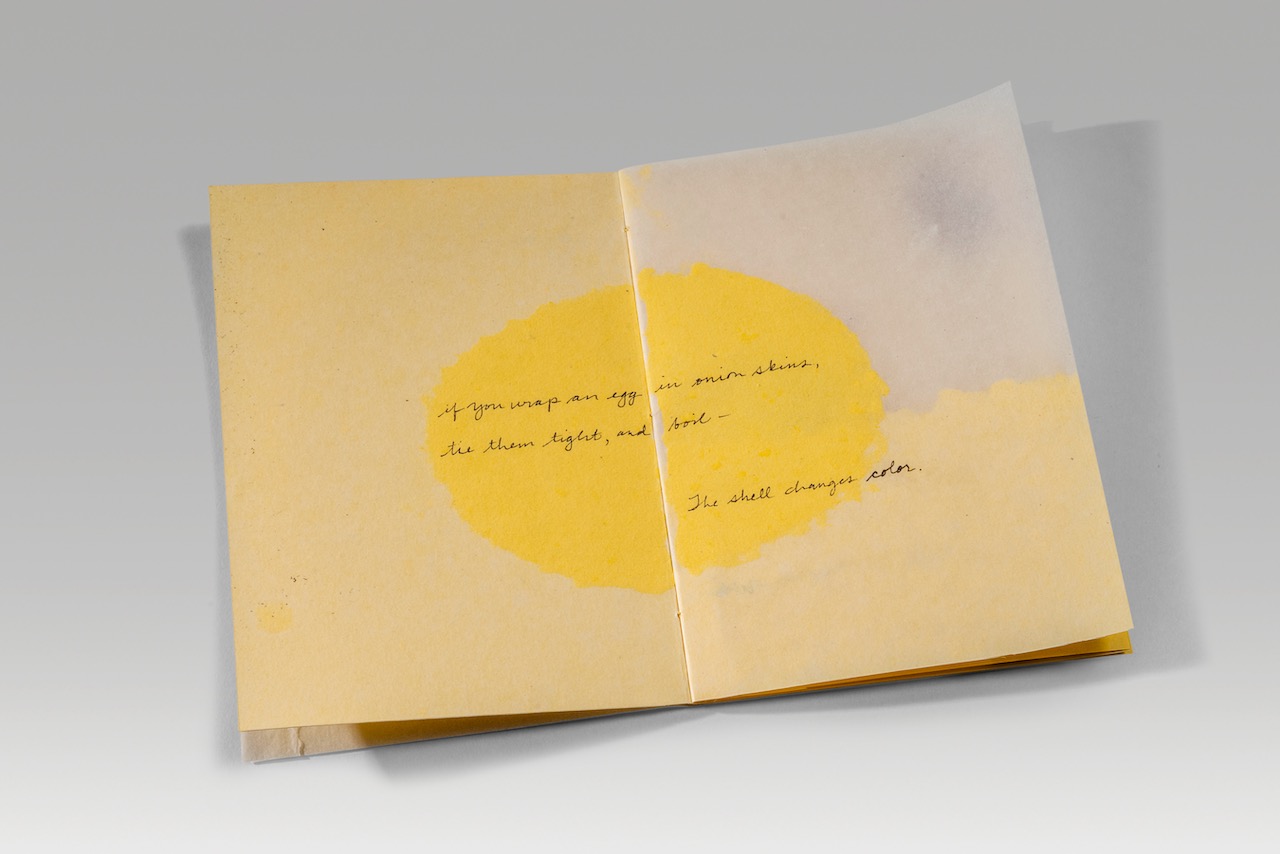
Golden memory (yellow version) (2022). Pen on cotton and abaca paper. Average dims 6.75 x 4.1 x 0.25” closed. Variable edition of 3. Cynthia Sears Collection; Tufts SMFA Library Special Collections.
We so often forget what our bodies actually know until we are compelled to use them, to become part of the world. This book speaks to how powerfully the things we learn by doing become embedded in our bodies. Stories of how heat affects color and strength are encapsulated in the pages of the book itself, available to read but permanently integrated. All of the paper is made by hand and created wet, spread by spread.
Main edition of 10:
1–5: Inkjet print on persimmon powder dusted hanji, embedded in abaca paper. 6.5 x 4.75 x 0.13” closed.
6–10: Inkjet print on pigmented cotton paper, embedded in abaca paper. 6.5 x 4.75 x 0.13” closed. Oberlin Art Library, Western Michigan University Library Special Collections, private collection.
Steady
Steady (2021). Pen, acrylic, and gouache on handmade paper. 8.5 x 5.75 x 0.75”. Cynthia Sears Collection.
Each day we attempt some kind of equilibrium
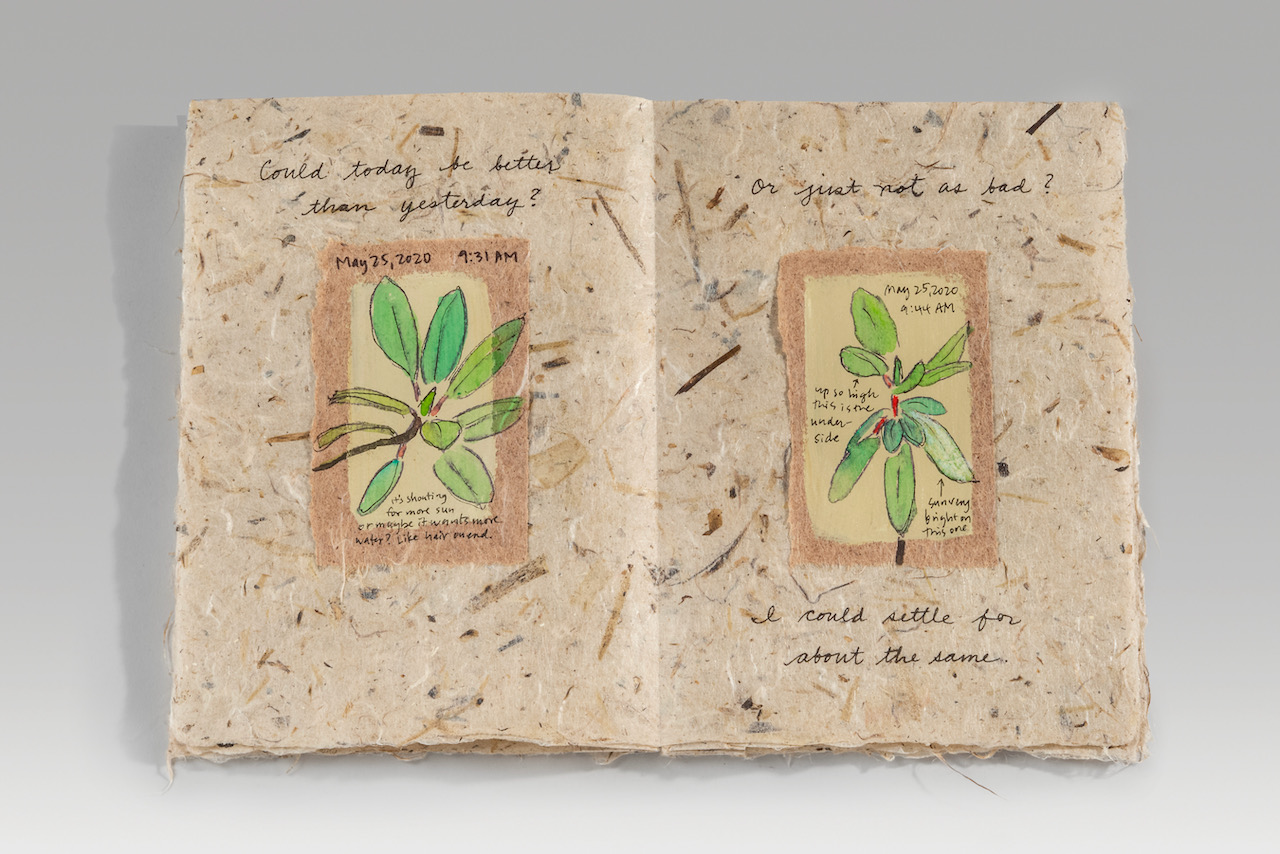
Could today be better than yesterday?
Or just not as bad?
I could settle for about the same.
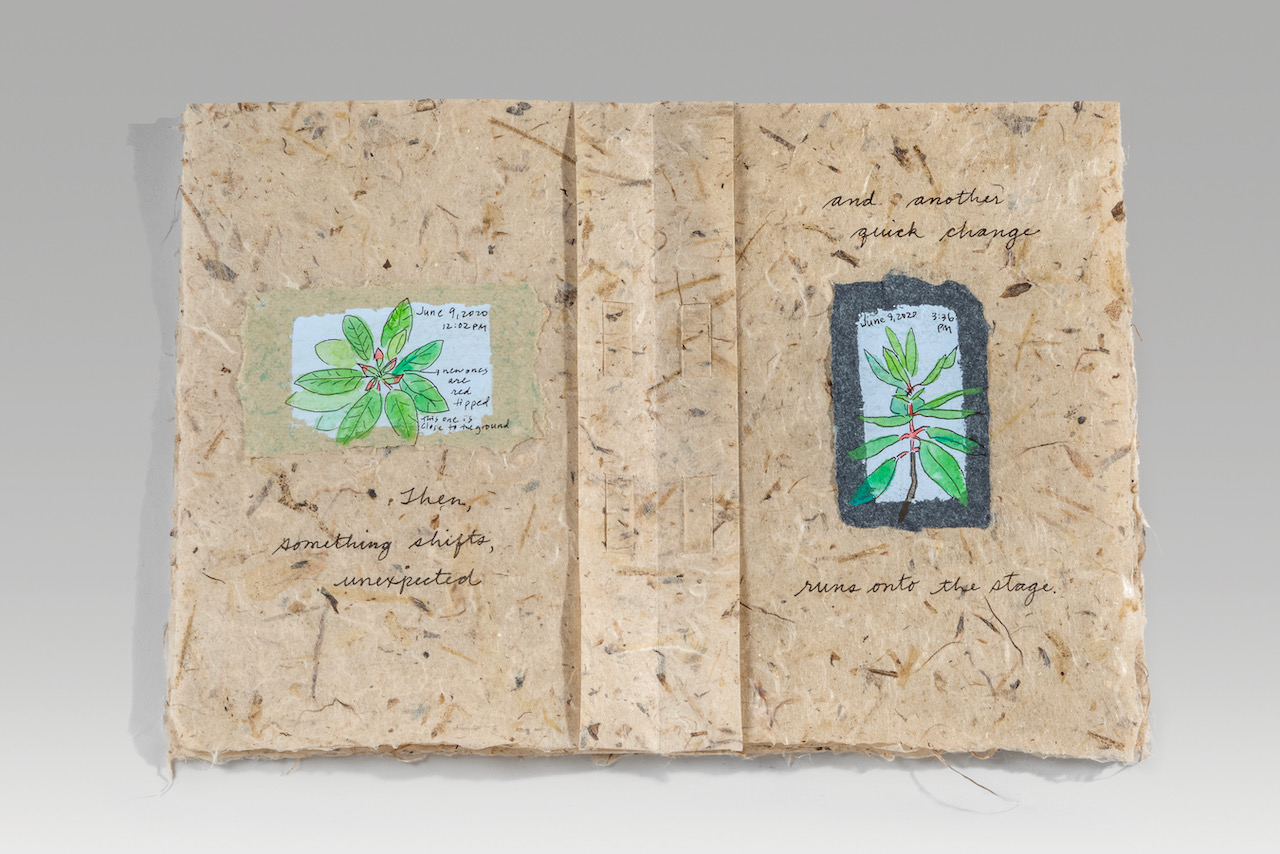
Then, something shifts, unexpected
and another quick change
rushes the stage
In a blink, it all shifts again
and you start to sit in that newness,
alter the shape of your seat,
rest a moment to see how it feels—
and let go.
You sink in long enough to trust
that you can navigate even more changes
as fast as they come.
You stay steady.
One of a kind milkweed paper, text, and drawings by Aimee Lee of Bionic Hearing Press. Bound in Virginia, completed in Ohio. Small papers by Velma Bolyard of Wake Robin in New York. Thanks to the Oak Spring Garden Foundation.
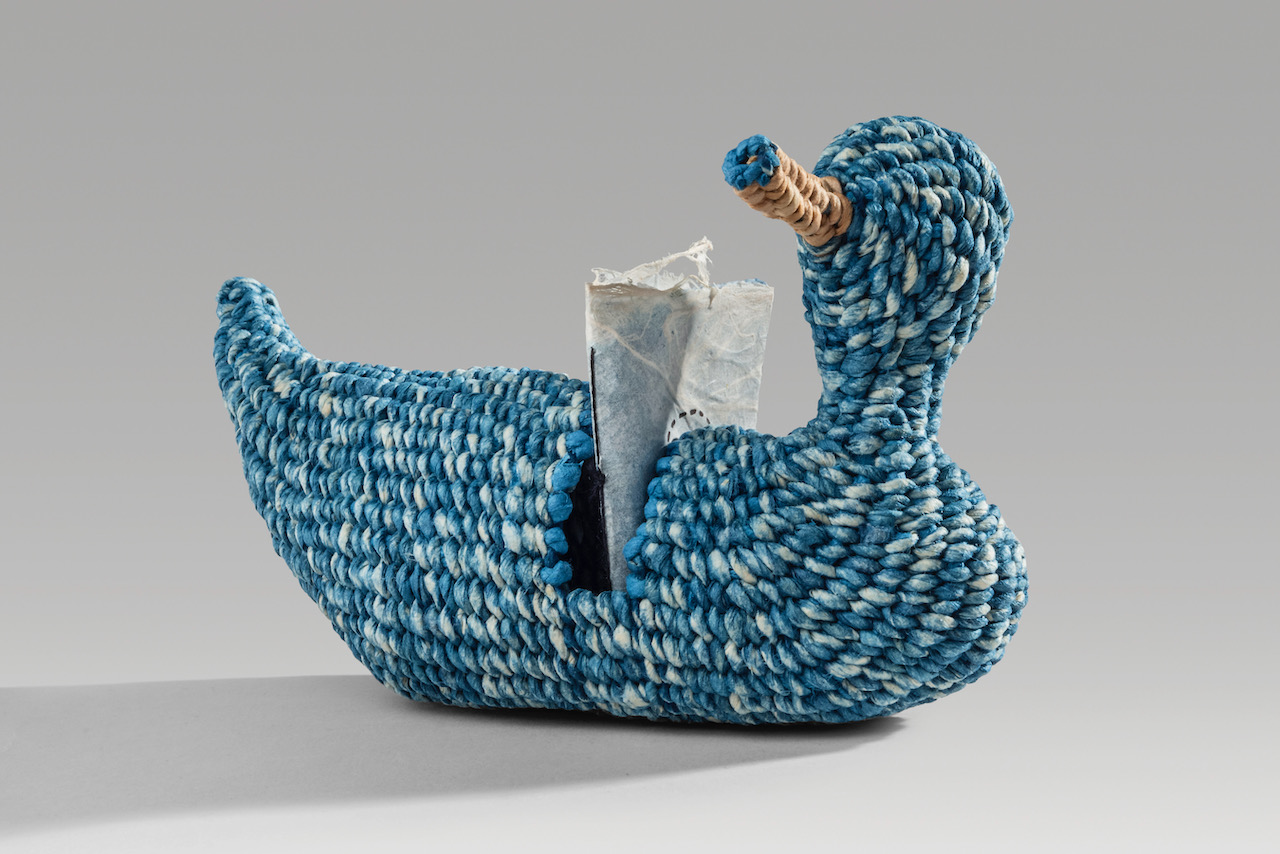
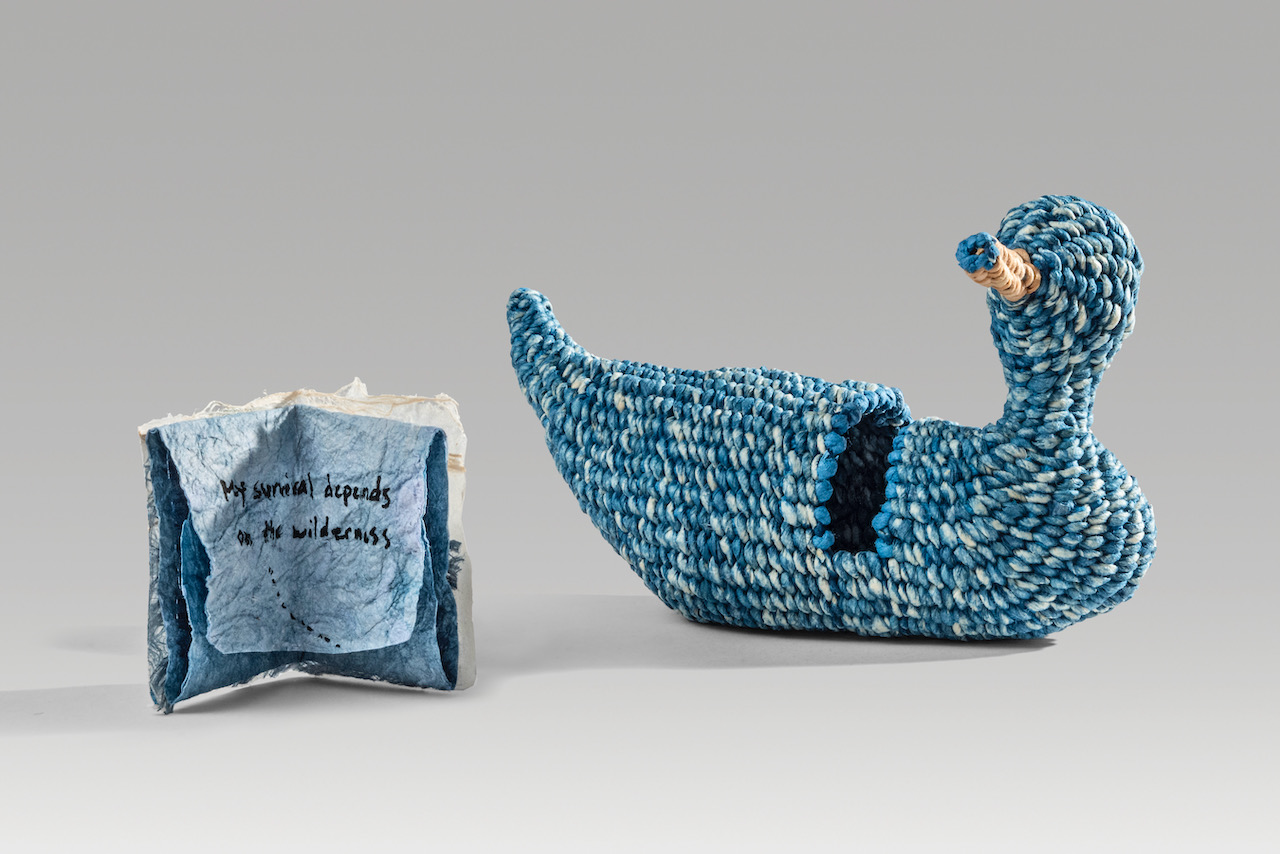
Interior duck
Interior duck (2021). Natural dyes on corded and twined hanji; pen and indigo dye on handmade paper and bark lace. Duck: 4 x 6.6 x 2.4”. Book: 2.5 x 1.75 x 0.25” closed, 6.25 x 3.75” open. Private collection.
When we consider the effects of wilderness and habitat loss on various species, we usually think only of the outside devastation: clear cutting and outright burning of forests, digging up the earth for what lies underneath or razing it to build endless developments for humans. But to arrive here, humans must have adapted to be capable of such violence. I think that losing touch with the wildness inside of ourselves is how we become okay with losing wild land, animals, plants, and entire ecosystems. This duck, evolved to hold a book, looks nearly sawn in half to carry a map of the interior. What are we willing to sacrifice to become whole, or stay ruptured?
Right now
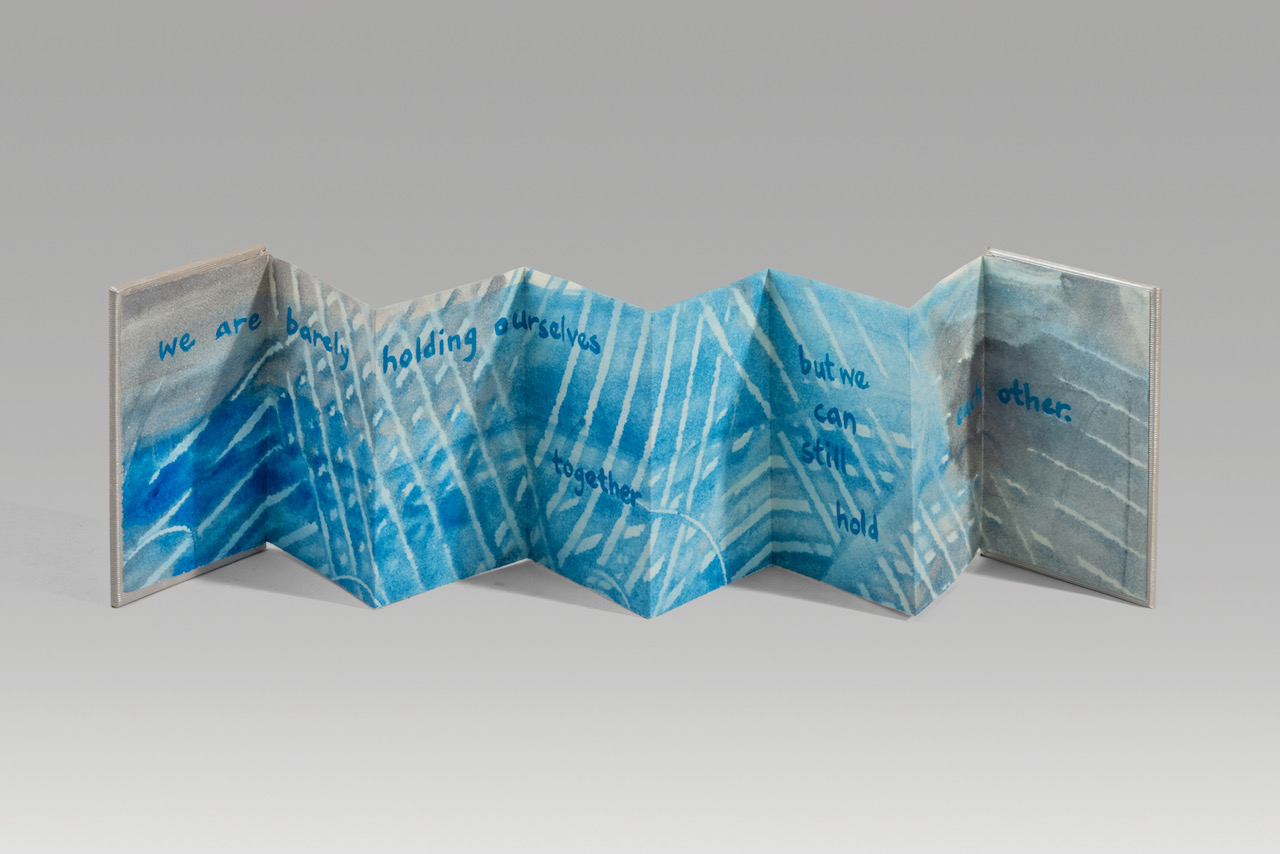
Right now (2021). Gouache on acrylic/methylcellulose on Mohawk Superfine. 3 x 1.86 x 0.3” closed, 14.75” wide open. Furman University Duke Library Special Collections.
Good Neighbors
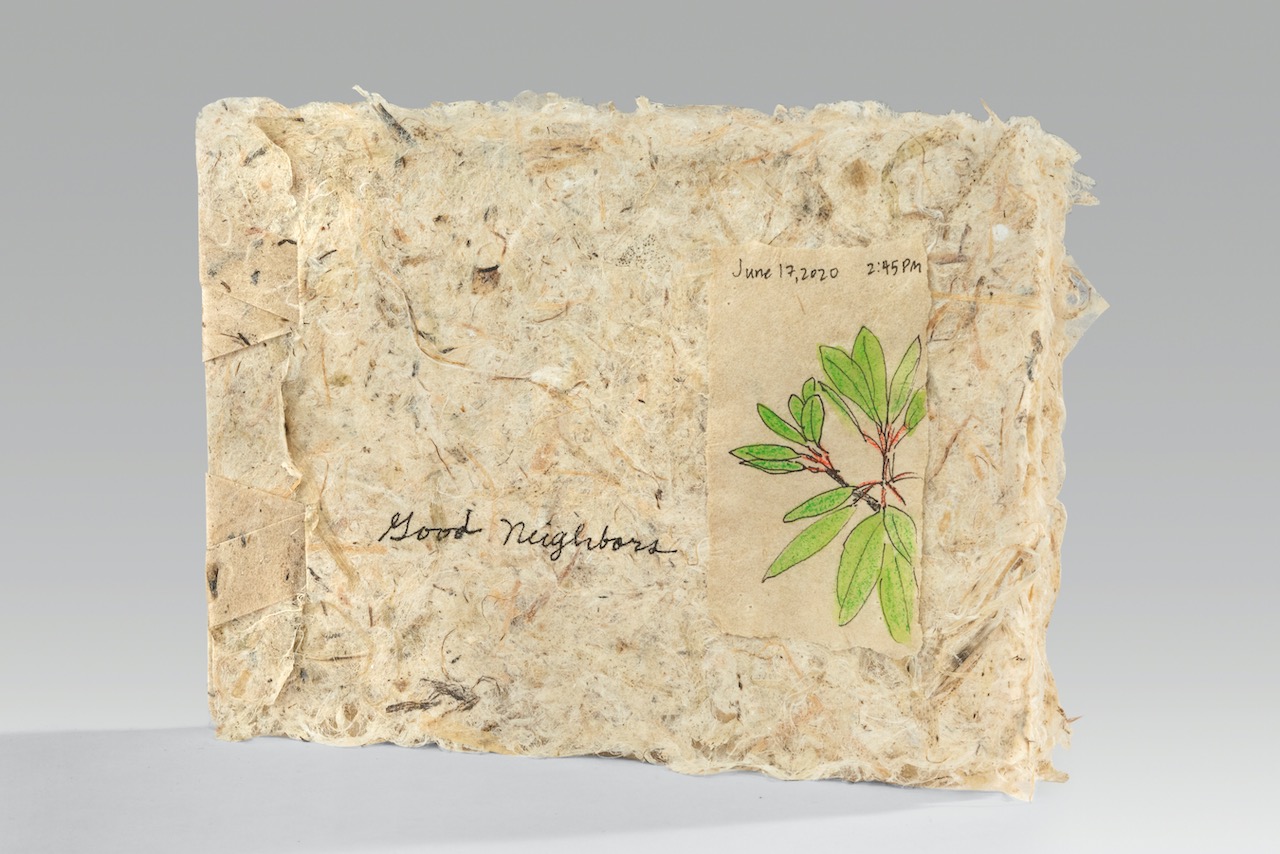
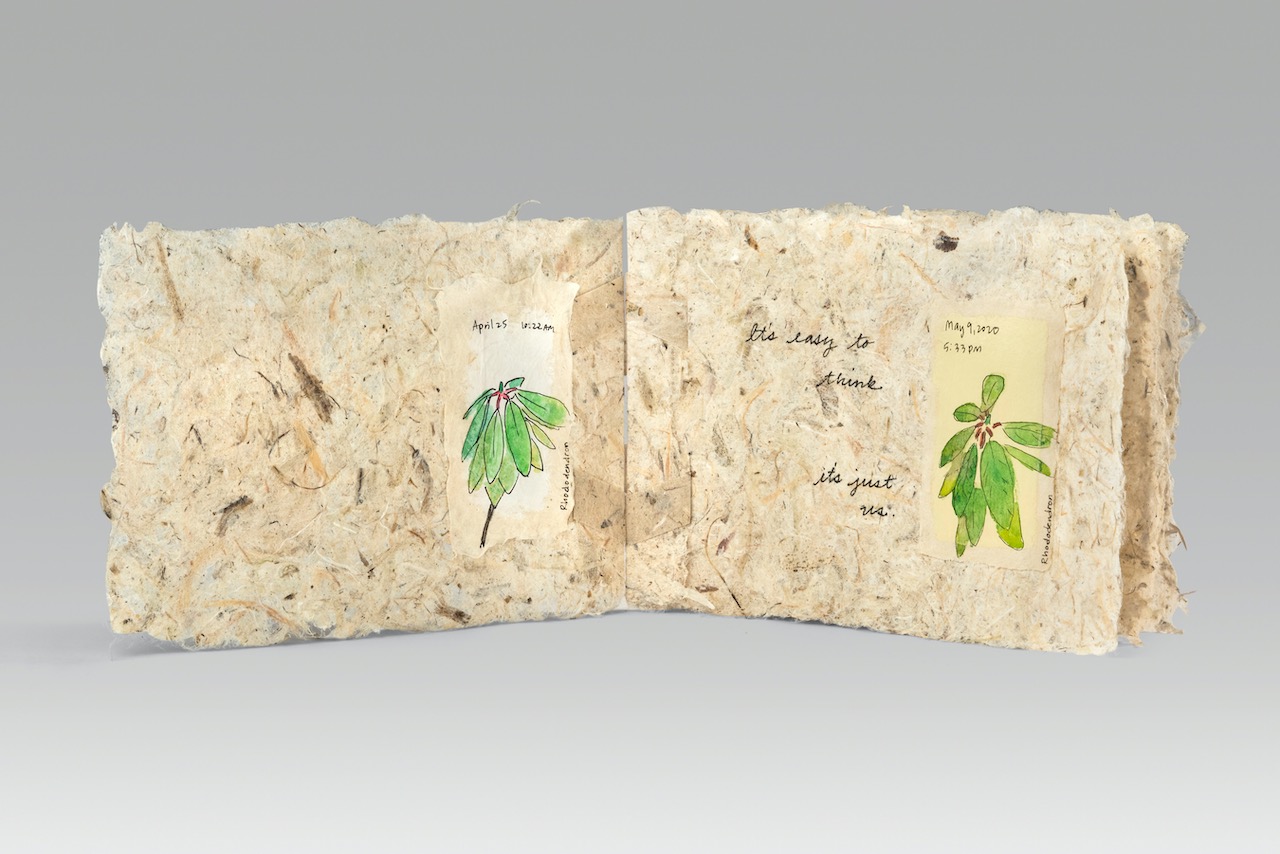
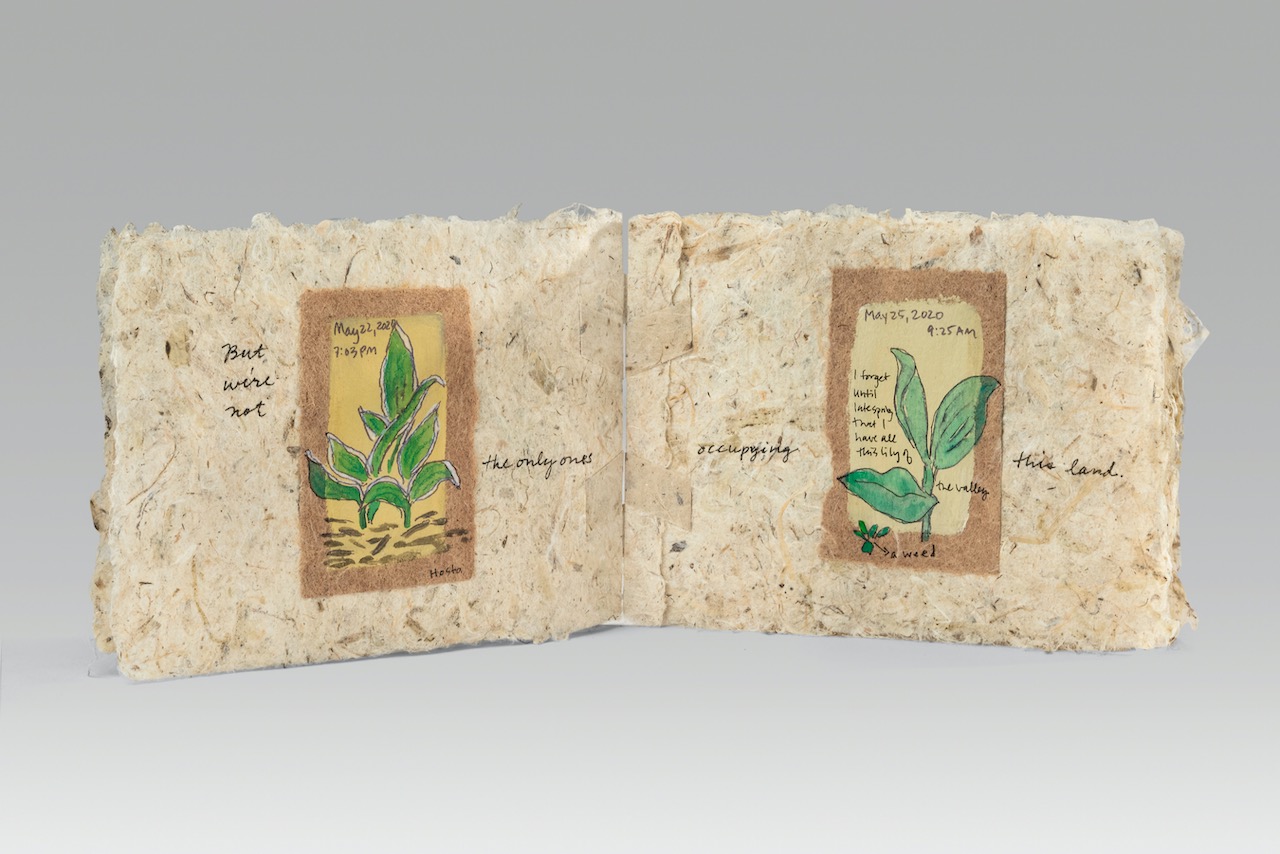
Good Neighbors (2020). Pen, gouache, acrylic on handmade paper. 6 x 8 x 0.4”. 6 leaves. Cynthia Sears Collection; Carleton College Gould Library.
It’s easy to think it’s just us.
But we’re not the only ones occupying this land.
While busy multiplying and growing
adjacent, others are doing exactly the same
US.
THEM.
Or, we could learn
to be better neighbors
The Drama of a Few Square Feet
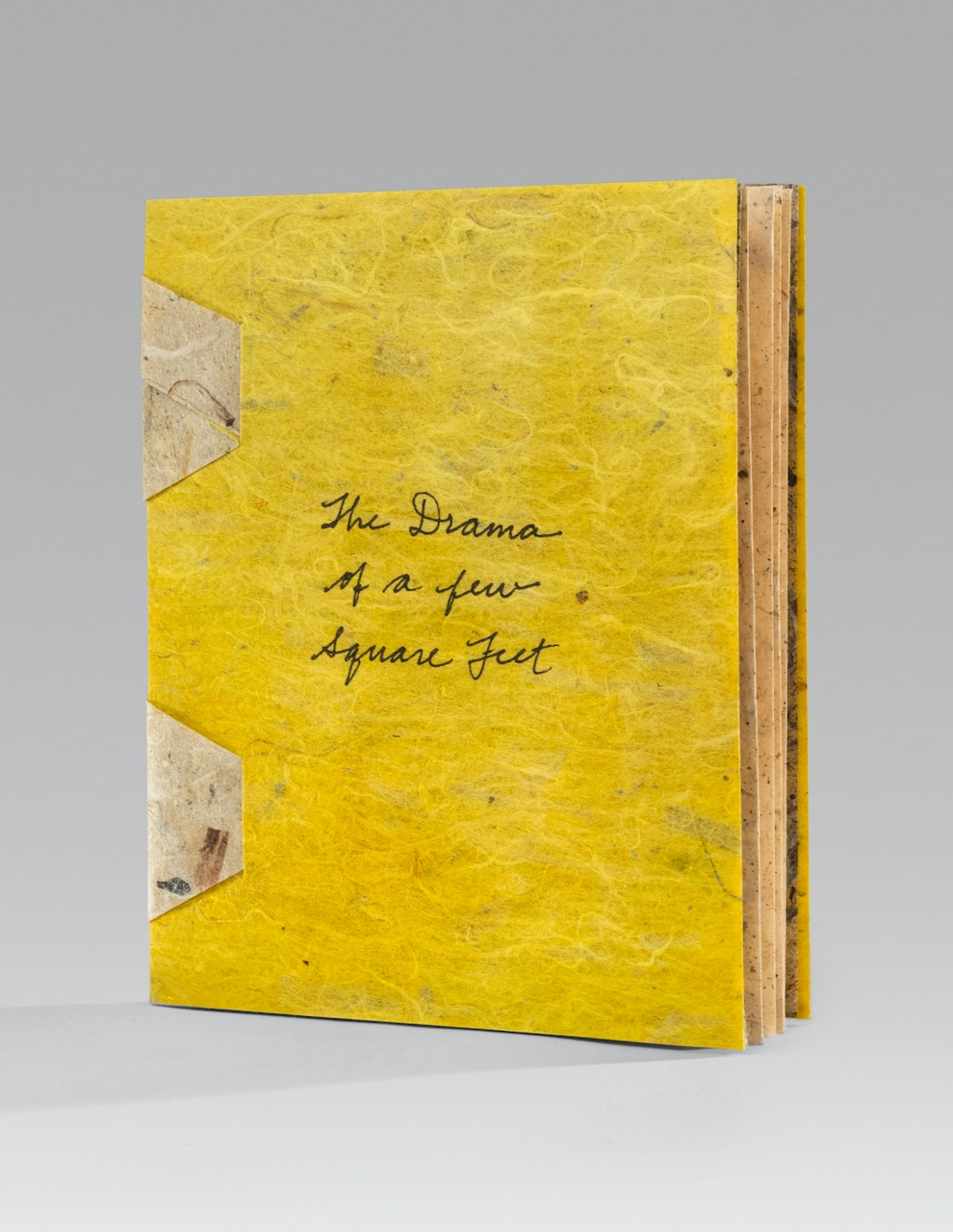
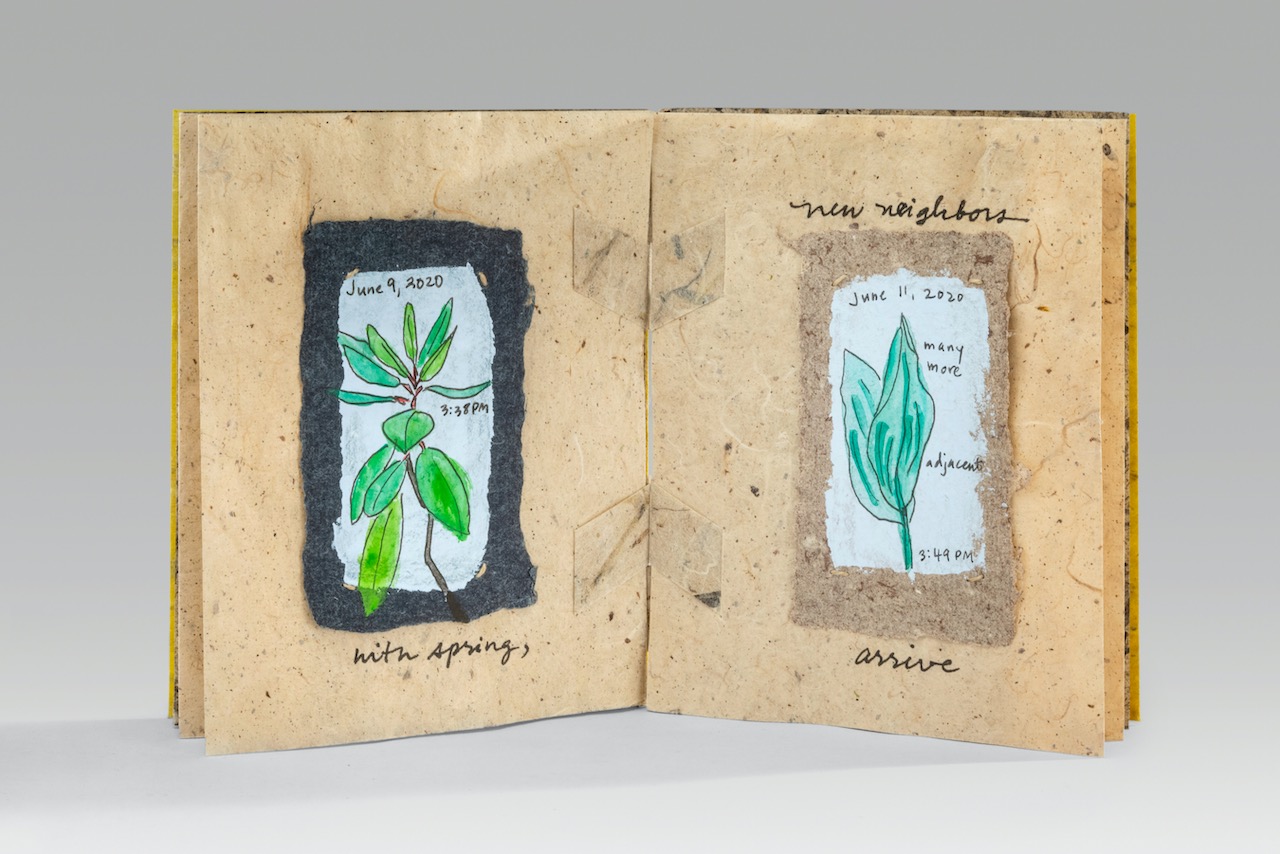
The Drama of a Few Square Feet (2020). Acrylic and gouache on Wake Robin papers, thread, marigold dye on handmade papers.
Version 1: 6 leaves, mulberry & milkweed covers, milkweed endsheets, mulberry chiri pages. 5.75 x 4.25 x 0.74”. Private collection.
Version 2: 6 leaves, mulberry & milkweed covers, milkweed endsheets, mulberry chiri pages. 5.3 x 4.25 x 0.5”. Private collection.
Version 3: 7 leaves, milkweed covers, yucca endsheets, salago pages. 5.5 x 4.5 x 0.5”. Cynthia Sears Collection.
Version 4: 6 leaves, milkweed covers & endsheets, salago pages. 5.75 x 4.4 x 0.5”. Oak Spring Garden Foundation.
When lockdown began in early March 2020, to stay sane I began to draw a rhododendron bush in my front border that I could see from my living room. I sat there almost every day and drew the plant, adding a time and date to each drawing. This practice was encouraged and supported by a Covid-19 relief grant from OSGF after I began. The first drawings were in my sketchbook, but I eventually made smaller drawings on tiny pieces of handmade paper from a colleague (Velma Bolyard of Wake Robin). On occasion I would also draw a few other plants in the border as they appeared as the weather warmed. I brought all the drawings to Oak Spring for my residency in July/Aug 2020 as well as my own larger paper in hopes of practicing more 100% paper structures that involve cutting and folding paper and using paper straps rather than sewing books with needle and thread. I have made these books for years, inspired by Woven and Interlocking Structures by Claire Van Vliet and Elizabeth Steiner.
My artists’ book looks at the tiny ecosystem of my front border, which is only a few square feet, and how it grows and persists. Of course I was also consumed by bigger problems in the world, and how so many situations replicate themselves in small and large systems: how we tolerate “other” people and become good neighbors (the way that some plants do, and also how my plants survive in a small, shady, acidic, clay border), how we survive the weather (do we lose limbs, leaves, or pieces of our shelters), and how we behave in different climates (being compliant to certain forces like the sun or the police, or taking time to rest when it is cold).
A thought
A thought (2020). Version 1: Pen, gouache, acrylic on slippery elm/Florida kozo paper. 5.5 x 4 x 0.5”. Private collection.
A thought (2020). Version 2: all slippery elm/Florida kozo paper. 5.5 x 4 x 0.5”. Private collection.